


News about the EU periphery is horrible. Now its core is in trouble.
Greece may yet leave the faux European Union (EU) by the end of this year after its economy remains in dire straits. It was never a qualifying state, but at least it kept its nemesis Turkey out.
Ireland and Portugal got their multi-billion euro bailouts to keep their economies afloat by passing the bill to fellow EU partners.
Spain is wobbling, but resists any talk of a bailout.
EU Center Collapsing
Germany and France have been the two principal authors of the EU experiment since its founding with the Treaty of Rome in 1957.
The Germany-France nucleus is now unraveling.
While Sarkozy's France seems to be stable, it is Germany, the EU's largest economy (nearly $3 trillion GDP), where attention now turns in light of two recent bits of news: another devastating electoral loss by Chancellor Angela Merkel's ruling Christian Democratic Union (CDU) Party and the Cucumber Crisis.
Lights out for Germany?
In another stinging electoral defeat this year, Chancellor Merkel's party lost an election in Germany's most populous state, North Rhine-Westphalia last Sunday. The CDU also lost control of its upper house of the German Parliament as a result, the Bundesrat.
Germany's bailout of Greece continues to exact a toll on Merkel's governance.
The political shift in Germany unmistakably away from the sane CDU could have a deleterious effect on an already hobbled EU going forward.
As an immediate reaction to election defeat, Merkel decided to essentially turn out the lights in Germany by ordering all nuclear plants extinguished by 2022, a concession to the wild-eyed Green Party. More energy will have to be pumped in from France and Poland at an added cost to German consumers.
Despite evidence abound, Germany will rely more upon a demonstrably failed wind power scheme to fuel the EU's largest economy. It is a very risky move for the country and the ailing EU around it.
Cucumber Crisis Crisscross
The Spanish cucumber crisis is more evidence of a Germany adrift.
An e.coli bacteria breakout in Hamburg last week has now claimed 14 lives across the country.
Fingers quickly pointed at Spain in more bad news for Madrid at a time of economic malaise.
However, now, German health authorities have backtracked leaving Spain the option to seek legal relief from the cucumber crisscross.
Spain faces a €43 million loss in wake of the false claims.
EU Death Throng
The EU continues to wither away. Now, even its core is crumbling.
While German Chancellor Merkel is expected to run for a third term in 2013, that looks less certain in the wake of the electoral defeats for her party and her unsteady leadership in face of truly difficult issues.
Berlin will regret the wind energy folly over the safety and certainty of nuclear energy.
The unwarranted highly-publicized panic to pin the cucumber crisis on Spain shows more than poor judgement. In the larger scheme, it is yet another sign of the faux EU.
A high level of mistrust runs deep between the member state capitals. The ghosts of history stalk the EU.
To undermine another national economy so recklessly is beyond excusable.
No, the EU is in its death throng. The collapse of steady and sane governance at the EU's core, Germany, marks another milestone in the organization's checkered history.
The silly Euro elitist experiment is coming to an end and not all of the overpaid and underworked bureaucrats in Brussels can put it back together again.
***If you need research from open sources in Spanish, French, or Portuguese and presented in a stylish English language report or a translation of documents in said languages to English, please contact Professor Winn at by sending an email to mrenglish101@gmail.com for a prompt evaluation.
Showing posts with label economy. Show all posts
Showing posts with label economy. Show all posts
Wednesday, June 1, 2011


Tuesday, February 22, 2011
The #MidEast Ablaze

From Morocco to Af-Pak, an arc of fire consumes the old order of the Middle East.
The diverse region of Arab monarchs and despots will forever be changed by the so-called Jasmine Revolution in Tunisia. Its ramifications rattle the brittle regimes with scant legitimacy to govern.
A new Middle East is emerging with each shift in the political sands of a storied region wracked by religious warfare, economic despair, and shattered dreams of the angry youth raging in the Arab Street.
Brittle Regimes
Despite their vaunted security apparatus, secret police, and strong-arm rule, in the end, the fall of former ''President'' Zine al-Abidine Ben Ali of Tunisia and ''President'' Hosni Mubarak of Egypt seemed anti-climatic.
Ali, 71, and Mubarak, 82, held in check more radical elements in their respective countries as long as possible. The brittle rule of the old men was clearly out of step of the needs and desires of the Arab Street and they paid the ultimate price by those who rule by force.
The shock waves of their collapse continue to undermine regional autocrats.
Falling Dominoes
When will the last domino fall?
Morocco. Algeria. Libya. Yemen. Jordan. Bahrain. Monarchs and dictators face the ire of their people. The thirst for freedom is innate in the human soul amid a world where slavery is the norm.
Zany Colonel Khadafy of Libya appears ready to fight to the bitter end. Unlike Tunisia and Egypt, the Libyan strongman has no compunction for using the full weight of the military against the people.
The defection to Malta of the two air force colonels who refused to do so gives little relief. Reports of other planes bombing the people demonstrated yet some loyalty to the regime.
The expected return of a key opposition leader to Bahrain cannot redound positively for the rulers on the tiny oil kingdom in the Persian Gulf as a tug-of-war between Saudi Arabia and Iran plays out.
Algerian strongman Abdelaziz Bouteflika has thus far staved off the ''Egyptian effect,'' but it is yet not clear he can resist the demands from the Street for an end to his authoritarian rule and miserable living conditions.
It is difficult to determine just when the dominoes will stop falling.
Economic Consequences
MENA (Middle East and North Africa) is home to the world's largest proven oil reserves.
Like a full goblet of wine, the slightest jolt in political, economic, and social events in the region and it spills out and prices soar.
The world economic recovery is fragile pressured by the spike in commodity prices and now the surge in oil threatening to undercut any gains made.
Who fills the vacuum?
When dictators fall, the strongest and most organized opposition group has the best shot of claiming the mantle to lead.
In many cases in the regimes that are on the brink in the MENA, Islamist fascists are poised to bring order to the resulting chaos.
Speculation about ''democracy'' in countries who have only known repression and misrule is only happy talk. Only Israel has managed a Western-style pluralist government with legitimate consent of the governed.
The potential for mal-actors to exploit the power vacuums emerging in the breakdown of the previous dictatorial orders is great. GSM explores the winners and losers in its coming examination of the phenomenon occurring the region today.
Final Words
The fear of the strongman dictating the course of affairs in individual Arab countries is over. Those lucky to survive the current wave of opposition must reform or flee.
The rage in the Arab Street has steadily built among the delusions of the dysfunctional society in each of the afflicted countries.
High unemployment, squalid living conditions, and broken dreams despite the wealth of the country and/or its despotic leader fueled the wave of opposition to the older Middle East order.
Stir in a liberal dose of Islamist fascism, nuclear ambitions of Iran and Syria, a Pakistan moving closer to implosion, and a notable decline in US influence, it is not difficult for a dispassionate observer to see more upheaval in a region that plays a significant role in the world economy as long as oil is its lifeblood.
***
If you need research from open sources in Spanish, French, or Portuguese and presented in a stylish English language report or a translation of documents in said languages to English, please contact Professor Winn at by sending an email to mrenglish101@gmail.com for a prompt evaluation.
Friday, December 31, 2010
Answering the 6 Strategic Questions for 2010

Q1. What will the international community do about Iran?
A: As predicted in our Net Assessment: Iran, the Western powers led by the United States would do - nothing much! Sure, more ''biting'' (read - watered-down) economic sanctions were passed at the UN, but Tehran brazenly defies the international community with impunity. It helps if you follow your own sanctions. Barring an Israeli attack, Iran will become a nuclear state and build the medium and long-range ballistic missiles to wage its jihad. The US still believes diplomacy of appeasement is the necessary elixir and Iran agrees. While the West talks, Tehran builds.
Q2. Will radical Islamic terrorism wax or wane?
A: Radical Islamic terrorism waxed around the globe. Some plots were disrupted with a new wrinkle in the bombers. Radicalized Islamic university students in the United States and United Kingdom - citizens of each - tried to set off bombs, but evidently shun suicide pacts to spare their lives unlike brethren abroad. Also, Al Qaeda franchise groups in the Arabian Peninsula (Yemen - AQAP) and AQIM (Al Qaeda in the Islamic Mahgreb) planted themselves firmly in the international terrorism universe. AQAP attempted to kill the UK ambassador in Sana'a and AQIM squared off against France.
Q3. What will China’s recent gains in diplomatic currency portend?
A: Beijing continues to build both economic strength and robust military power. China passed Japan to become the world's second largest economy in 2010. Its military modernization includes the stealth J-20 fighter, a ''carrier killer'' missile, and its own aircraft carriers. In a possible preview of Beijing's attitude toward its regional neighbors, China and Japan fussed over the Senkaku Islands leading to the capture and later release of a Chinese fishing captain by Tokyo. China intends to validate its so-called Mandate from Heaven to
rock the world.
Q4. Will the Nato mission fail in Afghanistan?
The Nato mission in Afghanistan is flagging. US President Obama fired his hand-picked commander, General McChrystal, and replaced him with seasoned General Petraeus from the Iraqi campaign in June. The counterinsurgency expert has the task to fight for a ''decent interval'' until the US wraps up its fight together with its allies by 2014. Experts yawned at Washington's vapid policy review released earlier in December. After the 10th anniversary in 2011 of toppling the Taliban, the US is squarely focused on retreat. The Taliban-Al Qaeda classic guerrilla campaign complete with a sanctuary border like Vietnam finally tires the feeble US giant.
Q5. Does Castro, Inc. survive?
A: Yes. Castro,Inc. limped across the finish line in 2010 just like 2009. At least Fidel's little brother, Raúl, recognizes the despotic regime's survival is on the line. Any easing in US economic sanctions is likely a nonstarter given the Republican opposition's control of the US House of Representatives. Expect more focus on Cuba as Ileana Ros-Lehtinen becomes chair of the powerful House Foreign Affairs Committee. Castroism, however, is the real culprit of the gutted economy and broken revolutionary dreams on the paradisaical prison island.
Q6. What is next for the European Union?
A: The gathering storm clouds at the end of 2009 rained on the European Union in 2010. The financial crisis spurred by excessive sovereign indebtedness, sclerotic growth in the national economies, and the global economic slowdown has already consumed Greece, Ireland, and Portugal. While the faux union avoided disintegration in 2010, economic gloom brought despair and riots across the Continent. Analysts see a tough go in 2011 as Spain struggles to stop the euro country dominoes from falling. However, at the end of the day, its socialist economic schemes doom any meaningful recovery in the Euroland house of cards.
Stay tuned for the Top 6 Strategic Questions for 2011. Do you have a strategic question?
Happy New Year! ¡Feliz Nuevo Año! Feliz Novo Ano!
***If you need research from open sources in Spanish, French, or Portuguese and presented in a stylish English language report or a translation of documents in said languages to English, please contact Professor Winn at by sending an email to mrenglish101@gmail.com for a prompt evaluation.
Sunday, December 19, 2010
Bet on Sinking, Cuba

In a bit of comic relief, he even suggested that committing the same errors of the past pone en juego "la vida de la revolución" (endanger the life of the revolution). Good!
And just who committed those errors?
Economic Crisis Deepens
Dr. Pavel Vidal Alejandro of the Universidad de La Habana provides background to the current crisis in a short paper published by the Spain´s Real Instituto Elcano entitled, El rompecabezas monetario y financiero cubano (Headache of Cuban Money and Finance).
Dr. Alejandro points to the trouble of the dual (dueling?) currencies - convertible and nonconvertible peso - and the financial disequilibriums in the banking sector.
However, one fundamental fact is inescapable - socialism does not work, especially the extreme state-centralized Castro style. No amount of cash infusions into the dying patient can revive it.
One of GSM's Top Six Strategic Questions of 2010 was - Does Castro, Inc. survive?
So now like in 2009, Cuba limps along.
Various media reports say a Wikileaks cable from the US Interest Section discussed a broke Cuba in two or three years.
Return to freedom
The entire Cuban experience under the jackboot of Castro,Inc. has been a nightmare in the cost of lives and treasure on the paradisaical prison island for those outside the communist elite.
Castro, Inc. cannot sink fast enough so freedom and prosperity can return to the once upon a time ''pearl of the Caribbean.''
***
Sunday, November 28, 2010
Invisible Hand Crushing €uro House of Cards

Whether practiced in the former Soviet Union, Cuba, North Korea, or the European Union, statism does not work.
Failed EU Economic System
At the end of the day, the much-maligned ''invisible hand'' of the market exacts its toll and cannot be defied without excessive costs. Just look at the collapsing euro house of cards.
Spain is learning a difficult lesson by the ''invisible hand'' as the bond market moves mercilessly against the Iberian giant spurring a huge leap in its risk premium this week, the highest since the euro's debut.
Effete socialist President Zapatero in Madrid, with declining popular support, still strenuously resists talk of a bailout, but so did Ireland at first.
The European social welfare experiment is nearing its end - in disaster.
The iron hand of dirigisme marked by parsimonious economic growth, unfunded promises by elite politicians to provide cradle-to-grave livelihood, entrenched unions, and above all - the disincentive for entrepreneurship and economic freedom to excel beyond one's social station at birth - mires an ageing, energy-strapped, and near defenseless (save Nato) EU adrift in a sea of pain. High tide is now upon the euro-zone.
The EU crisis is social, economic, and political. There is no president of the EU to bring discipline to decision making. Too much shared history, atavism, and a gulf between the ''rich core'' and ''poor periphery'' cannot be reconciled. Divisions are also geographic: east-west and north-south. A divided house will not stand.
Finally, bureaucrats and politicians are not smarter than the business class in economic production, job creation, and bolstering economic freedom. The lack of economic freedom smothers the euro zone.
Wither the EU?
The European Union began without the consent of the people yet now the hoi polloi (taxpayers) are being asked to save the elite dream began with the Treaty of Rome in March 1957.
Greece. Ireland. Probably Portugal. Maybe Spain. Then Italy. Like dominoes, the periphery EU countries are collapsing and pressuring the core (Germany and France) to stop the economic hemorrhaging.
Ironically, Ireland reluctantly joined the EU scheme. The United Kingdom smartly kept the pound sterling.
Ironically, Ireland reluctantly joined the EU scheme. The United Kingdom smartly kept the pound sterling.
GSM looked into its crystal ball in December 2009 and asked in its Six Strategic Questions for 2010: What is next for the European Union?
As far back as May, the respected business journal Bloomberg raised the prospect of a disintegrating EU.
Six months later, the EU is unraveling daily. Slovakia exempted itself from any aid in the Irish bailout. So much for the ''one for all and all for one'' happy EU.
Germany, the EU's ATM, now sees its own credit-worthiness stressed.
Germany, the EU's ATM, now sees its own credit-worthiness stressed.
Fundamental Failure
While the current crisis focuses on sovereign debt and bank lending, the fundamental failure is the attempt to fight market forces with excessive taxes, generous social welfare policies, and the ''omnipotent State'' growing into a Leviathan in every citizen's life.
Frankly, the mature EU economies are not producing what the world wants to buy. Where is the EU's Apple or Toshiba?
Moreover, the economies cannot grow or compete in the global economy with the impediments of overregulation and nanny-state interference from the national capitals and the colder blanket from Brussels' bureaucrats.
While the EU continues to voluntarily kill its economies, its global competitors move forward.
The market wins at the end of the day as demonstrated by world history, a lesson unfolding before the world today.
The faux European Union is dissolving along with its faux currency.
***
If you need research from open sources in Spanish, French, or Portuguese and presented in a stylish English language report or a translation of documents in said languages to English, please contact Professor Winn at by sending an email to mrenglish101@gmail.com for a prompt evaluation.
Saturday, October 16, 2010
Sarko Defies Leftist Opposition
French President Nicolas Sarkozy, to his credit, is not flinching in his latest policy move to modernize France - modest retirement reform by boosting the minimum age by only two years, from 60 to 62. (LeFigaro: Sarkozy confiant malgré le durcissement du conflit - Sarkozy confident despite escalation of conflict).
 Even this timid effort sent the usual crybaby suspects spilling into la rue (the street) from the alphabet soup of Hard Left les syndicats (trade unions) to the actual group that has most to lose if he fails - militant students - all in an attempt to defend the indefensible status quo.
The government claimed victory today in the numbers game (''la mobilisation a été la plus faible depuis le début du mois de septembre'' - Le Parisien - mobilization was the weakest since September) as les syndicats protested to the contrary. Le Figaro figures a 10% inflation in the numbers given by les syndicats.
Just when it seemed France was headed for a showdown on Monday since the refinery unions cut oil supply to airports nationwide, including Charles de Gaulle, the most important, outside Paris, even that service has been restored ( L'oléoduc qui livre Roissy et Orly est à nouveau en service - Le Parisien - The pipeline that delivers Roissy and Orly is back in service).
While it is not perfectly clear Sarkozy has escaped an apparent cul-de-sac taking on the entrenched Hard Left labor and its allies yet again, he is to be saluted for his courage and vision to bring sanity to France's sclerotic economic growth and structural barriers holding back its progress.
***
If you need research from open sources in Spanish, French, or Portuguese and presented in a stylish English language report or a translation of documents in said languages to English, please contact Professor Winn at by sending an email to mrenglish101@gmail.com for a prompt evaluation.
Monday, October 11, 2010
The China Conundrum

Will he be allowed to collect the award given he has been in a Chinese jail for over 10 years? The state has never defended his arrest.
Now his wife has been arrested as well after visiting him.
This recent news in the China-sphere comes amidst rumors of a currency war with the US, a recent heated territorial dispute with Japan, a military surge in Asia, and becoming the world's second largest economy.
The China conundrum is: Can an authoritarian regime continue to prosper economically without political freedom?
So far, Beijing has managed to keep its bargain with its people after the Tiananmen Square disaster in 1989: you may get rich, but do not ask for political freedom.
Even the widely-respected scholar Robert Kagan believes economic freedom can be separated from political freedom.
Liu Xiaobo, however, rejects the false dichotomy by demanding political freedom to match the economic freedom at the price of his own.
Some observers believe the false dichotomy works as long as the Chinese economy continues to prosper.
China has made revolutionary economic progress since the 1960s and rightly seeks its place at the leadership table of the world community.
Rights and respect come with responsibility.
The absence of political freedom for its citizens will continue to undermine its claim to the mantle as a responsible global leader until Lui Xiobo and his countrymen can respectfully dissent without the fear of state repression.
***
If you need research from open sources in Spanish, French, or Portuguese and presented in a stylish English language report or a translation of documents in said languages to English, please contact Professor Winn at by sending an email to mrenglish101@gmail.com for a prompt evaluation.
Sunday, October 10, 2010
Ecuador - The Coup That Never Happened
 Budgetary cuts and less promotions, as part of President Correa's austerity program, fueled a police protest in Ecuador on September 30.
In an act of machismo, Correa went to a police barracks in Quito, the capital, to confront the grumbling in the rank and file, tore open his shirt, and dared them to kill him.
The police responded by pelting him with rocks and tear gas was fired. The president fled across the street to a police hospital where supposedly he was ''kidnapped.''
Eyewitnesses in the hospital dispute Correa's claim of victimization of being kidnapped and that he could have left the hospital anytime he wanted. His grip on the country was never in jeopardy - a coup that never happened.
The military brass stood firm while reportedly the air force and navy ''reluctantly'' supported him.
The paroxysm of police protests around the country reflected Correa's increasingly unpopular ''populist'' moves after securing a new constitution in a referendum in 2008 giving the president broader powers.
The eco-socio-politico state of affairs in Ecuador is worsening. International investors increasingly are wary after defaulting on part of the national debt, increasing pressure on foreign oil firms, and a general direction of a statist economics under the umbrella of the so-called ''citizen's revolution.''
Correa has put Ecuador firmly in the Chavista orbit, apparently been implicated in dealings with the Colombian narcoterrorists the FARC, kicked the US out of its Manta airbase, and maintained chumminess with Iran.
He is exploiting the latest crisis to concentrate more power in his hands, silence the opposition, and advance his vision of an Ecuador under the so-called ''twenty-first century socialism'' which is just as much a failure as the twentieth century.
This time he held fast with the aid of the military. What about the next?
***
If you need research from open sources in Spanish, French, or Portuguese and presented in a stylish English language report or a translation of documents in said languages to English, please contact Professor Winn at by sending an email to mrenglish101@gmail.com for a prompt evaluation.
Saturday, October 2, 2010
Unease on Brazil's Election Eve, Dispatch from São Paulo
 |
| Dilma Rousseff, presidenta in waiting |
All that is left is the voting.
Short of a stunning reversal, Dilma Rousseff of the incumbent Partido Trabalhista (Workers' Party) will become Brazil's first woman president with a knock-out in the first round on Sunday.
Unease
Widely-popular President Luiz Ignacio Lula da Silva tapped her to succeed him and his adoration by the masses will probably translate into an overwhelming victory.
However, her own governing agenda is deliberately an enigma and her constant dodging of public debates with her lackluster opponents only can fuel unease about the prevailing thought that a vote for Dilma is a vote for continuity.
Sadly, it is not. There is no evidence Dilma will follow the same pragmatic policy prescriptions which conferred superstar status on President Lula.
As a former guerrilla fighter who was tortured upon capture in the 1970s during the country's right-wing military dictatorship, she is still a ''true believer'' cut from the Latin American Leftist revolutionary quilt.
The presidential contest has been marred by dirty tricks against Dilma's closet opponent, Jose Serra, at the hands of Partido Trabalhista apparatchiks in the bureaucracy, press censorship when the story leads too close to the ruling party, and sharp barbs by Lula aimed at the Fourth Estate for seeking the truth. All should be red flags for those voting for continuing one-party rule in Brazil.
However, Dilma's political career outside the ranks of revolutionary has been marked by controversies.
Socio-Economic-Political Success
 Lula, to his credit, kept his predecessor’s liberal economic policy orientation and restored market confidence in Brazil by taming inflation and stepping up privatization. A larger middle class has rapidly emerged since 2003. Over 30 Brazilian firms figure in Forbes 2000 list released in April this year. Petrobras, the state-shared mega-oil conglomerate, just garnered $70 billion in its first public stock offering.
Ironically Lula presided over an economic miracle which surely would not have occurred with his own party's command and control philosophy.
Brazil, the ''B'' in the so-called BRIC (Brazil Russian India China) club of developing states is thus prosperous and growing even with a perceived overvalued real currency. High tax revenues from a churning economy allowed social experiments like the uneven Bolsa Familia program to fight the country's crippling poverty. Official government figures show a 81% drop in poverty between 1995 and 2008 with much more to be done.
Errant Foreign Forays
Strong economics at home has accrued a measure of diplomatic clout abroad though squandered some by President Lula.
He cozied up to Terror,Inc. in Tehran including brokering a deal with Turkey that attempted to shield the Islamic Republic from ''tough'' UN sanctions over its nuclear armament gambit.
Lula's closeness with President Chavez in Venezuela and his remarks in March comparing Cuban political dissidents to ''criminals'' for only wanting freedom are disturbing.
Dilma's Dilemma
''The world's most powerful woman,'' as dubbed by the UK's Independent, should she indeed win to lead Brazil forward into the twenty-first century must prove she will really continue with Lula's sensible policies and not fall back to the Latin American Left's ruinous socio-economic-political policies.
The new president inherits a Brazil brimming with promise, reveling in oil wealth, and enjoying broad respect around the world.
As usual in transitions within the same ruling party, the trick is to sustain the past victories and build upon them for a more successful tomorrow. Can a President Rousseff deliver?
****
If you need research from open sources in Spanish, French, or Portuguese and presented in a stylish English language report or a translation of documents in said languages to English, please send an email to wtglobalanalytics@gmail.com for a prompt evaluation.
Wednesday, September 29, 2010
EU death throes continue, strikes wrack Continent
Austerity measures drew union protests across the European Union in 10 ten cities resulting in the arrest of 218 in Brussels, its capital, alone. Strikes by out of touch syndicalists is the lest of the EU's worries.
Spain experienced its seventh general national strike with calls of '¡'Zapatero dimisión!'' (Zapatero resign!)
Zapatero is the president of Spain and as a socialist, a reliable friend of the unions.
The European Union's fiscal crisis is not over. Moderate moves to reign in its spending is rejected by the unions at a time when the markets are calling for fiscal sanity.
Labor reform including a higher retirement age is a nonstarter for entrenched interests across the Continent.
Change is never easy but reality is closing in on the doddering socialist welfare states in Europe suffering from massive public deficit spending and an ageing population which together threaten the viability of the EU.
***
If you need research from open sources in Spanish, French, or Portuguese and presented in a stylish English language report or a translation of documents in said languages to English, please contact Professor Winn at by sending an email to mrenglish101@gmail.com for a prompt evaluation.
Monday, September 27, 2010
Not the Last China-Japan Clash
 |
| wikipedia.com |
The latest in a series of Sino-Japanese territorial disputes involves the island group claimed by both China and Taiwan, but is under Japanese control now.
Why is there the fuss over seemingly insignificant isles?
OIL!
Asia's two largest economies are dueling over the natural resources needed to keep their economies humming.
In August, China passed Japan to become the world's second largest economy.
Not only China, but South Korea and Russia as well, have ongoing maritime spats with Japan.
Clashes over islands, or sometimes more accurately, rock piles, in Asian seas is not a new phenomenon.
Expect China to continue its global push for the energy supplies needed to sustain its meteoric climb to surpass the United States and become the world's number one economy.
Also expect more clashes as Beijing fills the strategic vacuum in Asia in light of waning US power and flexes its national power to achieve its rightful ranking in the international system.
***
If you need research from open sources in Spanish, French, or Portuguese and presented in a stylish English language report or a translation of documents in said languages to English, please contact Professor Winn at by sending an email to mrenglish101@gmail.com for a prompt evaluation.
Thursday, July 22, 2010
Pressure to Lift US Embargo on Cuba Grows
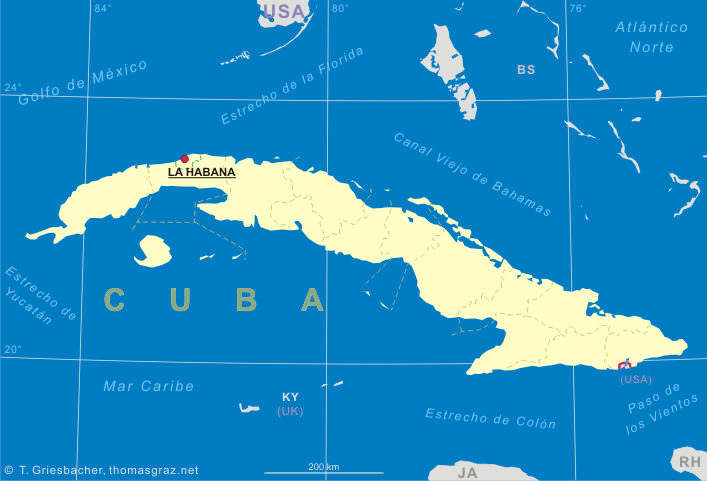
Cuba trades with the rest of the world. Castro, Inc. has been very profitable in the years following la revolución. Does the US embargo really matter as a practicality?
US President Barak Obama has shown leniency toward leftist gains in Latin America at the expense of freedom.
Will he seek more plaudits from the International Left and reward Castro,Inc.?
Or will he ignore the clamor for a change in Washington's 50-plus year policy toward Havana?
***
If you need research from open sources in Spanish, French, or Portuguese and presented in a stylish English language report or a translation of documents in said languages to English, please contact Professor Winn at by sending an email to mrenglish101@gmail.com for a prompt evaluation.
Sunday, July 11, 2010
75 Freed Political Prisoners = End of US embargo on Cuba?

With another hunger-striker near death, El Máximo Castro reappears in public (again, only still-shots), and in an apparent breakthrough on the release of a block of unjustly jailed political opponents, some observers believe it is a win-win for the rogue regime in La Habana. If not, it would not have happened.
Madrid´s El País has led the coverage of Cuba´s biggest release to date of 75 presos políticos (political prisoners) in a deal evidently brokered by Spanish Foreign Minister Miguel Ángel Moratinos Cuyabué.
The move drew jeers from influential Cuban-American blogger,Alberto de la Cruz, accusing Spain of "scheming behind closed doors with a murderous regime and the compromised and immoral leadership of the Catholic church in Cuba."
Undeniably, Spain under the unsteady leadership of socialist President José Luiz Zapatero, has been manipulated by the regime to gain coveted favorability by the European Union.
Moreover, the influential daily El Nuevo Herald in Miami reports the prisoner release is "...sólo una concesión táctica de un gobierno que enfrenta una fulminante crisis económica y es improbable que a largo plazo suavice medio siglo de autoritarismo y mano dura.(only a tactical concession by a regime facing a worsening economic crisis and it is unlikely to ease its half-century of authoritarian control in the long term).
Alas, is the door finally open for the left-leaning US President Barak Obama to ease, if not end the embargo, on the repressive prison paradise island?
Such a bold policy change would hand Castro, Inc. its long-sought moral victory and mark a total defeat in the US´s Cuba policy.
The Democrat-run House Agriculture Committee voted last week to ease the tough travel restrictions which allows more dollars to flow into Castro, Inc.´s coffers, moving the US closer to hollowing out the embargo.
Unfortunately, the trend is toward a "bailout" of Castro, Inc., not preparing for its burial as GSM mulled in its Top 6 Strategic Questions for 2010.
***
If you need research from open sources in Spanish, French, or Portuguese and presented in a stylish English language report or a translation of documents in said languages to English, please contact Professor Winn at by sending an email to wtglobalanalytics@gmail.com for a prompt evaluation.
Tuesday, June 29, 2010
USA in Disarray
The United States of America continues to be a country at grave risk in an increasingly dangerous world.
Worse, the USA is in total disarray at the highest levels of governance.
Team Obama appears bent on an economic, political, and social suicide pact. The much-ballyhooed trillion dollar "stimulus" plan has not revived the economy. There is a limit to government-inspired stimulus as any thoughtful Keynesian knows. Given most of the money allocated was political, not economic, who can be surprised?
The deficit grows wildy and the national debt nears 100% of GDP. Secretary of Treasury Geitner told the BBC that the world "cannot depend as much on the (United States) as it did in the past." That is a whopper of a statement, but certainly true with anti-capitalists running the show, right Mr. Geitner?
The USA is a Greece times ten and the day of reckoning is closer than many think.
Politically, the leftist minority in the US holds the levers of power in a center-right country, as confirmed by the latest Gallup poll. The current Congress will surely be reconstituted with less Yes-Obama votes after the November elections this year. Mr. Obama is lucky he is not up for re-election this year.
The passage of socialist health care by shear force against the will of the people has not been forgotten. One of the most important pieces of social legislation in a half-century will be imposed on a public that cherished their own private insurance plans. Given socialist health care is a manner to control the people and not about health care (since it is a wreck in every country that has tried to implement such a scheme), the American populace is rightfully outraged.
The current malaise in the USA could have been at least mitigated had Mr. Obama not won in November 2008. However, enough of the American people took a powder on election day and now have buyer´s remorse.
It is too late. When a citizenry collectively decides to toss away their responsibilities, candidates like Mr. Obama flourish.
Now with the USA in total decline and a president and his team dedicated to accelerating it, in the end, the American people can only blame themselves for the disarray in which they find their country.
Saturday, May 8, 2010
A Grim Future for the EU - Report

Alors que l’Europe commémore dimanche 9 mai 2010 - la journée de l’Europe -, le 60e anniversaire de la Déclaration Schuman, un rapport du « groupe des Sages » de l’UE rendu samedi 8 mai sur l’avenir de l’Europe n’est pas très optimiste et met en garde contre la « marginalisation » du continent face à l'Asie.
As Europe commemorates "the European journey" on Sunday, May 9, with the 60th anniversary of the Schuman Declaration, a report by the EU's "Group of Wise Ones" delivered on Saturday, May 8, is less optimistic and warns against the "marginalization" by Asia.
GSM thought the crises (plural) so severe facing the EU - from immigration and energy woes to the fear of a growing youthful and angry Muslim population to the failed welfare state - that it ranked as our 6th Strategic Question for 2010. In February we pointed out that the EU is Evaporating.
The premises of the EU sow the seeds of its current (and continuing) problems. Namely, the nation-states cannot disown their political, economic, and social history for a pan-European vision of cooperation, unity, and a "one for all and all for one" sentiment.
Secondly, socialism is a costly failed economic system. The EU is sinking fast because it cannot afford its generious welfare state.
Socialism is based on theft. After stealing the wealth from the risk-takers and the productive, the "Golden Goose" is eventually killed. Little productivity, less innovation, and mounting debt compared to other economic actors in the world do marginalize the faux European union.
While Greece, Portugal, and Spain figure heavily in the current economic crisis, other EU states are far from perfect models for economic success.
The entire EU experiment is in question and the continuing decline of the euro currency inexorably leads to a possibly frightful denouement.
***
If you need research from open sources in Spanish, French, or Portuguese and presented in a stylish English language report or a translation of documents in said languages to English, please contact Professor Winn at by sending an email to mrenglish101@gmail.com for a prompt evaluation.
Thursday, February 25, 2010
EU Evaporating
 The European Union is sinking.
The fabrication of a faux union of disparate nation states has been a total calamity. The main economic system - statism - is undermining governments from the United Kingdom to Greece.
Unionists poured into the streets of Madrid, Barcelona, and Valencia on Monday to fiercely oppose the modest cuts in public spending to reduce Spain´s public deficit and move up the retirement age to 67.
In France on Wednesday, unionists hit the streets (Les retraités descendent dans la rue - Retirees hit the streets) to demand higher retirement payments and maintaining the retirement age at 60. Fresh French unemployment figures from January confirm a total 2.6 million out of work.
Greece, the fulcrum of the current financial crisis threatening to unravel the entire EU, a national strike called by the "des grandes centrales syndicales" (largest unions) led to violent clashes with security forces. The S&P reports another downgrade of Greek debt is possible.
Spain, Greece, and Portugal are not the only three EU member states facing daunting economic problems and rising anger among their citizens.
More countries could violate the 3 per cent deficit limit of GDP imposed by the EU's Stability and Growth pact: Austria, Belgium, Czech Republic, Germany - the EU's largest economy - Italy, the Netherlands, Slovakia and Slovenia.
So, while the whole house of cards, aka European Union, continues to fall, the Brussels Euro-crats have now set sights on another successful American technology company - Google.
By the way, where is the EU's own Google? Just like the Microsoft case in the 1990s, where is the EU's answer to Microsoft? The answer is sending in the lawyers to litigate anti-trust suits. Euro-crats tear down, not build up.
More good news for the EU? Spain, the current EU president, announced a successful conclusion to the controversial and budget-busting project for its A400M cargo plane. Billions of euros in cost overruns have saved or created probably 10,000 jobs, but at what a cost.
Industrial policy, part and parcel of statism, is another reason the EU is in the death throes.
Once Greece exits from the euro monetary system, expect an acceleration of European Disunion.
Sunday, January 10, 2010
Showdown in Buenos Aires

Her latest quick-cash scheme set off an institutional crisis when she fired the Central Bank Director, Martín Redrado, last week when he refused the Casa Rosada´s request (demand). The opposition Congress which finally was seated six months after La Presidenta hurried up parliamentary elections from October to June for political advantage (suffering a stunning electoral defeat instead) sought judicial action to block the cash grab since the reserves are under legislative, not executive branch control.
La Presidenta thus has jeopardized the independence of the Central Bank, the last economic institution with any credibility in the country and ran afoul early of the opposition-controlled Congress. Not leaving the judicial branch out of the action, when Judge María José Sarmiento reinstated Mr. Redrado as Central Bank Director, the police visited her house to harass when she affirmed that the Casa Rosada would have to wait till Monday to appeal her decision.
In 2008, La Presidenta emptied the retirement accounts of Argentines to pay for her priorities. Statism is not the prescription for Argentina's woes. World history repudiates this folly.
Before the last Parliament expired, she sought to curb the press and now faces a tumultuous year before her supposed re-election campaign in 2011.Criticism is intolerable.
Argentina suffered an intractable economic challenge before the Kirchners arrived, but husband and wife have benefited handsomely (un vertiginoso crecimiento de la fortuna familiar) while the common Argentine continues to lose ground and faces continual destitution.
As their number one press enemy El Clarín opined recently, the problem now facing the presidential power duo is cómo gobernar sin plata y sin mayorías (how to govern without money and without majorities).
The showdown in Buenos Aires weighs on more than the future of La Presidenta, but the whole of Argentina to finally recover from the humiliating fall in the disastrous economic crisis of 2001.
***
If you need research from open sources in Spanish, French, or Portuguese and presented in a stylish English language report or a translation of documents in said languages to English, please contact Professor Winn at by sending an email to mrenglish101@gmail.com for a prompt evaluation.
The Venezuelan Quagmire

Despite having the world´s sixth proven oil reserves and even a larger(170 trillion cubic feet) of natural gas, Venezuela faces an acute energy crisis. English -language news accounts single out one dam as the linchpin of energy supply while others paint a picture of imminent collapse of the energy infrastruture. Not only do businesses face a 9pm shut off of power, bureaucrats are now scheduled for a five hour workday.
Adding to the country´s economic woes, the truly signifcant news was Mr. Chavez´s summary devaluation the currency on Friday night, el viernes rojo (Red Friday) by 50%. The bolivar has already dropped from 4 to nearly 7.5 to the US dollar. The New York Federal Reserve has an excellent article on the motives and effects of devaulation or revaluation of a currency.
However, in the special case of Chavez´s Venezuela, the Spanish-language press is very useful to track down the transparent motivations - self-preservation.
According to an economist close to the opposition, the revaluation darle más plata al Gobierno sacándosela del bolsillo de la gente. El economista Orlando Ochoa añadió que con esta medida el Gobierno duplicará sus ingresos en un año de elecciones parlamentarias.
...gives more money to the government by taking more from the people. Economist Orlando Ochoa added that this measure will double its revenues in a year of parliamentary elections.
As the mayor of Caracas stated following the move, "Quien necesite comprar algo el día de mañana, le costará el doble." Anyone who needs to buy something this morning, it will cost double. More poverty for the people, a fine socialist model for others in Latin America to emulate.
In order to deflect attention away from the country´s dire economic straits and his cruel misrule, Mr. Chavez accused the United States last week of violating its airspace with a P-3 Orion spy plane and purportedly brandished a photo as evidence. Even The Netherlands was weaved into the zany Chavez narrative since tourist haven Aruba is supposedly a base for these spy planes.
While Mr. Chavez fancies himself as the successor of the Gray Wolf in La Habana to continue the struggle for la revolución in one manner, thankfully he is half as clever and smart. Unfortunately for the Venezuelan productive class, the country must pay the ultimate price for Chavez's shenanigans.
***
If you need research from open sources in Spanish, French, or Portuguese and presented in a stylish English language report or a translation of documents in said languages to English, please contact Professor Winn at by sending an email to mrenglish101@gmail.com for a prompt evaluation.
Thursday, October 29, 2009
An American decline would undermine global security | csmonitor.com
 If, when the chips are down, the world's most powerful nation, the United States of America, acts like a pitiful, helpless giant, the forces of totalitarianism and anarchy will threaten free nations and free institutions throughout the world. - Former US President Richard Nixon in national address, April 30, 1970
An American decline would undermine global security | csmonitor.com: "Crude Awakenings' and 'The Absence of Grand Strategy.'"
While Dr. Yetiv´s central thesis is sound, US decline is already underway. The US as the great stabilizer of the international system is shattered like glass.
Moreover, America´s future as a great power is in the hands of its effete elites more than external forces. The current US administration denies America´s unique role in the world and seeks actively to diminish it. Thus the decline will become more pronounced in the coming years and global security will be jeopardized.
Internal difficulties - economic, social, and political - are undoing the US as a great power. Its financial house is in disarray while the current administration envisions adding more burdens through universal health care, extreme environmental restrictions, and a weaker dollar. The Social Security and Medicare programs are running in multi-trillion dollar debts. The political class is decadent, rudderless, and lacks the courage to confront domestic and foreign realities.
The failure to lead and lack of will to lead hasten the US decline. The great stabilizer in the past century of world history is steadily weakening from within with the active acknowledgment of its political class. Democracies more often decay from internal, not external, forces.
So, Dr. Yetiv´s tome may serve more as a historical chronicle of US foreign policy rather than a guiding light in an increasingly complex and dangerous world absent of US leadership.
Monday, February 2, 2009
Bangkok Bungling

credit: Bangkok Post
Thailand continues in crisis as up to 30,000 United Front of Democracy against Dictatorship (UDD) redshirts filled the Government House compound to deliver three demands to their ruling government Prime Minister Abhisit Vejjajiva (third PM in five months) to remove Foreign Minister Kasit Piromya, dissolve the House and take action against its rival People's Alliance for Democracy (PAD).
Gnawing political instability negatively impacts the Thai economy that contracted by as much as 2 per cent over the fourth quarter of 2008, according to its central bank.
Indeed Thailand is borrowing $2 billion to boost an ailing economy nearing its first recession since 1999.
Bangkok Bungling in political and economic affairs is sending the wrong signals to the international community and certainly tourists whose spending comprises 30% of GDP.
Subscribe to:
Posts (Atom)