Global Security Headlines

Showing posts with label India. Show all posts

Monday, January 3, 2011

Chinese Missile Buildup - Opportunity or Threat?

Three countries worry policymakers the most in Western capitals: China, North Korea, and Iran.  The first two have nuclear weapons and the latter is in hot pursuit.

All three are proliferators of missile and nuclear technology to some degree. China and Iran seek to dominate their respective regions at the expense of US power.

China's many objectives, one focus
An important article last weekend in the Washington Post tackles China's conventional missile buildup: Why China's missiles should be our focus.

Authors Mark Stokes and Dan Blumenthal see the New START ratified by the US Senate last December as misguided given Beijing's conventional short and intermediate-range ballistic and cruise missiles.

Beijing benefits as a non-signatory of the US-Russian INF (Intermediate Nuclear Forces) Treaty from the Cold War.

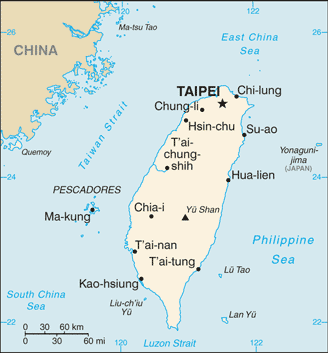
That China is building military power commensurate with its growing economic power is not news. While intense debate centers upon Beijing's many objectives, an ''overriding'' focus remains reunification with Taiwan.

Missile Manipulation
China's most aggressive missile program in the world threatens the East Asian power calculus. The article lists the multifaceted missile program. (see an Economist.com graphic)

Its over 1,200 short-range missiles are aimed squarely at manipulating and recapturing the ''renegade province,'' Taiwan.

Its long and intermediate-range ballistic and cruise missiles advance an anti-access/denial strategy to deter any US defense of Taiwan given Washington's formal commitment to Taipei.

In particular, Beijing's DF-21D anti-ship ballistic missile (ASBM), the so-called ''carrier killer'' concerns defense planners.

For decades, China has pursued a gambit to use land-based missiles to threaten targets at sea.

Implications
The Chinese missile buildup is an opportunity to soberly size up its existential threat to the Western Pacific, home for two of the world's largest economies and strategic choke points.

The credibility of the US commitment to Taiwan is under strain as China's Second Artillery intends to intimidate neighbors (India and Japan) and drive the US out of the region.

The arrival of the Asian century, China's rise to global power status, and relative US decline portend seismic shifts in global security.

It is time for Realpolitik approaches by freedom-loving states to counter the emerging military threats from the China challenge to the tense peace in the region today.
***
If you need research from open sources in Spanish, French, or Portuguese and presented in a stylish English language report or a translation of documents in said languages to English, please contact Professor Winn at by sending an email to mrenglish101@gmail.com for a prompt evaluation.

Saturday, January 1, 2011

Top 6 Strategic Questions for 2011

The past is prologue.

As we go forward, issues trending in the international affairs arena in 2010 are poised to intensify in 2011.

It is easy to get lost in daily press reports and miss the fundamental understanding of what really is happening.

While no one can accurately predict the future course of global security no more than the weather, informed estimates of military and diplomatic analyses must be made.

As GSM peers down the road, we ask the following 6 Strategic Questions (see our questions in 2010) to provoke thought and focus debate on the issues impacting global security now and likely in the near future.
_____________________________________________________
1. Does despotism deepen in Russia ahead of 2012 presidential elections? Putin's Russia slid closer to a  one-man rule in 2010. Curiously the titular president Medvedev pressed his US counterpart Obama to ratify the ''new'' START Treaty for reductions in nuclear ICBMs and limits on future development of any anti-ballistic missile systems. But, the Russian Duma did not see any urgency at all and deferred any action until this year. The rule of law was severely weakened with the recent imprisonment of Mikhail Khodorkovsky and Platon Lebedev, former Yukos oil executives, for what many observers see as a penalty for opposing Putin. His grip is tightening on all parts of the government ahead of his expected run in the 2012 presidential elections.

2. Is the Middle East destined for another armed clash? The Economist muses about clashes between Israel and Iran, its newly-replenished Hamas and Hizbolla proxies, and even Syria over Tehran's nuclear quest. Events last year could precipitate fighting in 2011. The spectacular failure of the latest US-led round of Palestinian-Israeli peace talks weighs on the scale. While estimates vary of when Iran may ''go nuclear'' given delays from the Stuxnet computer virus attack, it is possible Israel could decide to act sometime this year.

3. Can Calderon of Mexico save his country from narcoterrorism? Mexico is torn asunder by the war between the narcotraficantes and the government and internecine savagery between rival cartels for primacy. More than 22,000 have died since Presidente Felipe Calderón cracked down on the narcos and the border with the US is on fire. The systemic corruption, a weak judiciary, and suspect  federales only complicate any ''victory'' over the well-armed and well-financed narcos. US planners as far back as 2008 pondered a total collapse of the country. Calderón must act decisively to avoid that fate.

4. Does Brazil solidify its ''middle power'' status and stand up for freedom? Happy talk surrounds Brazil, Latin America's largest country and economy. Brazilians begin 2011 with a new president, Dilma Rousseff, the first female to take charge in Brasilia. Its oil success, if managed well, could pave the path to an economically stronger and less poorer regional  hegemon. Outgoing President Lula left Brazil better after 8 years of rule. However if Ms. Rousseff continues his left-bent embrace of neighbor Chavez and outreach to Iran by meddling again in the nuclear question, the turn away from supporting freedom abroad would detract from Brazil's attempt to gain international currency. Is Brazil ready for prime time?

5. Does India effectively balance against the Sino-Pak encirclement? China is India's chief adversary in south Asia. Beijing's ''string of pearls'' encirclement of India is nothing new. As both a maritime and land power, its regional power projection gives New Delhi options to counter the Sino-Pak gambit. US President Obama's visit last November bolstered India's standoff with both its neighbors. The chaos in the Afghanistan-Pakistan theater and China's rising aggressiveness challenge India to chart a delicate course.

6. Is there peaceful reunification on the Korean peninsula? Leadership transitions in totalitarian regimes are often dicey deals and in a regime as opaque as North Korea, doubly. Kim Jong-il named his third son as successor, a mere 27 year-old, to head up the dying regime in Pyongyang. While some observers say the transition is in its early stages, it is clear that freedom-loving countries including South Korea can barely spare any more existence of the nuclear-tipped, nuclear proliferating, and otherwise thuggish gang in Pyongyang. China, however, does not want a democratic and unified Korea on its border and thus continues to subsidize and prop up the NE Asian menace. Along with its proxy Iran, China can frustrate US goals in the respective regions. North Korea is enriching uranium and antagonizing the South at will, all in the throes of a transition. Is it possible the Pyongyang gang's lease on life is running short?
_____________________________________________________
GSM is committed to providing the keen analysis our loyal readers demand and deserve.

Count on our continued commitment to providing the information and insights you have come to enjoy.

Happy 2011!

***If you need research from open sources in Spanish, French, or Portuguese and presented in a stylish English language report or a translation of documents in said languages to English, please contact Professor Winn at by sending an email to mrenglish101@gmail.com for a prompt evaluation.

Saturday, October 2, 2010

Unease on Brazil's Election Eve, Dispatch from São Paulo

Dilma Rousseff, presidenta in waiting 
Dateline: São Paulo, Brazil, 18h02 BST

All that is left is the voting.

Short of a stunning reversal, Dilma Rousseff of the incumbent Partido Trabalhista (Workers' Party) will become Brazil's first woman president with a knock-out in the first round on Sunday.


Unease

Widely-popular President Luiz Ignacio Lula da Silva tapped her to succeed him and his adoration by the masses will probably translate into an overwhelming victory.

However, her own governing agenda is deliberately an enigma and her constant dodging of public debates with her lackluster opponents only can fuel unease about the prevailing thought that a vote for Dilma is a vote for continuity.

Sadly, it is not. There is no evidence Dilma will follow the same pragmatic policy prescriptions which conferred superstar status on President Lula.

As a former guerrilla fighter who was tortured upon capture in the 1970s during the country's right-wing military dictatorship, she is still a ''true believer'' cut from the Latin American Leftist revolutionary quilt.

The presidential contest has been marred by dirty tricks against Dilma's closet opponent, Jose Serra, at the hands of Partido Trabalhista apparatchiks in the bureaucracy, press censorship when the story leads too close to the ruling party, and sharp barbs by Lula aimed at the Fourth Estate for seeking the truth. All should be red flags for those voting for continuing one-party rule in Brazil.

However, Dilma's political career outside the ranks of revolutionary has been marked by controversies.

Socio-Economic-Political Success
Lula, to his credit, kept his predecessor’s liberal economic policy orientation and restored market confidence in Brazil by taming inflation and stepping up privatization.  A larger middle class has rapidly emerged since 2003. Over 30 Brazilian firms figure in Forbes 2000 list released in April this year. Petrobras, the state-shared mega-oil conglomerate, just garnered $70 billion in its first public stock offering.

Ironically Lula presided over an economic miracle which surely would not have occurred with his own party's command and control philosophy.

Brazil, the ''B'' in the so-called BRIC (Brazil Russian India China) club of developing states is thus prosperous and growing even with a perceived overvalued real currency.  High tax revenues from a churning economy allowed social experiments like the uneven Bolsa Familia program to fight the country's crippling poverty. Official government figures show a 81% drop in poverty between 1995 and 2008 with much more to be done.

Errant Foreign Forays
Strong economics at home has accrued a measure of diplomatic clout abroad though squandered some by President Lula.

He cozied up to Terror,Inc. in Tehran including brokering  a deal with Turkey that attempted to shield the Islamic Republic from ''tough'' UN sanctions over its nuclear armament gambit.

Lula's closeness with President Chavez in Venezuela and his remarks in March comparing Cuban political dissidents to ''criminals'' for only wanting freedom are disturbing.

Dilma's Dilemma
''The world's most powerful woman,'' as dubbed by the UK's Independent, should she indeed win to lead Brazil forward into the twenty-first century must prove she will really continue with Lula's sensible policies and not fall back to the Latin American Left's ruinous socio-economic-political policies.

The new president inherits a Brazil brimming with promise, reveling in oil wealth, and enjoying broad respect around the world.

As usual in transitions within the same ruling party, the trick is to sustain the past victories and build upon them for a more successful tomorrow. Can a President Rousseff deliver?
****
If you need research from open sources in Spanish, French, or Portuguese and presented in a stylish English language report or a translation of documents in said languages to English, please send an email to wtglobalanalytics@gmail.com for a prompt evaluation.

Sunday, December 20, 2009

China Can Say ‘No’


The real story out of COP15, the so-called Climate Change Conference in Copenhagen, is not the curious quest for an international agreement based on dubious science.

It is the conspicuous display of China’s full diplomatic, and economic strength on the world stage and the eclipse of US prestige.

China Leads

China hosted a closed door meeting among other partners with India and Brazil to thwart any legal binding stipulations to put teeth into any accord pushed by the United States. While it is not confirmed that Russia attended, the BRIC bloc (Brazil, Russia, India, and China) came alive in Copenhagen.

The BRIC bloc represents the four top developing nations whose weight on the world stage is increasing every day.

Surrounded by its BRIC bloc partners, China asserted its role clearly as a leader of the “non-aligned” less-developed countries at the Copenhagen conference. This was China’s tact during the Cold War and remains a guiding principle in its international statecraft.

BRIC Ascendancy


It was US President Barak Obama who sought out Chinese Premier Wen Jiabao, not the reverse, to salvage a minimal and meaningless “declaration of principles” so he did not appear to leave Copenhagen empty handed twice in a span of two months.

China told the US ‘no’ on any binding targets for reduction of CO2 gas emissions on which its economy is dependent for exports as a developing country. It will not sacrifice its economic progress and date with history based on dubious science.

The BRIC bloc is emerging as an effective counterweight to declining US primacy.

China Snubs

The Sino-US standoff began as soon as US President Obama arrived on Friday in Copenhagen. Premier Wen took umbrage from an extemporaneous line in the president's speech in a slightly veiled reference to China by insisting on "sharing information and ensuring we are meeting our commitments."

Later that afternoon in a negotiation round, he and Secretary of State Hillary Clinton cooled their heels with three low-level Chinese delegates who could not make any political decisions. That was only the first diplomatic snub.

US Prestige Drops

The amateurish US diplomatic play by President Obama to crash China's closed door meeting (to which it was pointedly not invited) in order to desperately force even an unbinding agreement will certainly be noted by the BRIC bloc and other adversaries in the world.

The rapid drop of US prestige in the world less than one year into the naïve president’s term is quite shocking.

The Sino-US chilliness is palpable. China's handling of the weak US president has broader implications. A China that can say 'no' to the US has already risen.

The fissures exposed among the international players in Copenhagen augur a more competitive global security environment at the expense of Washington. The die is cast.
***
Please follow us on Twitter name:@wtglobalanalytics and visit our blog at globalsecuritymonitor.blogspot.com.
If you need research from open sources in Spanish, French, or Portuguese and presented in a stylish English language report or a translation of documents in said languages to English, please contact Professor Winn at by sending an email to mrenglish101@gmail.com for a prompt evaluation.
64G3JEUKBNP3

Sunday, April 12, 2009

Israel’s Iran Dilemma by S. Samuel C. Rajiv

credit: AFP - Israeli Arrow Interceptor Missile Launch

Israel’s Iran Dilemma by S. Samuel C. Rajiv

Mr. Rajiv at India's Institute for Defence Studies and Analyses (IDSA) lays out in frank terms the dilemma Israel faces in countering the budding Iranian nuclear missile challenge.

As the new US president extends the olive branch to his country's longtime foe, and Iran's leader boasts of centrifuges and unwillingness to halt the march toward nuclear weaponry, analysts wonder about the next moves of the new Israeli prime minister.

Is deterrence enough? Does Israel have the necessary supplies to project "extended deterrence?"

Mr. Rajiv methodically examines Jerusalem's limited options.

Get your International Policy books today!

Wednesday, February 4, 2009

credit: defense-update.com

Russian news agency, RIA Novosti, reports exhibition of the MiG-35 (Fulcrum F) at Aero India 2009 on February 11-15, 2009 at Yelahanka, Bangalore, India.

The largest air show in south Asia allows Russia to showcase its Multirole Front-Line Fighter offering an extremely maneuverable, all-axial deflected vectored thrust "DTV" engine which first debuted in 1999.

Speaking of maneuverability, Russia was the first to master real thrust vectoring and build it into a serving combat aircraft design: the Sukhoi Su-30MKI, which uses single-axis or up-and-down vectoring.

The move comes as India contemplates buying 126 multi-role combat aircraft (MRCA) in a multi-billion dollar deal (largest since early 1990s) to replace its ageing MiG-21 aircraft.

India and Russia share a 50 year military relationship. The Indian military is full of Russian aircraft, helicopters, submarines, and tanks.

Attractive Options

The MiG-35 is an attractive option for New Delhi. Along with improvements in keeping maintenance costs lower, the MiG-35 also comes with "modern glass cockpit designed with three 6x8 inch flat-panel LCDs and full HOTAS controls, digital map, helmet-mounted sight."

The latest Zhuk-AE active electronically scanning array (AESA) is "one of the most important, if not the most important development in radar technology since the 1940s."

The MiG-35 builds on the MiG-29 which India flies about 65. Ease of part acquisition, training, etc. favor the acquisition of the MiG-35s over the US F/A-18s and/or F-16s.

In Sum

India's multidirectional international policy engages the major powers on a somewhat equal basis from China to Russia to the United States. As India develops as a major world power in its own right, its arms purchases from 1998 to 2005 topped all of the developing world.

The US would like to cultivate an arms supplier relationship as close as Russia's with India.

However, it appears unlikely as New Delhi's expected green light to Moscow on the MiG-35 will demonstrate.