The Western powers, led presumably by France and the United Kingdom, not the United States, have made a tragic mistake entering into the Libyan civil war.
Curious Motives
While the plight of the Libyan people is cited, the West's motivations for intervention in the Libya affairs are circumspect. The Libyan people have been held captive for over 40 years by the madman in Tripoli.
Their plight is now an international issue?
Paris and London are curious leaders of the military operations against the murderous Khadafy regime.
President Sarkozy of France is still reeling from the forced resignation of his foreign minister, Alliot-Marie, in wake of the Tunisian rebellion and her scandalous links to the former dictatorship in Tunis.
Prime Minister David Cameron's UK (under former Labour PMs Blair and Brown) paved the way for the release of the so-called "Lockerbie bomber" from prison in Scotland.
The United States has been very reluctant to take any position beyond empty rhetoric against one of its presumed inveterate enemies who sponsors international terrorism.
President Barak Obam had been hailed as a "friend" by Colonel Khadafy, and gently refers to "Libya" only in his remaks on the subject, avoiding Khadafy by name.
Too little, too late
While Colonel Khadafy is not unlike other blood-soaked autocrats without any legitimacy in MENA (Middle East and North Africa), the die is cast: Benghazi, the last significant rebel holdout and capital of "Free Libya" is bound to fall back into his fold.
The half-hearted Western response is too little too late.
Beyond the landing of ground forces to stop the pro-Khadafy forces advance on Benghazi, and short of forcefully removing the Tripoli tyrant, the military maneuver will be seen as an ineffectual foray.
Post-Uprising Libya
Khadafy is likely to unleash a wave of oppression in wake of his victory.
While weakened, he will have the resources to reform his military and security apparatus to remain in power.
The Western powers will have no leverage to manage the ''mad dog'' after the attacks.
"Limited" military action does not exist in the global security lexicon. Victory is what counts.
London, Paris, and Washington are officially at war with Tripoli. The trio is now committed to the rebels and their defeat will be the defeat of the Western powers.
Khadafy's propensity for terrorism is just one worrisome result from the failed Western intervention.
The West's tragic mistake of ''intervention on the cheap'' will make Libya more dangerous and belligerent in an increasingly unstable MENA bordering on war.
***
If you need research from open sources in Spanish, French, or Portuguese and presented in a stylish English language report or a translation of documents in said languages to English, please contact Professor Winn at by sending an email to mrenglish101@gmail.com for a prompt evaluation.
Global Security Headlines
Showing posts with label US. Show all posts
Sunday, March 20, 2011
Ineffectual Libya Foray
Labels:
France,
Libya,
Mr. Cameron,
President Obama,
Sarkozy,
United Kingdom,
US
Monday, January 3, 2011
Chinese Missile Buildup - Opportunity or Threat?
Three countries worry policymakers the most in Western capitals: China, North Korea, and Iran. The first two have nuclear weapons and the latter is in hot pursuit.
All three are proliferators of missile and nuclear technology to some degree. China and Iran seek to dominate their respective regions at the expense of US power.
China's many objectives, one focus
An important article last weekend in the Washington Post tackles China's conventional missile buildup: Why China's missiles should be our focus.
Authors Mark Stokes and Dan Blumenthal see the New START ratified by the US Senate last December as misguided given Beijing's conventional short and intermediate-range ballistic and cruise missiles.
Beijing benefits as a non-signatory of the US-Russian INF (Intermediate Nuclear Forces) Treaty from the Cold War.
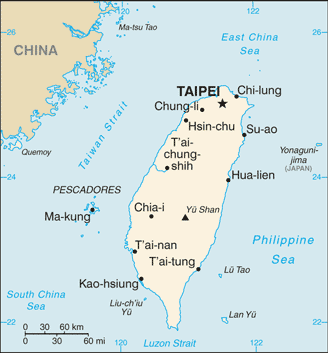
That China is building military power commensurate with its growing economic power is not news. While intense debate centers upon Beijing's many objectives, an ''overriding'' focus remains reunification with Taiwan.
Missile Manipulation
China's most aggressive missile program in the world threatens the East Asian power calculus. The article lists the multifaceted missile program. (see an Economist.com graphic)
Its over 1,200 short-range missiles are aimed squarely at manipulating and recapturing the ''renegade province,'' Taiwan.
Its long and intermediate-range ballistic and cruise missiles advance an anti-access/denial strategy to deter any US defense of Taiwan given Washington's formal commitment to Taipei.
In particular, Beijing's DF-21D anti-ship ballistic missile (ASBM), the so-called ''carrier killer'' concerns defense planners.
For decades, China has pursued a gambit to use land-based missiles to threaten targets at sea.
Implications
The Chinese missile buildup is an opportunity to soberly size up its existential threat to the Western Pacific, home for two of the world's largest economies and strategic choke points.
The credibility of the US commitment to Taiwan is under strain as China's Second Artillery intends to intimidate neighbors (India and Japan) and drive the US out of the region.
The arrival of the Asian century, China's rise to global power status, and relative US decline portend seismic shifts in global security.
It is time for Realpolitik approaches by freedom-loving states to counter the emerging military threats from the China challenge to the tense peace in the region today.
***
If you need research from open sources in Spanish, French, or Portuguese and presented in a stylish English language report or a translation of documents in said languages to English, please contact Professor Winn at by sending an email to mrenglish101@gmail.com for a prompt evaluation.
All three are proliferators of missile and nuclear technology to some degree. China and Iran seek to dominate their respective regions at the expense of US power.
China's many objectives, one focus
An important article last weekend in the Washington Post tackles China's conventional missile buildup: Why China's missiles should be our focus.
Authors Mark Stokes and Dan Blumenthal see the New START ratified by the US Senate last December as misguided given Beijing's conventional short and intermediate-range ballistic and cruise missiles.
Beijing benefits as a non-signatory of the US-Russian INF (Intermediate Nuclear Forces) Treaty from the Cold War.
That China is building military power commensurate with its growing economic power is not news. While intense debate centers upon Beijing's many objectives, an ''overriding'' focus remains reunification with Taiwan.
Missile Manipulation
Its over 1,200 short-range missiles are aimed squarely at manipulating and recapturing the ''renegade province,'' Taiwan.
Its long and intermediate-range ballistic and cruise missiles advance an anti-access/denial strategy to deter any US defense of Taiwan given Washington's formal commitment to Taipei.
In particular, Beijing's DF-21D anti-ship ballistic missile (ASBM), the so-called ''carrier killer'' concerns defense planners.
For decades, China has pursued a gambit to use land-based missiles to threaten targets at sea.
Implications
The Chinese missile buildup is an opportunity to soberly size up its existential threat to the Western Pacific, home for two of the world's largest economies and strategic choke points.
The credibility of the US commitment to Taiwan is under strain as China's Second Artillery intends to intimidate neighbors (India and Japan) and drive the US out of the region.
The arrival of the Asian century, China's rise to global power status, and relative US decline portend seismic shifts in global security.
It is time for Realpolitik approaches by freedom-loving states to counter the emerging military threats from the China challenge to the tense peace in the region today.
***
If you need research from open sources in Spanish, French, or Portuguese and presented in a stylish English language report or a translation of documents in said languages to English, please contact Professor Winn at by sending an email to mrenglish101@gmail.com for a prompt evaluation.
Labels:
Ballistic Missiles,
China,
India,
Iran,
Japan,
North Korea,
US,
Western Pacific
Saturday, January 1, 2011
Top 6 Strategic Questions for 2011
The past is prologue.As we go forward, issues trending in the international affairs arena in 2010 are poised to intensify in 2011.
It is easy to get lost in daily press reports and miss the fundamental understanding of what really is happening.
While no one can accurately predict the future course of global security no more than the weather, informed estimates of military and diplomatic analyses must be made.
As GSM peers down the road, we ask the following 6 Strategic Questions (see our questions in 2010) to provoke thought and focus debate on the issues impacting global security now and likely in the near future.
_____________________________________________________
1. Does despotism deepen in Russia ahead of 2012 presidential elections? Putin's Russia slid closer to a one-man rule in 2010. Curiously the titular president Medvedev pressed his US counterpart Obama to ratify the ''new'' START Treaty for reductions in nuclear ICBMs and limits on future development of any anti-ballistic missile systems. But, the Russian Duma did not see any urgency at all and deferred any action until this year. The rule of law was severely weakened with the recent imprisonment of Mikhail Khodorkovsky and Platon Lebedev, former Yukos oil executives, for what many observers see as a penalty for opposing Putin. His grip is tightening on all parts of the government ahead of his expected run in the 2012 presidential elections.
2. Is the Middle East destined for another armed clash? The Economist muses about clashes between Israel and Iran, its newly-replenished Hamas and Hizbolla proxies, and even Syria over Tehran's nuclear quest. Events last year could precipitate fighting in 2011. The spectacular failure of the latest US-led round of Palestinian-Israeli peace talks weighs on the scale. While estimates vary of when Iran may ''go nuclear'' given delays from the Stuxnet computer virus attack, it is possible Israel could decide to act sometime this year.
3. Can Calderon of Mexico save his country from narcoterrorism? Mexico is torn asunder by the war between the narcotraficantes and the government and internecine savagery between rival cartels for primacy. More than 22,000 have died since Presidente Felipe Calderón cracked down on the narcos and the border with the US is on fire. The systemic corruption, a weak judiciary, and suspect federales only complicate any ''victory'' over the well-armed and well-financed narcos. US planners as far back as 2008 pondered a total collapse of the country. Calderón must act decisively to avoid that fate.
4. Does Brazil solidify its ''middle power'' status and stand up for freedom? Happy talk surrounds Brazil, Latin America's largest country and economy. Brazilians begin 2011 with a new president, Dilma Rousseff, the first female to take charge in Brasilia. Its oil success, if managed well, could pave the path to an economically stronger and less poorer regional hegemon. Outgoing President Lula left Brazil better after 8 years of rule. However if Ms. Rousseff continues his left-bent embrace of neighbor Chavez and outreach to Iran by meddling again in the nuclear question, the turn away from supporting freedom abroad would detract from Brazil's attempt to gain international currency. Is Brazil ready for prime time?
5. Does India effectively balance against the Sino-Pak encirclement? China is India's chief adversary in south Asia. Beijing's ''string of pearls'' encirclement of India is nothing new. As both a maritime and land power, its regional power projection gives New Delhi options to counter the Sino-Pak gambit. US President Obama's visit last November bolstered India's standoff with both its neighbors. The chaos in the Afghanistan-Pakistan theater and China's rising aggressiveness challenge India to chart a delicate course.
6. Is there peaceful reunification on the Korean peninsula? Leadership transitions in totalitarian regimes are often dicey deals and in a regime as opaque as North Korea, doubly. Kim Jong-il named his third son as successor, a mere 27 year-old, to head up the dying regime in Pyongyang. While some observers say the transition is in its early stages, it is clear that freedom-loving countries including South Korea can barely spare any more existence of the nuclear-tipped, nuclear proliferating, and otherwise thuggish gang in Pyongyang. China, however, does not want a democratic and unified Korea on its border and thus continues to subsidize and prop up the NE Asian menace. Along with its proxy Iran, China can frustrate US goals in the respective regions. North Korea is enriching uranium and antagonizing the South at will, all in the throes of a transition. Is it possible the Pyongyang gang's lease on life is running short?
_____________________________________________________
GSM is committed to providing the keen analysis our loyal readers demand and deserve.
Count on our continued commitment to providing the information and insights you have come to enjoy.
Happy 2011!
Labels:
Brazil,
China,
India,
Iran,
Mexico,
narcoterrorism,
North Korea,
Russia,
South Asia,
South Korea,
Strategic Questions,
US
Friday, November 26, 2010
The North Korean Menace - Time for the stick?
The deadly artillery bombardment of South Korea's Yeonpyeong Island is yet more evidence that the cartload of carrots thrown at the North Korea nuclear impasse over the years has only emboldened the dictatorship in Pyongyang.
Spoiled Child in Pyongyang
The North Korean case is a perfect example of sparing the rod, spoils the child.
The impish regime in Pyongyang like most autocracies consumed the inducements, used negotiations to advance its nuclear program to fruition, and correctly interpreted the constant request for negotiations as a sign of weakness.
Today, North Korea stands at the brink in the death throes of a desperate transition to the Kim Jong-Un, Kim Jong-Il's youngest son. He is yet another corpulent member of the ruling family in a country that has suffered repeated episodes of famine, but obviously the ruling class was not affected. The twenty-something neophyte is supposed to save the dying regime?
China, who is the mother to the childish regime, is the key to resolving the North Korean imbroglio. For fear of disrupting any access to the lucrative Chinese consumer market and offending its banker, the United States is loathe to bluntly tell Beijing to solve the problem or have it solved.
American impotence to defend an ally from a regional bully is noted not just by China but its enemies around the world.
The North Korean menace ranges beyond the spooky corner of Northeast Asia. Pyongyanh is also heavily involved with Iran and also ships arms to terrorist groups like Hizbullah.
Higher Cost to End the Crisis
Now a declining yet nuclear-tipped Pyongyang threatens war with South Korea as Seoul prepares for naval exercises with the US.
World history is replete with examples that those who live by force like the thugs in Pyongyang only respect force. Why this is such a hard concept for many to grasp in the world capitals of democracies is baffling. Regime behavior can only be moderated by the stick since carrots only fatten resolve.
The cost of solving the North Korea case is higher now because past opportunities were squandered at the negotiation table as if (same for Iran) a rogue regime has any interest in volunteering ceding its chip at the table of international diplomacy.
A unified Korea, yes bordering China, under democratic control from Seoul, should be the goal and the appropriate measures should be undertaken to achieve it.
***
If you need research from open sources in Spanish, French, or Portuguese and presented in a stylish English language report or a translation of documents in said languages to English, please contact Professor Winn at by sending an email to mrenglish101@gmail.com for a prompt evaluation.
![]() |
| Kim Jong-Un to rescue |
Spoiled Child in Pyongyang
The North Korean case is a perfect example of sparing the rod, spoils the child.
The impish regime in Pyongyang like most autocracies consumed the inducements, used negotiations to advance its nuclear program to fruition, and correctly interpreted the constant request for negotiations as a sign of weakness.
Today, North Korea stands at the brink in the death throes of a desperate transition to the Kim Jong-Un, Kim Jong-Il's youngest son. He is yet another corpulent member of the ruling family in a country that has suffered repeated episodes of famine, but obviously the ruling class was not affected. The twenty-something neophyte is supposed to save the dying regime?
China, who is the mother to the childish regime, is the key to resolving the North Korean imbroglio. For fear of disrupting any access to the lucrative Chinese consumer market and offending its banker, the United States is loathe to bluntly tell Beijing to solve the problem or have it solved.
American impotence to defend an ally from a regional bully is noted not just by China but its enemies around the world.
The North Korean menace ranges beyond the spooky corner of Northeast Asia. Pyongyanh is also heavily involved with Iran and also ships arms to terrorist groups like Hizbullah.
Higher Cost to End the Crisis
Now a declining yet nuclear-tipped Pyongyang threatens war with South Korea as Seoul prepares for naval exercises with the US.
World history is replete with examples that those who live by force like the thugs in Pyongyang only respect force. Why this is such a hard concept for many to grasp in the world capitals of democracies is baffling. Regime behavior can only be moderated by the stick since carrots only fatten resolve.
The cost of solving the North Korea case is higher now because past opportunities were squandered at the negotiation table as if (same for Iran) a rogue regime has any interest in volunteering ceding its chip at the table of international diplomacy.
A unified Korea, yes bordering China, under democratic control from Seoul, should be the goal and the appropriate measures should be undertaken to achieve it.
***
If you need research from open sources in Spanish, French, or Portuguese and presented in a stylish English language report or a translation of documents in said languages to English, please contact Professor Winn at by sending an email to mrenglish101@gmail.com for a prompt evaluation.
Labels:
China,
NE Asia,
North Korea,
Nuclear,
South Korea,
US,
US decline
Sunday, October 10, 2010
Ecuador - The Coup That Never Happened
In an act of machismo, Correa went to a police barracks in Quito, the capital, to confront the grumbling in the rank and file, tore open his shirt, and dared them to kill him.
The police responded by pelting him with rocks and tear gas was fired. The president fled across the street to a police hospital where supposedly he was ''kidnapped.''
Eyewitnesses in the hospital dispute Correa's claim of victimization of being kidnapped and that he could have left the hospital anytime he wanted. His grip on the country was never in jeopardy - a coup that never happened.
The military brass stood firm while reportedly the air force and navy ''reluctantly'' supported him.
The paroxysm of police protests around the country reflected Correa's increasingly unpopular ''populist'' moves after securing a new constitution in a referendum in 2008 giving the president broader powers.
The eco-socio-politico state of affairs in Ecuador is worsening. International investors increasingly are wary after defaulting on part of the national debt, increasing pressure on foreign oil firms, and a general direction of a statist economics under the umbrella of the so-called ''citizen's revolution.''
Correa has put Ecuador firmly in the Chavista orbit, apparently been implicated in dealings with the Colombian narcoterrorists the FARC, kicked the US out of its Manta airbase, and maintained chumminess with Iran.
He is exploiting the latest crisis to concentrate more power in his hands, silence the opposition, and advance his vision of an Ecuador under the so-called ''twenty-first century socialism'' which is just as much a failure as the twentieth century.
This time he held fast with the aid of the military. What about the next?
***
If you need research from open sources in Spanish, French, or Portuguese and presented in a stylish English language report or a translation of documents in said languages to English, please contact Professor Winn at by sending an email to mrenglish101@gmail.com for a prompt evaluation.
Sunday, July 25, 2010
| Al Shabaab - cnn.com |
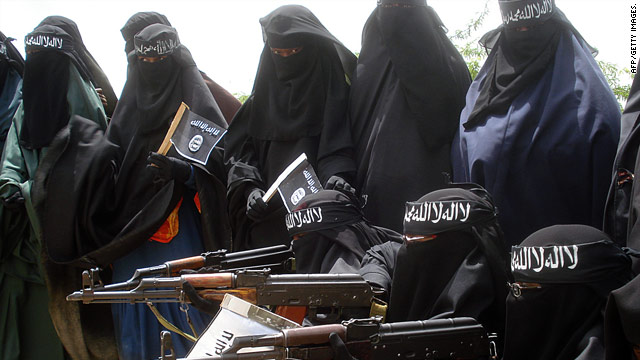
Somali-based Al Shabaab's attack in Kampala, Uganda, following the World Cup final earlier this month is credited by terrorist experts as a play for official membership in the Al Qaeda franchise club.
Uganda was not a random target. Its peacekeepers protect the weak Somali government which Al Shabaab hopes to sack.
AQIM (Al Qaeda in the Islamic Maghreb-Sahel) operates in Sub-Saharan Africa and poses a direct danger to western Europe. It likes to capture and kill relief workers trying to improve the lives of those trapped in the desolate region.
In Yemen, the UK ambassador and his convoy narrowly survived a suicide bomb attack last April credited to Al Qaeda in the Arabian Peninsula (AQAP).
AQAP is expanding its reach and scale of operations. In fact it just released its first English-language Inspire magazine for entrepreneurial suicide bombers in order to connect with a worldwide recruitment pool.
Moreover, AQAP is directly tied to the so-called Christmas Day bomber in the United States last year.
While the main Al Qaeda organization is pressured in Iraq, Afghanistan, and Pakistan, start ups and franchises proliferate where lawlessness prevails like in the Sahel, Somalia, and Yemen.
It is clear the West's efforts to control the tide of terror wrought by Islamic fascism is failing.
While the real war is inside Islam, the West is a convenient target both in the minds and in the deeds of militant Islamics as an expression of their fundamentalist rage against the modern world.
***
If you need research from open sources in Spanish, French, or Portuguese and presented in a stylish English language report or a translation of documents in said languages to English, please contact Professor Winn at by sending an email to mrenglish101@gmail.com for a prompt evaluation.
Thursday, June 17, 2010
Putin Reset? Boasts new jet fighter better than U.S. plane
Russian Prime Minister Vladimir Putin boasts that the PAK-FA Sukhoi T-50 is mightier than the US F-22 Raptor, killed by the US Senate last year.
The current leadership in the US does not see the need for such a fighter, unlike Russia.
The new fifth generation Russian fighter can take off from a short runway and deliver supersonic speed with a range of about 5,500 km.
Put military hardware issues aside.
What does Mr. Putin´s boast mentioning the US fighter forebode in relations between Moscow and Washington?
***
If you need research from open sources in Spanish, French, or Portuguese and presented in a stylish English language report or a translation of documents in said languages to English, please contact Professor Winn at by sending an email to wtglobalanalytics@gmail.com for a prompt evaluation.
Sunday, June 13, 2010
Saudis Give Israel Green Light
In a ramp up to an inevitable conclusion to both the Turkey-Brazil diplomatic hat trick to shield the Teheran Tyranny and the toothless UN sanctions in which the US gave away the store to enact, Saudi Arabia, reports the Times of London, has given Israel, its erstwhile non-friend, rights to pass its airspace enroute to bomb Iran´s nuclear program.
As the recent raid on the Turkey aid convoys to Gaza reveals, Israel will not hesitate to defend itself.
While outside powers like the United States have the luxury, for now, to continue playing patty-cake with Terror, Inc. in Teheran, Israel does not.
All diplomatic nicieties aside, Iran presents a clear and present danger to global security. Pretending otherwise is a march of folly.
Teheran, unimpressed by UN Security Council sanctions, is actually much closer to passing the nuclear threshhold by continuing headlong on producing higher-enriched uranium, as even the IAEA conceded in a restricted UN report, according to the AFP in May.
Indeed, as GSM wrote in its net assessement, theWestern powers would actually make an Israeli attack on Iran more urgent given their pussilanimity.
The Iran case is a ticking-time bomb and regimes that rule by force only respect the use of force, a timely gem from the study of world history.
Labels:
Iran,
Israel,
Nuclear,
Saudi Arabia,
Turkey,
UN Security Council,
US
Sunday, February 7, 2010
NATO Desperately Seeks a Mission?
How NATO, one the world´s most successful military alliances, has seemingly gone awry.
The trouble in Afghanistan is very severe as underscored by the desperation expressed by Secretary General Anders Fogh Rasmussen in the Munich Security Conference: NATO Says Russia, China Can Help in Afghanistan.
The SecGen´s news is just stunning. First, why would Russia want to wade back into Afghanistan? "Moscow´s Vietnam War" during the Soviet-era helped bring down the then Soviet Union. NATO does not have adequate helicopters to engage the enemy?
Russia wants to remain only as an observer in NATO now. Its fresh condemnation of US missiles in Romania is a curious development in this vain.
China? Sure, China is in the neighborhood. Yes, Beijing searches to expand the scope and range of its military reach. Does China want NATO to succeed?
Does Mr. Rassmussen believe both Russia and China view NATO benignly?
The Western military alliance which sat across the Fulda Gap between East and West Germany from 1949-1989 to halt a Soviet invasion which never came engaged in another mission far afield from Europe when the United States was attacked on 9/11.
Article 5 of the NATO Treaty states an attack on one is an attack on all. So NATO followed the United States into Afghanistan where it faces its gravest test in the history of the alliance.
Failure in a difficult scenario to secure a peace with a corrupt government and a determined enemy with safe border sanctuary - a la Vietnam - is not an option. The credibility of the alliance and its members governments, notably the United States, United Kingdom, and France are on the line.
By Rassmussen´s account, NATO appears to be untethered and without a clearly defined mission as if fighting for freedom is not enough to sustain an alliance of democracies in a world generally hostile to this value.
Labels:
Afghanistan,
China,
France,
NATO,
Russia,
United Kingdom,
US
Monday, November 9, 2009
Honduran Crisis: Recognize Michelleti Now
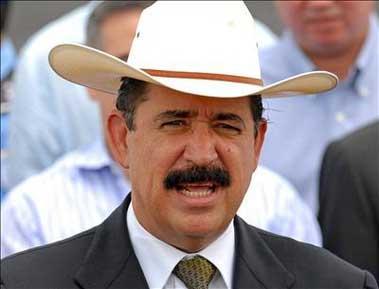
Honduras is no better off after constitutionally-ousted former president of Honduras, Manuel Zelaya, cries foul over a breakdown of the accord leading to his restitution and a national unity government: ´´The accord is dead.´´
The accord forced upon the interim President Michelleti by the disgraced OAS calls for a vote by the Honduran Congress and Supreme Court before Zelaya supposedly returns to power. However, the Honduran Congress and Supreme Court voted him out of power, thus sparking the ´´crisis.´´ Just because one is president he or she is not above the law as Mr. Zelaya found out.
There is no evidence Mr. Zelaya has learned a lesson from his constitutional ouster. There is no contrition. Authoritarians rarely say ´´I am sorry.´´ His designs for Honduras to continue as a transhipment point for Venezuelan drug planes and to become a junior member of the Castro-Chavez Club are unaltered.
Thus, Mr. Zelaya is a threat to Honduran democracy. His street thugs agitating for his return at any costs, including attacking the attorney general investigating his alledged long list of crimes last weekend, are very similar to the same outlaws enforcing Chavezism in Venezuela.
Brazil still provides diplomatic cover for Mr. Zelaya housing him in their embassy. The United States first rushed to support him because of ´´coup´´ talk (false).
It is time for regional powers and the international community as a whole to recognize the Micheletti government in Tegucigalpa and recognize Mr. Zelaya was dutifully dismissed and let Honduras resolve its problems alone.
Freedom and democracy are in the balance.
Get your International Policy
books today!
The accord forced upon the interim President Michelleti by the disgraced OAS calls for a vote by the Honduran Congress and Supreme Court before Zelaya supposedly returns to power. However, the Honduran Congress and Supreme Court voted him out of power, thus sparking the ´´crisis.´´ Just because one is president he or she is not above the law as Mr. Zelaya found out.
There is no evidence Mr. Zelaya has learned a lesson from his constitutional ouster. There is no contrition. Authoritarians rarely say ´´I am sorry.´´ His designs for Honduras to continue as a transhipment point for Venezuelan drug planes and to become a junior member of the Castro-Chavez Club are unaltered.
Thus, Mr. Zelaya is a threat to Honduran democracy. His street thugs agitating for his return at any costs, including attacking the attorney general investigating his alledged long list of crimes last weekend, are very similar to the same outlaws enforcing Chavezism in Venezuela.
It is time for regional powers and the international community as a whole to recognize the Micheletti government in Tegucigalpa and recognize Mr. Zelaya was dutifully dismissed and let Honduras resolve its problems alone.
Freedom and democracy are in the balance.
Get your International Policy
Wednesday, September 30, 2009
US in precarious global security jam - Pt I
part 1: US President no longer fights for freedom

US President Barak Hussein Obama promised a new America; he has delievered.
The new president of the United States is not a tireless advocate for freedom lovers abroad and the security of his country at home.
He allowed himself to be photographed with Venezuelan President Hugo Chavez who actively plots to diminish US influence in Latin America and undermine Colombia´s democracy. At the same hemispheric conference in April, the US president endured a tirade by Nicaraguan President Daniel Ortega enumerating the supposed crimes Washington had perpetrated in the sweep of Latin American history.
His attorney general, Eric Holder, has unleashed a vindictive investigation of CIA interrogators who produced actionable intelligence to smash terrorist attacks inside the US during the previous presidential administration. Saving American lives and thwarting terror attacks used to be a priority for a US president.
No more. The interrogators will now be interrogated with a noticeable chilling effect on the practice and comforting those subject to it. It is curious to note that Mr. Holder´s old law firm represents and provides legal defense counsel for Yemeni terror detainees at Gitmo.
The US Democrat Party traditionally has opposed any missile defense shield whether for the homeland or not. US President Obama´s decision to abandon the Bush-era missile defense shield housed in the Czech Republic and Poland to protect Europe from Iran´s increasingly iniquitous missile threat fits the pattern.
However, the immediate satisfaction to appease Russia in an empty chance to get help with UN sanctions on Iran rewards Moscow on two fronts. The US slap of two Nato allies genuflects before Moscow´s tough demands on a youthful US president. Additionally, Moscow basks in seeing its ex-Soviet states knocked back a peg or two by the very country that gave much to liberate them from tyranny. The new democratic states in Central Europe will not easily forgive or forget Washington´s betrayal.
US President Obama too easily cossets his enemies and dismisses his friends. US presidents are normally more informed and more careful.
President Obama´s moves to this point weaken the US in an increasinly less secure world. While dumping on allies is easy, the big test, as GSM has reminded its readers, is the challenge posed by Iran. We invite you to read on in part two.
Sunday, March 29, 2009
RFI - Iranian Military Experts in Pyongyang
credit: RFI
Translation Courtesy: Buenos Aires Translator - Professor Winn
NOTE: Professor Winn is a trained observer of international relations and certified translator. These unique skills provide his loyal readers expanded insights distinct from other global security blogs.
Analysis: While the article dismisses the Iranian-North Korean linkage as fitting former US President's "axle of evil," this linkage is precisely what worries global security observers no matter the historical ties between the two countries.
Iran is assisting North Korea perfect its ballistic missile technology. These two rogue nations are negative regional actors, but their technological gains propose wider global security challenges given the increasing range of their missiles.
The proliferation of ballistic missile technology wedded with nuclear ambitions is a deadly combination in the hands of unstable leaders in Tehran and Pyongyang.
The world waits to see just how much Iran has helped North Korea improve its "satellite launch" program. The anticipated early April launch is only a few days away.
Translated Article from the original French
RFI - Des experts militaires iraniens à Pyongyang
Iran/ North Korea
Iranian military experts in Pyongyang
by RFI
Article published 03/29/2009 Last updated on 03/29/2009 at 10:36 UT
Iranian experts are in North Korea to assist the April launch of a “satellite” according to Pyongyang and a disguised missile by the United States, Japan, and South Korea, reports the Japanese newspaper, Sankei Shimbun, on Sunday, citing anonymous sources. Fifteen Iranian missile technology experts arrived in North Korea in early March carrying a letter from the Iranian president to the North Korean leader.
On February 2, Iran placed its first satellite into orbit with its Safir-2 rocket, fuelling Western worries that Tehran would use the technology to develop its ballistic missile program. (Photo: Reuters)
(Photo: Reuters)
If Mahmoud Ahmadinejad wrote Kim Jong-il, it is does signal George Bush’s axis of evil, but underscores the important cooperation between the two countries in the fields of ballistic missiles and space. Iran and North Korea have worked together in these fields for more than 20 years.
Since the 1980s, Iran showed interest in the North Korean Hwaseong-5, nothing more than an improvement on the Soviet Scud. In June 1987 at the end of the Iran-Iraq War, Tehran bought 100 for $500 million. It was renamed Shahab-1 in Iran with a range of 300 kilometers.
In 1993, North Korea prepared a new missile : the Rodong-1 with a range of 1,500 kilometers. In March, Iranian General Mantequei, head of the Revolution’s guided missile program, was invited for its test. Delighted, Iran bought 150 Rodongs and renamed them Shahab-2 and Shahab-3.
At the time, Tehran was not just satisfied with buying North Korean technology. Iranian engineers developed their own ballistic missiles with oil dollars. North Korea was not their only seller and they soon overtook their client.
Today Iran is more advanced than North Korea. Mahmoud Ahmadinejad takes pride in recently launching a satellite into space. Iranians are assisting North Korea launch its much-touted Taepodong-2 missile with a supposed range of 6,700 kilometers.
Translation Courtesy: Buenos Aires Translator, Professor Winn
Please contact Professor Winn for translations (Spanish/French/Portuguese >English) via email (mrenglish101@gmail.com) for prompt evaluation.
Labels:
Ballistic Missiles,
Iran,
Japan,
North Korea,
South Korea,
Translation,
US
Saturday, March 28, 2009
Japón y EEUU, en alerta máxima por cohete de Corea del Norte | CaracolTV.com
Translation Courtesy: Buenos Aires Translator
Japón y EEUU, en alerta máxima por cohete de Corea del Norte | CaracolTV.com

****
Test of Wills, Credibility
Pyongyang insists in being first to challenge the young Obama administration in Washington.
The test of wills between the two capitals is more than an academic exercise for both US foes and friends alike. Japan, a stalwart Asian ally, now has Patriot missile batteries surrounding Tokyo just in case.
Given the untested president, US credibility not only in Asia but worldwide hangs in the balance the stakes are so high.
Media reports diffused in different languages communicate explicitly Washington and Tokyo's resolve to counter any Pyongyang chicanery.
US in Range
The Taepodong-2, a two or three-stage rocket with a range of over 4,000 miles, could hit Alaska while a US admiral also includes Hawaii, where President Obama spent his formative years.
While analysts at Global Security Monitor are certain Pyongyang is aware of the "red lines" set by Washington to what constitutes a "pull the ripcord" moment, it is not abundantly clear North Korea cares. credit: AFP
Given North Korea's technical difficulties with the Taepedong (the last test failed in 2006), a safer scenario for global security is another launch pad "accident."
While the immediate crisis would pass, the persistent problem of a starving hermit regime armed to the teeth across
from the DMZ menacing an important US ally, South Korea, and disturbing NE Asia peace, would remain in its wake.
Japón y EEUU, en alerta máxima por cohete de Corea del Norte | CaracolTV.com
Japan and US on maximum alert for North Korean Missile
Las dos potencias no están dispuestas a quedarse de brazos cruzados mientras Pyongyang se apresta a lanzar el supuesto cohete. Por eso, la primera movilizó dos buques militares capaces de interceptar misiles y la segunda alista otras dos naves destructoras. ¿Conflicto armado a la vista?
The two powers are not sitting with their arms crossed while Pyongyang readies to launch its reported rocket. In this regard, the former mobilized two missile interceptor vessles and the latter two naval destroyers. Is armed conflict near?
Corea del Norte anunció que lanzará un satélite de comunicaciones entre el 4 y el 8 de abril, pero las potencias regionales creen que será una prueba de su misil de largo alcance, el Taepodong-2, que ya estaría en la plataforma de lanzamiento en una base.
North Korea said it will launch a communications satellite between April 4 and 8, but the regional powers believe the long-range missile test of the Taepodong-2 could already be on a base launch pad.****
Test of Wills, Credibility
Pyongyang insists in being first to challenge the young Obama administration in Washington.
The test of wills between the two capitals is more than an academic exercise for both US foes and friends alike. Japan, a stalwart Asian ally, now has Patriot missile batteries surrounding Tokyo just in case.
Given the untested president, US credibility not only in Asia but worldwide hangs in the balance the stakes are so high.
Media reports diffused in different languages communicate explicitly Washington and Tokyo's resolve to counter any Pyongyang chicanery.
US in Range
The Taepodong-2, a two or three-stage rocket with a range of over 4,000 miles, could hit Alaska while a US admiral also includes Hawaii, where President Obama spent his formative years.
While analysts at Global Security Monitor are certain Pyongyang is aware of the "red lines" set by Washington to what constitutes a "pull the ripcord" moment, it is not abundantly clear North Korea cares. credit: AFP
Given North Korea's technical difficulties with the Taepedong (the last test failed in 2006), a safer scenario for global security is another launch pad "accident."
While the immediate crisis would pass, the persistent problem of a starving hermit regime armed to the teeth across
from the DMZ menacing an important US ally, South Korea, and disturbing NE Asia peace, would remain in its wake.
Labels:
Ballistic Missiles,
Japan,
Navy,
North Korea,
US
Monday, March 16, 2009
US shoots down Iranian spy drone | BreakingNews.ie
Iran remains an immediate threat to Mid East security and increasingly to global security because of its aggressive nuclear and long-range missile programs. The negative regime in Tehran is not easily deterred and no credible force has yet to step forward to directly oppose its lethal designs. The US may leave Iraq; Iran will not.
Wednesday, March 11, 2009
Commuting Cuba's Embargo
The new Obama Administration in Washington has raised high hopes about imminent changes in international policy on a host of issues.
The tiny state of Cuba still figures in a prominent way in the US international policy calculus. The Cuban exile community is politically potent and savvy. The country's geographic proximity is another concern.
Since Fidel Castro marched triumphantly into Havana in 1959, a Cold War has raged between the two hemispheric neighbors filled with mutual suspicion and high drama including almost triggering the nuclear trip wire in the Missile Crisis with the former Soviet Union.
While the old warrior Fidel has retired due to serious health reasons resulting from a routine surgical procedure (in most countries without Cuban-style medical care), his somewhat younger brother (five years difference) only changes the face of murderous Castro, Inc. which runs the island prison for their sole economic benefit.
Indeed, the Castro family fortune is estimated at nearly $1 billion, according to Forbes Magazine in 2006. What would Fathers Marx and Lenin think?
It seems the US embargo has not dented Castro, Inc. given Cuba trades with every other country (and limited items with the US). The embargo is not about economics, but politics. It is a test of wills between freedom and liberty and repression and murder.
If the US blinks under President Obama - something every president has not done since 1959 - and commutes the embargo, a moral victory goes to the dying dictator and the Castro-clones throughout the region and the world. Imagine the Hugo Chavez victory speech!
The US will not garner an ounce of recognition contrary to the columnists and other observers otherwise who have mixed motivations for sporting a repeal of the embargo. On the contrary, th price could be very high. Surrendering in face of tyranny never accrues profits or benefits for democracies.
Raul Castro is more of the same brutal repression in the name of profits for the Castro clique and a desperate attempt at regime survival. An internal putsch to end blood-dipped Castroism once and for all is one likely scenario to solve the Cuban problem. Now that is Cuban self-determination.
Get your International Policy
Wednesday, February 11, 2009
No Place for Hope in Intl Policy
Naive, at best
White House Press Conference, Feb. 9, 2009:
"What I've also said is that we should take an approach with Iran that employs all of the resources at the United States' disposal, and that includes diplomacy.
And so my national security team is currently reviewing our existing Iran policy, looking at areas where we can have constructive dialogue, where we can directly engage with them. And my expectation is in the coming months we will be looking for openings that can be created where we can start sitting across the table, face to face, diplomatic overtures that will allow us to move our policy in a new direction." - President Barak Husein Obama
Then, we read this AP article today: " Clinton holds out hope for useful talks with Iran." One may conclude the new Administration is naive, at best.
Leaders of democracies often believe unwisely they alone can tame a determined foe. "Peace in our time" has proven illusive by mere words alone.
Iranian Foreign Policy
Iran has engaged the United States since the hostage crisis of 1979 with multiple terrorist attacks from Beirut marine barracks to Khobar Towers in Saudi Arabia and the attempted destabilization of Iraq with Qods Force operations.
Is there any indication from Tehran that it is reviewing its policy toward the United States? Is there any hope Iran wants to change its policy?
President Obama and Secretary of State Clinton may want to review the State Department's Country Reports on Terrorism 2007, Chapter 1:
"Iran remained the most significant state sponsor of terrorism. A critically important element of Iranian national security strategy is its ability to conduct terrorist operations abroad."
Going Forward
President Obama pledged in his first primetime news conference to sit down across the table "face to face" with state sponsors of terrorism against US citizens and interests abroad.
We hope he reconsiders.
Get your International Policy
Labels:
Iran,
Iraq,
President Obama,
terrorism,
US,
US State Department
Wednesday, February 4, 2009
Russian news agency, RIA Novosti, reports exhibition of the MiG-35 (Fulcrum F) at Aero India 2009 on February 11-15, 2009 at Yelahanka, Bangalore, India.
The largest air show in south Asia allows Russia to showcase its Multirole Front-Line Fighter offering an extremely maneuverable, all-axial deflected vectored thrust "DTV" engine which first debuted in 1999.
Speaking of maneuverability, Russia was the first to master real thrust vectoring and build it into a serving combat aircraft design: the Sukhoi Su-30MKI, which uses single-axis or up-and-down vectoring.
The move comes as India contemplates buying 126 multi-role combat aircraft (MRCA) in a multi-billion dollar deal (largest since early 1990s) to replace its ageing MiG-21 aircraft.
India and Russia share a 50 year military relationship. The Indian military is full of Russian aircraft, helicopters, submarines, and tanks.
Attractive Options
The MiG-35 is an attractive option for New Delhi. Along with improvements in keeping maintenance costs lower, the MiG-35 also comes with "modern glass cockpit designed with three 6x8 inch flat-panel LCDs and full HOTAS controls, digital map, helmet-mounted sight."
The latest Zhuk-AE active electronically scanning array (AESA) is "one of the most important, if not the most important development in radar technology since the 1940s."
The MiG-35 builds on the MiG-29 which India flies about 65. Ease of part acquisition, training, etc. favor the acquisition of the MiG-35s over the US F/A-18s and/or F-16s.
In Sum
India's multidirectional international policy engages the major powers on a somewhat equal basis from China to Russia to the United States. As India develops as a major world power in its own right, its arms purchases from 1998 to 2005 topped all of the developing world.
The US would like to cultivate an arms supplier relationship as close as Russia's with India.
However, it appears unlikely as New Delhi's expected green light to Moscow on the MiG-35 will demonstrate.
Subscribe to:
Posts (Atom)