Global Security Headlines

Showing posts with label Japan. Show all posts

Monday, January 3, 2011

Chinese Missile Buildup - Opportunity or Threat?

Three countries worry policymakers the most in Western capitals: China, North Korea, and Iran.  The first two have nuclear weapons and the latter is in hot pursuit.

All three are proliferators of missile and nuclear technology to some degree. China and Iran seek to dominate their respective regions at the expense of US power.

China's many objectives, one focus
An important article last weekend in the Washington Post tackles China's conventional missile buildup: Why China's missiles should be our focus.

Authors Mark Stokes and Dan Blumenthal see the New START ratified by the US Senate last December as misguided given Beijing's conventional short and intermediate-range ballistic and cruise missiles.

Beijing benefits as a non-signatory of the US-Russian INF (Intermediate Nuclear Forces) Treaty from the Cold War.

That China is building military power commensurate with its growing economic power is not news. While intense debate centers upon Beijing's many objectives, an ''overriding'' focus remains reunification with Taiwan.

Missile Manipulation
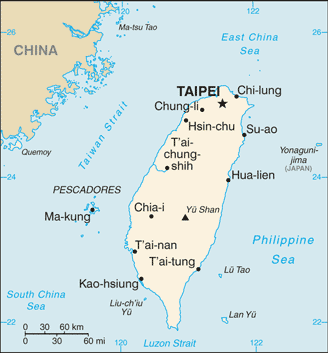
China's most aggressive missile program in the world threatens the East Asian power calculus. The article lists the multifaceted missile program. (see an Economist.com graphic)

Its over 1,200 short-range missiles are aimed squarely at manipulating and recapturing the ''renegade province,'' Taiwan.

Its long and intermediate-range ballistic and cruise missiles advance an anti-access/denial strategy to deter any US defense of Taiwan given Washington's formal commitment to Taipei.

In particular, Beijing's DF-21D anti-ship ballistic missile (ASBM), the so-called ''carrier killer'' concerns defense planners.

For decades, China has pursued a gambit to use land-based missiles to threaten targets at sea.

Implications
The Chinese missile buildup is an opportunity to soberly size up its existential threat to the Western Pacific, home for two of the world's largest economies and strategic choke points.

The credibility of the US commitment to Taiwan is under strain as China's Second Artillery intends to intimidate neighbors (India and Japan) and drive the US out of the region.

The arrival of the Asian century, China's rise to global power status, and relative US decline portend seismic shifts in global security.

It is time for Realpolitik approaches by freedom-loving states to counter the emerging military threats from the China challenge to the tense peace in the region today.
***
If you need research from open sources in Spanish, French, or Portuguese and presented in a stylish English language report or a translation of documents in said languages to English, please contact Professor Winn at by sending an email to mrenglish101@gmail.com for a prompt evaluation.

Tuesday, November 2, 2010

Sino-Ruso Gangup on Japan?

In late September, China and Japan clashed over the Diaoyutai Islands (Senkaku in Japanese).

Russia's Move
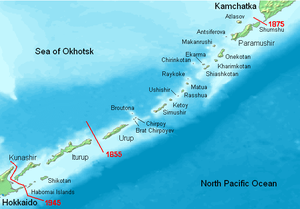
Yesterday Russian President Dmitry Medvedev drew Tokyo's ire when he visited Kunashir isle, one of the four disputed with Japan since the end of World War II.

The provocative step is consistent with stoking Russian nationalism on full display in the Victory Day last May in Moscow and comes ahead of a regional summit between the two countries.

Mr. Medvedev's visit was a milestone since he is the first Russian leader to visit the island group.

Japanese Foreign Minister Naoto Kan reasserted Japan's claim to its ''northern islands'' and called the visit ''regrettable.''
 
Japan recalled its ambassador to Moscow in response to the latest territorial tiff. 

Russo-Sino policy in tandem
Is there another reason to up the pressure on Japan?

Some Japanese observers see a joint Russo-Sino gang up on territorial disputes with Japan.

Evidence grows of  a stronger ''strategic partnership'' between Beijing and Moscow especially in the Pacific region.

The fight over the four Kuril Islands stems from the vagaries of the post-World War II conferences in Postsdam and Yalta and the fact that the Soviet Union did not sign the Treaty of San Francisco.

The United States thus never supported the Soviet claim over the isles and still sides with Japan today.

***If you need research from open sources in Spanish, French, or Portuguese and presented in a stylish English language report or a translation of documents in said languages to English, please contact Professor Winn at by sending an email to mrenglish101@gmail.com for a prompt evaluation.

Monday, September 27, 2010

Not the Last China-Japan Clash

wikipedia.com
So, Japan made the correct move and finally released the Chinese captain who piloted a fishing trawler which allegedly rammed two Japanese patrol boats off the disputed Diaoyutai Islands (Senkaku in Japanese) earlier this month in the East China Sea.

The latest in a series of Sino-Japanese territorial disputes involves the island group claimed by both China and Taiwan, but is under Japanese control now.

Why is there the fuss over seemingly insignificant isles?

OIL!

Asia's two largest economies are dueling over the natural resources needed to keep their economies humming.

In August, China passed Japan to become the world's second largest economy.

Not only China, but South Korea and Russia as well, have ongoing maritime spats with Japan.

Clashes over islands, or sometimes more accurately, rock piles, in Asian seas is not a new phenomenon.

Expect China to continue its global push for the energy supplies needed to sustain its meteoric climb to surpass the United States and become the world's number one economy.

Also expect more clashes as Beijing fills the strategic vacuum in Asia in light of waning US power and flexes its national power to achieve its rightful ranking in the international system.

***
If you need research from open sources in Spanish, French, or Portuguese and presented in a stylish English language report or a translation of documents in said languages to English, please contact Professor Winn at by sending an email to mrenglish101@gmail.com for a prompt evaluation.
Sunday, March 29, 2009

RFI - Iranian Military Experts in Pyongyang

credit: RFI


Translation Courtesy: Buenos Aires Translator - Professor Winn

NOTE: Professor Winn is a trained observer of international relations and certified translator. These unique skills provide his loyal readers expanded insights distinct from other global security blogs.

Analysis: While the article dismisses the Iranian-North Korean linkage as fitting former US President's "axle of evil," this linkage is precisely what worries global security observers no matter the historical ties between the two countries.


Iran is assisting North Korea perfect its ballistic missile technology. These two rogue nations are negative regional actors, but their technological gains propose wider global security challenges given the increasing range of their missiles.

The proliferation of ballistic missile technology wedded with nuclear ambitions is a deadly combination in the hands of unstable leaders in Tehran and Pyongyang.

The world waits to see just how much Iran has helped North Korea improve its "satellite launch" program. The anticipated early April launch is only a few days away.

Translated Article from the original French

RFI - Des experts militaires iraniens à Pyongyang

Iran/ North Korea
Iranian military experts in Pyongyang

by RFI

Article published 03/29/2009 Last updated on 03/29/2009 at 10:36 UT

Iranian experts are in North Korea to assist the April launch of a “satellite” according to Pyongyang and a disguised missile by the United States, Japan, and South Korea, reports the Japanese newspaper, Sankei Shimbun, on Sunday, citing anonymous sources. Fifteen Iranian missile technology experts arrived in North Korea in early March carrying a letter from the Iranian president to the North Korean leader.

On February 2, Iran placed its first satellite into orbit with its Safir-2 rocket, fuelling Western worries that Tehran would use the technology to develop its ballistic missile program. (Photo: Reuters)

On February 2, Iran placed its first satellite into orbit with its Safir-2 rocket, fuelling Western worries that Tehran would use the technology to develop its ballistic missile program. (Photo: Reuters)
(Photo: Reuters)

If Mahmoud Ahmadinejad wrote Kim Jong-il, it is does signal George Bush’s axis of evil, but underscores the important cooperation between the two countries in the fields of ballistic missiles and space. Iran and North Korea have worked together in these fields for more than 20 years.

Since the 1980s, Iran showed interest in the North Korean Hwaseong-5, nothing more than an improvement on the Soviet Scud. In June 1987 at the end of the Iran-Iraq War, Tehran bought 100 for $500 million. It was renamed Shahab-1 in Iran with a range of 300 kilometers.

In 1993, North Korea prepared a new missile : the Rodong-1 with a range of 1,500 kilometers. In March, Iranian General Mantequei, head of the Revolution’s guided missile program, was invited for its test. Delighted, Iran bought 150 Rodongs and renamed them Shahab-2 and Shahab-3.

At the time, Tehran was not just satisfied with buying North Korean technology. Iranian engineers developed their own ballistic missiles with oil dollars. North Korea was not their only seller and they soon overtook their client.

Today Iran is more advanced than North Korea. Mahmoud Ahmadinejad takes pride in recently launching a satellite into space. Iranians are assisting North Korea launch its much-touted Taepodong-2 missile with a supposed range of 6,700 kilometers.

***
Translation Courtesy: Buenos Aires Translator, Professor Winn

Please contact Professor Winn for translations (Spanish/French/Portuguese >English) via email (mrenglish101@gmail.com) for prompt evaluation.

Saturday, March 28, 2009

Japón y EEUU, en alerta máxima por cohete de Corea del Norte | CaracolTV.com

Translation Courtesy: Buenos Aires Translator

Japón y EEUU, en alerta máxima por cohete de Corea del Norte | CaracolTV.com

Japan and US on maximum alert for North Korean Missile

Las dos potencias no están dispuestas a quedarse de brazos cruzados mientras Pyongyang se apresta a lanzar el supuesto cohete. Por eso, la primera movilizó dos buques militares capaces de interceptar misiles y la segunda alista otras dos naves destructoras. ¿Conflicto armado a la vista?

The two powers are not sitting with their arms crossed while Pyongyang readies to launch its reported rocket. In this regard, the former mobilized two missile interceptor vessles and the latter two naval destroyers. Is armed conflict near?

Corea del Norte anunció que lanzará un satélite de comunicaciones entre el 4 y el 8 de abril, pero las potencias regionales creen que será una prueba de su misil de largo alcance, el Taepodong-2, que ya estaría en la plataforma de lanzamiento en una base.

North Korea said it will launch a communications satellite between April 4 and 8, but the regional powers believe the long-range missile test of the Taepodong-2 could already be on a base launch pad.

****
Test of Wills, Credibility

Pyongy
ang insists in being first to challenge the young Obama administration in Washington.

The test of wills between the two capitals is more than an academic exercise for both US foes and friends alike. Japan, a stalwart Asian ally, now has Patriot missile batteries surrounding Tokyo just in case.

Given the untested president, US credibility not only in Asia but worldwide hangs in the balance the stakes are so high.

Media reports diffused in different languages communicate explicitly Washington and Tokyo's resolve to counter any Pyongyang chicanery.

US in Range


The Taepodong-2, a two or three-stage rocket with a range of over 4,000 miles, could hit Alaska while a US admiral also includes Hawaii, where President Obama spent his formative years.

While analysts at Global Security Monitor are certain Pyongyang is aware of the "red lines" set by Washington to what constitutes a "pull the ripcord" moment, it is not abundantly clear North Korea cares. credit: AFP

Given North Korea's technical difficulties with the Taepedong (the last test failed in 2006), a safer scenario for global security is another launch pad "accident."

While the immediate crisis would pass, the persistent problem of a starving hermit regime armed to the teeth across
from the DMZ menacing an important US ally, South Korea, and disturbing NE Asia peace, would remain in its wake.