


Two members of the much-maligned "Axis of Evil" - Iran and North Korea - are in cohoots together with the support of China to take maximum advantage of a weak US president at home and abroad.
Beijing's proxy war has never ceased against Washington. Too bad Washington does not realize this fact.
As GSM opined long ago, the US would do NOTHING to stop Iran from obtaining nuclear weapons under the overmatched President Barak Obama.
Iran-North Korea Axis
So, Iran plays rope-a-dope in Kazakhstan in yet another successful attempt to buy time to complete its nuclear program.
North Korea threatens the US and South Korea with nuclear war.
These news items are not isolated.
The Iran-North Korea partnership is long-standing and is even closer today.
Evil twins Iran and North Korea are in a Gemini Gambit with China in full support to inflict the most damage possible on a cowardly US president and a USA in deep decline.
The future of Asia is not only in jeopardy, but a stable world order is as well.
***
Peace through strength.
Showing posts with label North Korea. Show all posts
Showing posts with label North Korea. Show all posts
Sunday, April 7, 2013


Monday, January 3, 2011
Chinese Missile Buildup - Opportunity or Threat?

All three are proliferators of missile and nuclear technology to some degree. China and Iran seek to dominate their respective regions at the expense of US power.
China's many objectives, one focus
An important article last weekend in the Washington Post tackles China's conventional missile buildup: Why China's missiles should be our focus.
Authors Mark Stokes and Dan Blumenthal see the New START ratified by the US Senate last December as misguided given Beijing's conventional short and intermediate-range ballistic and cruise missiles.
Beijing benefits as a non-signatory of the US-Russian INF (Intermediate Nuclear Forces) Treaty from the Cold War.
That China is building military power commensurate with its growing economic power is not news. While intense debate centers upon Beijing's many objectives, an ''overriding'' focus remains reunification with Taiwan.
Missile Manipulation
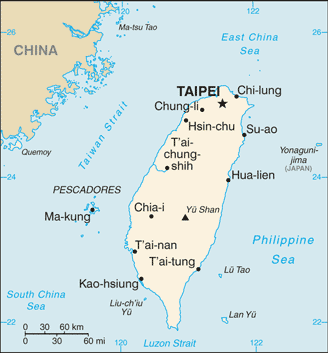 China's most aggressive missile program in the world threatens the East Asian power calculus. The article lists the multifaceted missile program. (see an Economist.com graphic)
Its over 1,200 short-range missiles are aimed squarely at manipulating and recapturing the ''renegade province,'' Taiwan.
Its long and intermediate-range ballistic and cruise missiles advance an anti-access/denial strategy to deter any US defense of Taiwan given Washington's formal commitment to Taipei.
In particular, Beijing's DF-21D anti-ship ballistic missile (ASBM), the so-called ''carrier killer'' concerns defense planners.
For decades, China has pursued a gambit to use land-based missiles to threaten targets at sea.
Implications
The Chinese missile buildup is an opportunity to soberly size up its existential threat to the Western Pacific, home for two of the world's largest economies and strategic choke points.
The credibility of the US commitment to Taiwan is under strain as China's Second Artillery intends to intimidate neighbors (India and Japan) and drive the US out of the region.
The arrival of the Asian century, China's rise to global power status, and relative US decline portend seismic shifts in global security.
It is time for Realpolitik approaches by freedom-loving states to counter the emerging military threats from the China challenge to the tense peace in the region today.
***
If you need research from open sources in Spanish, French, or Portuguese and presented in a stylish English language report or a translation of documents in said languages to English, please contact Professor Winn at by sending an email to mrenglish101@gmail.com for a prompt evaluation.
Saturday, January 1, 2011
Top 6 Strategic Questions for 2011
 The past is prologue.
As we go forward, issues trending in the international affairs arena in 2010 are poised to intensify in 2011.
It is easy to get lost in daily press reports and miss the fundamental understanding of what really is happening.
While no one can accurately predict the future course of global security no more than the weather, informed estimates of military and diplomatic analyses must be made.
As GSM peers down the road, we ask the following 6 Strategic Questions (see our questions in 2010) to provoke thought and focus debate on the issues impacting global security now and likely in the near future.
_____________________________________________________
1. Does despotism deepen in Russia ahead of 2012 presidential elections? Putin's Russia slid closer to a one-man rule in 2010. Curiously the titular president Medvedev pressed his US counterpart Obama to ratify the ''new'' START Treaty for reductions in nuclear ICBMs and limits on future development of any anti-ballistic missile systems. But, the Russian Duma did not see any urgency at all and deferred any action until this year. The rule of law was severely weakened with the recent imprisonment of Mikhail Khodorkovsky and Platon Lebedev, former Yukos oil executives, for what many observers see as a penalty for opposing Putin. His grip is tightening on all parts of the government ahead of his expected run in the 2012 presidential elections.
2. Is the Middle East destined for another armed clash? The Economist muses about clashes between Israel and Iran, its newly-replenished Hamas and Hizbolla proxies, and even Syria over Tehran's nuclear quest. Events last year could precipitate fighting in 2011. The spectacular failure of the latest US-led round of Palestinian-Israeli peace talks weighs on the scale. While estimates vary of when Iran may ''go nuclear'' given delays from the Stuxnet computer virus attack, it is possible Israel could decide to act sometime this year.
3. Can Calderon of Mexico save his country from narcoterrorism? Mexico is torn asunder by the war between the narcotraficantes and the government and internecine savagery between rival cartels for primacy. More than 22,000 have died since Presidente Felipe Calderón cracked down on the narcos and the border with the US is on fire. The systemic corruption, a weak judiciary, and suspect federales only complicate any ''victory'' over the well-armed and well-financed narcos. US planners as far back as 2008 pondered a total collapse of the country. Calderón must act decisively to avoid that fate.
4. Does Brazil solidify its ''middle power'' status and stand up for freedom? Happy talk surrounds Brazil, Latin America's largest country and economy. Brazilians begin 2011 with a new president, Dilma Rousseff, the first female to take charge in Brasilia. Its oil success, if managed well, could pave the path to an economically stronger and less poorer regional hegemon. Outgoing President Lula left Brazil better after 8 years of rule. However if Ms. Rousseff continues his left-bent embrace of neighbor Chavez and outreach to Iran by meddling again in the nuclear question, the turn away from supporting freedom abroad would detract from Brazil's attempt to gain international currency. Is Brazil ready for prime time?
5. Does India effectively balance against the Sino-Pak encirclement? China is India's chief adversary in south Asia. Beijing's ''string of pearls'' encirclement of India is nothing new. As both a maritime and land power, its regional power projection gives New Delhi options to counter the Sino-Pak gambit. US President Obama's visit last November bolstered India's standoff with both its neighbors. The chaos in the Afghanistan-Pakistan theater and China's rising aggressiveness challenge India to chart a delicate course.
6. Is there peaceful reunification on the Korean peninsula? Leadership transitions in totalitarian regimes are often dicey deals and in a regime as opaque as North Korea, doubly. Kim Jong-il named his third son as successor, a mere 27 year-old, to head up the dying regime in Pyongyang. While some observers say the transition is in its early stages, it is clear that freedom-loving countries including South Korea can barely spare any more existence of the nuclear-tipped, nuclear proliferating, and otherwise thuggish gang in Pyongyang. China, however, does not want a democratic and unified Korea on its border and thus continues to subsidize and prop up the NE Asian menace. Along with its proxy Iran, China can frustrate US goals in the respective regions. North Korea is enriching uranium and antagonizing the South at will, all in the throes of a transition. Is it possible the Pyongyang gang's lease on life is running short?
_____________________________________________________
GSM is committed to providing the keen analysis our loyal readers demand and deserve.
Count on our continued commitment to providing the information and insights you have come to enjoy.
Happy 2011!
Friday, November 26, 2010
The North Korean Menace - Time for the stick?
The deadly artillery bombardment of South Korea's Yeonpyeong Island is yet more evidence that the cartload of carrots thrown at the North Korea nuclear impasse over the years has only emboldened the dictatorship in Pyongyang.
Spoiled Child in Pyongyang
The North Korean case is a perfect example of sparing the rod, spoils the child.
The impish regime in Pyongyang like most autocracies consumed the inducements, used negotiations to advance its nuclear program to fruition, and correctly interpreted the constant request for negotiations as a sign of weakness.
Today, North Korea stands at the brink in the death throes of a desperate transition to the Kim Jong-Un, Kim Jong-Il's youngest son. He is yet another corpulent member of the ruling family in a country that has suffered repeated episodes of famine, but obviously the ruling class was not affected. The twenty-something neophyte is supposed to save the dying regime?
China, who is the mother to the childish regime, is the key to resolving the North Korean imbroglio. For fear of disrupting any access to the lucrative Chinese consumer market and offending its banker, the United States is loathe to bluntly tell Beijing to solve the problem or have it solved.
American impotence to defend an ally from a regional bully is noted not just by China but its enemies around the world.
The North Korean menace ranges beyond the spooky corner of Northeast Asia. Pyongyanh is also heavily involved with Iran and also ships arms to terrorist groups like Hizbullah.
Higher Cost to End the Crisis
Now a declining yet nuclear-tipped Pyongyang threatens war with South Korea as Seoul prepares for naval exercises with the US.
World history is replete with examples that those who live by force like the thugs in Pyongyang only respect force. Why this is such a hard concept for many to grasp in the world capitals of democracies is baffling. Regime behavior can only be moderated by the stick since carrots only fatten resolve.
The cost of solving the North Korea case is higher now because past opportunities were squandered at the negotiation table as if (same for Iran) a rogue regime has any interest in volunteering ceding its chip at the table of international diplomacy.
A unified Korea, yes bordering China, under democratic control from Seoul, should be the goal and the appropriate measures should be undertaken to achieve it.
***
If you need research from open sources in Spanish, French, or Portuguese and presented in a stylish English language report or a translation of documents in said languages to English, please contact Professor Winn at by sending an email to mrenglish101@gmail.com for a prompt evaluation.
 |
| Kim Jong-Un to rescue |
Spoiled Child in Pyongyang
The North Korean case is a perfect example of sparing the rod, spoils the child.
The impish regime in Pyongyang like most autocracies consumed the inducements, used negotiations to advance its nuclear program to fruition, and correctly interpreted the constant request for negotiations as a sign of weakness.
Today, North Korea stands at the brink in the death throes of a desperate transition to the Kim Jong-Un, Kim Jong-Il's youngest son. He is yet another corpulent member of the ruling family in a country that has suffered repeated episodes of famine, but obviously the ruling class was not affected. The twenty-something neophyte is supposed to save the dying regime?
China, who is the mother to the childish regime, is the key to resolving the North Korean imbroglio. For fear of disrupting any access to the lucrative Chinese consumer market and offending its banker, the United States is loathe to bluntly tell Beijing to solve the problem or have it solved.
American impotence to defend an ally from a regional bully is noted not just by China but its enemies around the world.
The North Korean menace ranges beyond the spooky corner of Northeast Asia. Pyongyanh is also heavily involved with Iran and also ships arms to terrorist groups like Hizbullah.
Higher Cost to End the Crisis
Now a declining yet nuclear-tipped Pyongyang threatens war with South Korea as Seoul prepares for naval exercises with the US.
World history is replete with examples that those who live by force like the thugs in Pyongyang only respect force. Why this is such a hard concept for many to grasp in the world capitals of democracies is baffling. Regime behavior can only be moderated by the stick since carrots only fatten resolve.
The cost of solving the North Korea case is higher now because past opportunities were squandered at the negotiation table as if (same for Iran) a rogue regime has any interest in volunteering ceding its chip at the table of international diplomacy.
A unified Korea, yes bordering China, under democratic control from Seoul, should be the goal and the appropriate measures should be undertaken to achieve it.
***
If you need research from open sources in Spanish, French, or Portuguese and presented in a stylish English language report or a translation of documents in said languages to English, please contact Professor Winn at by sending an email to mrenglish101@gmail.com for a prompt evaluation.
Saturday, November 7, 2009
Cold War Series Part I: Soviet Communist Ascendancy
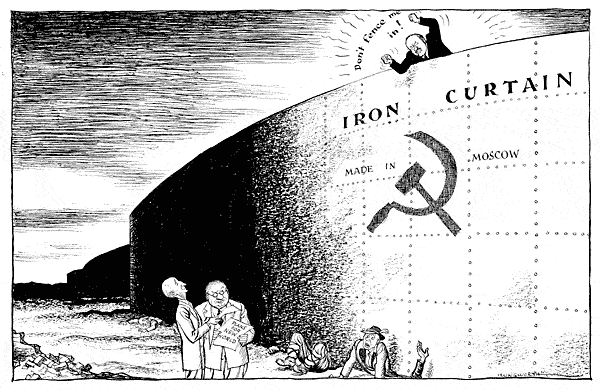
The Western democracies led by the United States rejected this barbarism.
GSM in a four part series reviews the Cold War. Part I covers the ascendancy of Soviet communism. Part II shows how the Cold War was not won. Part III demonstrates how the West´s iron-willed determination forced Moscow to relent. Finally, Part IV expounds upon the lessons learned which are applicable to the current international system.
From the ashes of World War II sprang almost immediately the Cold War, the titanic struggle between the West (NATO) and the East (Warsaw Pact). Namely, the United States and the Soviet Union managed a rivalry across the global chessboard for supremacy. Would tyranny and command economics triumph over freedom and market economics? For 46 years, the two sides competed for prestige, allies to carry forward the fight, and of course, victory.
The early contests began in the divided Germany - Federal Republic of Germany (West Germany) and the German Democratic Republic (East Germany) in the former Nazi capital - Berlin. The West led by US President Harry Truman defied Soviet attempts to block land routes into western Berlin (where the western Allies had divided the capital into zones) with a massive airlift transferring supplies to 2.2 million inhabitants. The Soviets did not act to stop the airlift and the crisis abated and West Berlin became an island of freedom and market economics in the heart of East Germany. West Berlin and the divided Germany would be a constant thorn in the side of the Soviet Union throughout the Cold War.
The US-Soviet rivalry stretched across the globe touching every continent. US President Truman believed China´s helped spark the Korean Conflict which was fought to a stalemate. That unsettled conflict precipitated a challenge later in Vietnam where first the French were evicted by a nationalistic communist insurgency and later the United States who left the quagmire with a shameful defeat. The dominoes fell later as predicted in Laos and Cambodia who also fell under communist tyranny. Re-education camps and ´´the killing fields´´of Cambodia proceeded to subject millions to a fate of certain death.
Indeed, the 1970s can arguably be the apogee of Soviet communism. The West was reeling. Many observers believed Moscow´s march was unstoppable and that capitalism was a spent force. At the height of the Arab-Israeli War in 1973, US President Nixon put the country on DEFCON3 (Defense Readiness Condition) to deter the Soviets from intervening.
However deadly serious, the second direct confrontation between Moscow and Washington occurred a decade earlier during the Cuban Missile Crisis of 1962 which nudged the United States and the Soviet Union closer to mutually assured destruction (MAD). The wily Castro in Havana and reckless Khrushchev in Moscow pushed the US Kennedy Administration to the brink over nuclear missiles in Cuba.
These hot points during the Cold War again redounded to a test of wills. Join us for Part II of our series where we explore how the Cold War was not won. Our final post on the series reflects more on the extraordinary time period the Cold War covered in world history and lessons applicable to global security challenges today.
Get your International Policy
 books today!
Sunday, June 14, 2009
Iran and North Korea: Twin Global Security Challenges
Iran and North Korea: Two Sides of the Same Coin
 |  |
Do not depend on the enemy not coming, but depend on our readiness against him.
Do not depend on the enemy not attacking, but depend on our position that cannot be attacked."Sun Tzu, Chinese military thinker
Events this month have confirmed Global Security Monitor's fears about the pressing twin challenges to the current global order: Iran and North Korea.
Friday's sham election in Iran (Mahmoud Ahmadinejad' s "victory") and the effrontery of North Korea (threats of nuclear attack) since its apparently successful long-range missile test earlier this month ratchet up the possibility of spiraling crises with a potentially catastrophic endgame.
Global Security Monitor maintains intercontinental ballistic missile capability and nuclear arms in the hands of rogue regimes Iran and North Korea together make a cataclysmic cocktail.
The flaccid response by the fledgling Obama administration in Washington only encourages Tehran and Pyongyang's aggression. Blind optimism cannot temper blind ambition.
Immobilizing the enemy without war, wrote Sun Tzu, is the greatest military feat.
Every day the global community delays in confronting the twin global challenges of Iran and North Korea raises the costs of doing so and edges the world closer to a nuclear disaster.
Sunday, March 29, 2009
RFI - Iranian Military Experts in Pyongyang

credit: RFI
Translation Courtesy: Buenos Aires Translator - Professor Winn
NOTE: Professor Winn is a trained observer of international relations and certified translator. These unique skills provide his loyal readers expanded insights distinct from other global security blogs.
Analysis: While the article dismisses the Iranian-North Korean linkage as fitting former US President's "axle of evil," this linkage is precisely what worries global security observers no matter the historical ties between the two countries.
Iran is assisting North Korea perfect its ballistic missile technology. These two rogue nations are negative regional actors, but their technological gains propose wider global security challenges given the increasing range of their missiles.
The proliferation of ballistic missile technology wedded with nuclear ambitions is a deadly combination in the hands of unstable leaders in Tehran and Pyongyang.
The world waits to see just how much Iran has helped North Korea improve its "satellite launch" program. The anticipated early April launch is only a few days away.
Translated Article from the original French
RFI - Des experts militaires iraniens à Pyongyang
Iran/ North Korea
Iranian military experts in Pyongyang
by RFI
Article published 03/29/2009 Last updated on 03/29/2009 at 10:36 UT
Iranian experts are in North Korea to assist the April launch of a “satellite” according to Pyongyang and a disguised missile by the United States, Japan, and South Korea, reports the Japanese newspaper, Sankei Shimbun, on Sunday, citing anonymous sources. Fifteen Iranian missile technology experts arrived in North Korea in early March carrying a letter from the Iranian president to the North Korean leader.
On February 2, Iran placed its first satellite into orbit with its Safir-2 rocket, fuelling Western worries that Tehran would use the technology to develop its ballistic missile program. (Photo: Reuters)
On February 2, Iran placed its first satellite into orbit with its Safir-2 rocket, fuelling Western worries that Tehran would use the technology to develop its ballistic missile program. (Photo: Reuters)
(Photo: Reuters)
If Mahmoud Ahmadinejad wrote Kim Jong-il, it is does signal George Bush’s axis of evil, but underscores the important cooperation between the two countries in the fields of ballistic missiles and space. Iran and North Korea have worked together in these fields for more than 20 years.
Since the 1980s, Iran showed interest in the North Korean Hwaseong-5, nothing more than an improvement on the Soviet Scud. In June 1987 at the end of the Iran-Iraq War, Tehran bought 100 for $500 million. It was renamed Shahab-1 in Iran with a range of 300 kilometers.
In 1993, North Korea prepared a new missile : the Rodong-1 with a range of 1,500 kilometers. In March, Iranian General Mantequei, head of the Revolution’s guided missile program, was invited for its test. Delighted, Iran bought 150 Rodongs and renamed them Shahab-2 and Shahab-3.
At the time, Tehran was not just satisfied with buying North Korean technology. Iranian engineers developed their own ballistic missiles with oil dollars. North Korea was not their only seller and they soon overtook their client.
Today Iran is more advanced than North Korea. Mahmoud Ahmadinejad takes pride in recently launching a satellite into space. Iranians are assisting North Korea launch its much-touted Taepodong-2 missile with a supposed range of 6,700 kilometers.
Translation Courtesy: Buenos Aires Translator, Professor Winn
Please contact Professor Winn for translations (Spanish/French/Portuguese >English) via email (mrenglish101@gmail.com) for prompt evaluation.
Saturday, March 28, 2009
Japón y EEUU, en alerta máxima por cohete de Corea del Norte | CaracolTV.com
Translation Courtesy: Buenos Aires Translator
Japón y EEUU, en alerta máxima por cohete de Corea del Norte | CaracolTV.com

****
Test of Wills, Credibility
Pyongyang insists in being first to challenge the young Obama administration in Washington.
The test of wills between the two capitals is more than an academic exercise for both US foes and friends alike. Japan, a stalwart Asian ally, now has Patriot missile batteries surrounding Tokyo just in case.
Given the untested president, US credibility not only in Asia but worldwide hangs in the balance the stakes are so high.
Media reports diffused in different languages communicate explicitly Washington and Tokyo's resolve to counter any Pyongyang chicanery.
US in Range
The Taepodong-2, a two or three-stage rocket with a range of over 4,000 miles, could hit Alaska while a US admiral also includes Hawaii, where President Obama spent his formative years.
While analysts at Global Security Monitor are certain Pyongyang is aware of the "red lines" set by Washington to what constitutes a "pull the ripcord" moment, it is not abundantly clear North Korea cares. credit: AFP
Given North Korea's technical difficulties with the Taepedong (the last test failed in 2006), a safer scenario for global security is another launch pad "accident."
While the immediate crisis would pass, the persistent problem of a starving hermit regime armed to the teeth across
from the DMZ menacing an important US ally, South Korea, and disturbing NE Asia peace, would remain in its wake.
Japón y EEUU, en alerta máxima por cohete de Corea del Norte | CaracolTV.com
Japan and US on maximum alert for North Korean Missile

Las dos potencias no están dispuestas a quedarse de brazos cruzados mientras Pyongyang se apresta a lanzar el supuesto cohete. Por eso, la primera movilizó dos buques militares capaces de interceptar misiles y la segunda alista otras dos naves destructoras. ¿Conflicto armado a la vista?
The two powers are not sitting with their arms crossed while Pyongyang readies to launch its reported rocket. In this regard, the former mobilized two missile interceptor vessles and the latter two naval destroyers. Is armed conflict near?
Corea del Norte anunció que lanzará un satélite de comunicaciones entre el 4 y el 8 de abril, pero las potencias regionales creen que será una prueba de su misil de largo alcance, el Taepodong-2, que ya estaría en la plataforma de lanzamiento en una base.
North Korea said it will launch a communications satellite between April 4 and 8, but the regional powers believe the long-range missile test of the Taepodong-2 could already be on a base launch pad.****
Test of Wills, Credibility
Pyongyang insists in being first to challenge the young Obama administration in Washington.
The test of wills between the two capitals is more than an academic exercise for both US foes and friends alike. Japan, a stalwart Asian ally, now has Patriot missile batteries surrounding Tokyo just in case.
Given the untested president, US credibility not only in Asia but worldwide hangs in the balance the stakes are so high.
Media reports diffused in different languages communicate explicitly Washington and Tokyo's resolve to counter any Pyongyang chicanery.
US in Range

The Taepodong-2, a two or three-stage rocket with a range of over 4,000 miles, could hit Alaska while a US admiral also includes Hawaii, where President Obama spent his formative years.
While analysts at Global Security Monitor are certain Pyongyang is aware of the "red lines" set by Washington to what constitutes a "pull the ripcord" moment, it is not abundantly clear North Korea cares. credit: AFP
Given North Korea's technical difficulties with the Taepedong (the last test failed in 2006), a safer scenario for global security is another launch pad "accident."
While the immediate crisis would pass, the persistent problem of a starving hermit regime armed to the teeth across
from the DMZ menacing an important US ally, South Korea, and disturbing NE Asia peace, would remain in its wake.
Thursday, March 26, 2009
North Korea readies missile, makes new threat

North Korea readies missile, makes new threat
3...2...1...Countdown to Confrontation
North Korea appears impervious to external pressure. Its early April satellite launch (which also tests ballistic missile launch capability) nears without any sign of flexibility from Pyongyang.
Despite the warnings of more UN sanctions (dubious effectiveness given the extent North Korea is already disconnected from the global community) and the presence of US naval vessels offshore to shoot down the missile if ordered, Pyongyang nears the point of no return in its deadly serious cat-and-mouse game with its Six Party Talk states (US, China, Russia, Japan, South Korea).
Another rogue regime disturbs regional security with wider implications for global security. The countdown to confrontation with North Korea advances unabated.
If you are in Buenos Aires and want English lessons personally designed to fit your needs, please call Professor Winn at 1160 461 342 or send an email to mrenglish101@gmail.com.
Anyone interested in English-language services or translations (Sp/Fr/Pt>En) may send an email to mrenglish101@gmail.com for a prompt evaluation.
Buy your English-language texts today!
Monday, March 16, 2009
North Korea I: Clear and Present Danger to Global Security
 Dangerous DPRK
The Democratic People's Republic of Korea (DPRK) a/k/a North Korea is another clear and present danger to global security like Iran. The nuclear genie out of the bottle worries global security planners and observers alike.
North Korea is nuclear and is testing long-range missiles to deliver these payloads while sharing (selling) its technology with other pariah regimes across the globe like a nuclear reactor in Syria.
Who leads the DPRK?
The DPRK is a mysterious country cloaked in secrecy, opaqueness, and intrigue. Its Juche philosophy - extreme self-reliance and sacrifice for the North Korean state - remains its guiding body of principles. After the collapse of the Soviet Union, Pyonyang has become more militarily bellicose and politically isolated.
An apparent ailing Kim Jong-il has sparked a leadership crisis for the regime amidst its confrontation with its neighbors and the US over its nuclear program. Its economy is moribund. The populace "continues to suffer from prolonged malnutrition and poor living conditions." Its military, winner of most state resources, is poised to unleash a scorching artillery and missile barrage on South Korea and overrun its familiar nation.
What next for the DPRK?
A wounded animal fights to the death. The DPRK is spiraling downward for either a hard or soft landing. Its fragility however is no reason to recoil from the difficult task ahead. Our next post examines the military situation on the Korean peninsula and in our third post we discuss the red lines for a policy cracking the Korean chestnut that vexes global security policy makers.
Get your International Policy
books today!
Subscribe to:
Posts (Atom)