


Tyranny grows at freedom's expense in the Middle East and Latin America. Spain, suffering the ills of statism, turns to rightist Popular Party (PP) in local elections for a way out of its economic, social, and political malaise.
US Power Again Undermined by Obama Speech on Israel-Palestinian "Issue"
US President Obama, feeling his oats after killing Osama bin Laden on May 1, turned to one of the perennial chestnuts of global security - the so-called Israel-Palestinian issue.
In a speech on Thursday, while Israeli Prime Minister Bibi Netanyahu was in the air on his way to Washington for talks, Mr. Obama hoped to trap his supposed ally in a public relations vise grip.
The gambit backfired spectacularly. Mr. Obama's call for a forced return of Israel to its pre-1967 borders was soundly rejected by Mr. Netanyahu and supporters of Israel.
The Jewish state's current borders were forged when its Arab neighbors ganged up for invasion and were soundly thrashed in combat, a historical fact seemingly ignored or not understood by the US president. History ignored usually is history repeated.
The public degrading of a US ally, nothing new from the current US administration, is yet another wakeup call for both friend (those remaining) and foe. Washington leans harder on its allies while refusing to confront common enemies, an amazing shift from previous administrations that understood realpolitik.
The naive leftist US president was rebuked publicly in the Oval Office on Friday by Mr. Netanyahu for all of the world's cameras to record the open dispute between supposed allies.
Mr. Obama endangered Israel's existence with his reckless and radical US policy shift despite claims to the contrary now that harsh criticism has descended upon him.
That a US president would apparently endorse the Muqawama Doctrine used by Israel's terrorist enemies is despicable.
The current US administration's anti-Israel bias is highly disturbing and provides too much comfort to the radical elements that work diligently to dissolve US power already on the wane in the Middle East and the state of Israel.
Missile Silos, ALBA Intrigue, FARC Laptop Fallout, Mel back to Honduras
Hugo Chavez's ALBA (Alternativa Bolivariana para Los Pubelos de Nuestra América) tyranny project continues unopposed across Latin America.
After reports at the end of 2010 about plans for Iran to install medium-range missiles in Venezuela, again German sources indicated this week an initiative to build missile bases on the Paraguaná Peninsula jutting out into the balmy Caribbean Sea just miles from Colombia.
Terror,Inc, racing to master the nuclear genie and build the missiles to deliver payloads of mass destruction, is not content to meddle in the Middle East region. That is why rogue regimes must be confronted and defeated. Their tentacles, once firmly rooted, continue to spread around the world.
All of this news comes on the heels of reporting about Iran's new Quiyam missile test fired by the Revolutionary Guard this week.
Iran is not the only interloper in the region (See Russian bombers post).
Now Washington, should it have the will, must confront growing Iranian influence in Latin America in alliance with Venezuelan dictator Hugo Chavez. The encirclement of the US and its dwindling friends in the region meshes nicely with the diabolic plans of both Tehran and Caracas to spread tyranny wherever possible.
Two other Chavez-related news bits from the region were reported this week. First, Colombia's Supreme Court ruled any evidence from the FARC laptops seized in a daring raid into Ecuador in March 2008 was inadmissible in legal proceedings.
Reyes, the number two guerrilla commander, was killed and a treasure trove of laptops and thumb drives were confiscated by the military. However, the Court cited military, not police, handling of the evidence in its harmful decision for the side of freedom in a region with less every day.
As Bogotá's El Tiempo reports today, the decision continues to cause shockwaves in and outside of Colombia. Colombian congressional representatives under investigation for collaboration with the narcoterrorist FARC and related international cases could be scuttled now. Chavez figures prominently in the FARC laptops which is not surprising given his belligerency toward democratic states.
In Cartagena, Colombia, today, Presidente Santos and the Venezuelan foreign minister welcomed the current presidente of Honduras, Porfirio Lobo, and the legally-ousted Chavista Mel Zelaya.
In a plan cobbled together over four days, Zelaya is allowed to return to Honduras to continue his tyrannical campaign and Honduras is eligible to re-enter among the flaccid Chavista-dominated Organization of American States (OAS).
The Chavistas have not given up on adding Honduras to their notch in the belt of Latin American countries heading toward the totalitarianism of Fidel's Cuba and Chavez's Venezuela: Argentina, Bolivia, Ecuador, El Salvador, Nicaragua, and soon-to-be Peru.
The return of Zelaya supposedly heals the wounds he opened with his failed gambit to force Honduras into the ALBA orbit. It is quite the opposite and the consequences for freedom-loving Honduras will become quickly apparent.
Spain's Socialists Smashed in Local Elections - "una histórica victoria" (historic victory)
Spaniards went to the polls in droves seeking relief from the pain of the incumbent Socialist Party's disastrous misrule and the country's tattered economy which threatens to deepen the eurocrisis gripping the Continent.
According to the Socialist fave, El País, the rightist opposition PP (Partido Popular) swept 10 of 13 regions and gained 10 points on the incumbent Socialists in local elections.
José Luis Rodríguez Zapatero was always the accidental president of Spain elected as a chaotic reaction to the PP's mishandling of the macabre 11-M Islamic terror attacks at the Atocha train station in 2004 on the eve of the presidential election.
The witless political apparatchik, Zapatero, was never qualified to lead the country and adding the failed policies of the Euro-Socialists, the electoral carnage today results.
Socialism threatens to undermine the entire European Union. After Portugal's €78 billion bailout this week by the IMF, eyes turn to "sick" Spain.
Presidente Zapatero should resign immediately given his Party's sound rejection by Spaniards across the country.
Stay tuned for the clearest insights into global security issues as developments warrant!
***
Showing posts with label Cuba. Show all posts
Showing posts with label Cuba. Show all posts
Sunday, May 22, 2011


Friday, December 31, 2010
Answering the 6 Strategic Questions for 2010

Q1. What will the international community do about Iran?
A: As predicted in our Net Assessment: Iran, the Western powers led by the United States would do - nothing much! Sure, more ''biting'' (read - watered-down) economic sanctions were passed at the UN, but Tehran brazenly defies the international community with impunity. It helps if you follow your own sanctions. Barring an Israeli attack, Iran will become a nuclear state and build the medium and long-range ballistic missiles to wage its jihad. The US still believes diplomacy of appeasement is the necessary elixir and Iran agrees. While the West talks, Tehran builds.
Q2. Will radical Islamic terrorism wax or wane?
A: Radical Islamic terrorism waxed around the globe. Some plots were disrupted with a new wrinkle in the bombers. Radicalized Islamic university students in the United States and United Kingdom - citizens of each - tried to set off bombs, but evidently shun suicide pacts to spare their lives unlike brethren abroad. Also, Al Qaeda franchise groups in the Arabian Peninsula (Yemen - AQAP) and AQIM (Al Qaeda in the Islamic Mahgreb) planted themselves firmly in the international terrorism universe. AQAP attempted to kill the UK ambassador in Sana'a and AQIM squared off against France.
Q3. What will China’s recent gains in diplomatic currency portend?
A: Beijing continues to build both economic strength and robust military power. China passed Japan to become the world's second largest economy in 2010. Its military modernization includes the stealth J-20 fighter, a ''carrier killer'' missile, and its own aircraft carriers. In a possible preview of Beijing's attitude toward its regional neighbors, China and Japan fussed over the Senkaku Islands leading to the capture and later release of a Chinese fishing captain by Tokyo. China intends to validate its so-called Mandate from Heaven to
rock the world.
Q4. Will the Nato mission fail in Afghanistan?
The Nato mission in Afghanistan is flagging. US President Obama fired his hand-picked commander, General McChrystal, and replaced him with seasoned General Petraeus from the Iraqi campaign in June. The counterinsurgency expert has the task to fight for a ''decent interval'' until the US wraps up its fight together with its allies by 2014. Experts yawned at Washington's vapid policy review released earlier in December. After the 10th anniversary in 2011 of toppling the Taliban, the US is squarely focused on retreat. The Taliban-Al Qaeda classic guerrilla campaign complete with a sanctuary border like Vietnam finally tires the feeble US giant.
Q5. Does Castro, Inc. survive?
A: Yes. Castro,Inc. limped across the finish line in 2010 just like 2009. At least Fidel's little brother, Raúl, recognizes the despotic regime's survival is on the line. Any easing in US economic sanctions is likely a nonstarter given the Republican opposition's control of the US House of Representatives. Expect more focus on Cuba as Ileana Ros-Lehtinen becomes chair of the powerful House Foreign Affairs Committee. Castroism, however, is the real culprit of the gutted economy and broken revolutionary dreams on the paradisaical prison island.
Q6. What is next for the European Union?
A: The gathering storm clouds at the end of 2009 rained on the European Union in 2010. The financial crisis spurred by excessive sovereign indebtedness, sclerotic growth in the national economies, and the global economic slowdown has already consumed Greece, Ireland, and Portugal. While the faux union avoided disintegration in 2010, economic gloom brought despair and riots across the Continent. Analysts see a tough go in 2011 as Spain struggles to stop the euro country dominoes from falling. However, at the end of the day, its socialist economic schemes doom any meaningful recovery in the Euroland house of cards.
Stay tuned for the Top 6 Strategic Questions for 2011. Do you have a strategic question?
Happy New Year! ¡Feliz Nuevo Año! Feliz Novo Ano!
***If you need research from open sources in Spanish, French, or Portuguese and presented in a stylish English language report or a translation of documents in said languages to English, please contact Professor Winn at by sending an email to mrenglish101@gmail.com for a prompt evaluation.
Sunday, December 19, 2010
Bet on Sinking, Cuba

In a bit of comic relief, he even suggested that committing the same errors of the past pone en juego "la vida de la revolución" (endanger the life of the revolution). Good!
And just who committed those errors?
Economic Crisis Deepens
Dr. Pavel Vidal Alejandro of the Universidad de La Habana provides background to the current crisis in a short paper published by the Spain´s Real Instituto Elcano entitled, El rompecabezas monetario y financiero cubano (Headache of Cuban Money and Finance).
Dr. Alejandro points to the trouble of the dual (dueling?) currencies - convertible and nonconvertible peso - and the financial disequilibriums in the banking sector.
However, one fundamental fact is inescapable - socialism does not work, especially the extreme state-centralized Castro style. No amount of cash infusions into the dying patient can revive it.
One of GSM's Top Six Strategic Questions of 2010 was - Does Castro, Inc. survive?
So now like in 2009, Cuba limps along.
Various media reports say a Wikileaks cable from the US Interest Section discussed a broke Cuba in two or three years.
Return to freedom
The entire Cuban experience under the jackboot of Castro,Inc. has been a nightmare in the cost of lives and treasure on the paradisaical prison island for those outside the communist elite.
Castro, Inc. cannot sink fast enough so freedom and prosperity can return to the once upon a time ''pearl of the Caribbean.''
***
Saturday, October 2, 2010
Unease on Brazil's Election Eve, Dispatch from São Paulo
 |
| Dilma Rousseff, presidenta in waiting |
All that is left is the voting.
Short of a stunning reversal, Dilma Rousseff of the incumbent Partido Trabalhista (Workers' Party) will become Brazil's first woman president with a knock-out in the first round on Sunday.
Unease
Widely-popular President Luiz Ignacio Lula da Silva tapped her to succeed him and his adoration by the masses will probably translate into an overwhelming victory.
However, her own governing agenda is deliberately an enigma and her constant dodging of public debates with her lackluster opponents only can fuel unease about the prevailing thought that a vote for Dilma is a vote for continuity.
Sadly, it is not. There is no evidence Dilma will follow the same pragmatic policy prescriptions which conferred superstar status on President Lula.
As a former guerrilla fighter who was tortured upon capture in the 1970s during the country's right-wing military dictatorship, she is still a ''true believer'' cut from the Latin American Leftist revolutionary quilt.
The presidential contest has been marred by dirty tricks against Dilma's closet opponent, Jose Serra, at the hands of Partido Trabalhista apparatchiks in the bureaucracy, press censorship when the story leads too close to the ruling party, and sharp barbs by Lula aimed at the Fourth Estate for seeking the truth. All should be red flags for those voting for continuing one-party rule in Brazil.
However, Dilma's political career outside the ranks of revolutionary has been marked by controversies.
Socio-Economic-Political Success
 Lula, to his credit, kept his predecessor’s liberal economic policy orientation and restored market confidence in Brazil by taming inflation and stepping up privatization. A larger middle class has rapidly emerged since 2003. Over 30 Brazilian firms figure in Forbes 2000 list released in April this year. Petrobras, the state-shared mega-oil conglomerate, just garnered $70 billion in its first public stock offering.
Ironically Lula presided over an economic miracle which surely would not have occurred with his own party's command and control philosophy.
Brazil, the ''B'' in the so-called BRIC (Brazil Russian India China) club of developing states is thus prosperous and growing even with a perceived overvalued real currency. High tax revenues from a churning economy allowed social experiments like the uneven Bolsa Familia program to fight the country's crippling poverty. Official government figures show a 81% drop in poverty between 1995 and 2008 with much more to be done.
Errant Foreign Forays
Strong economics at home has accrued a measure of diplomatic clout abroad though squandered some by President Lula.
He cozied up to Terror,Inc. in Tehran including brokering a deal with Turkey that attempted to shield the Islamic Republic from ''tough'' UN sanctions over its nuclear armament gambit.
Lula's closeness with President Chavez in Venezuela and his remarks in March comparing Cuban political dissidents to ''criminals'' for only wanting freedom are disturbing.
Dilma's Dilemma
''The world's most powerful woman,'' as dubbed by the UK's Independent, should she indeed win to lead Brazil forward into the twenty-first century must prove she will really continue with Lula's sensible policies and not fall back to the Latin American Left's ruinous socio-economic-political policies.
The new president inherits a Brazil brimming with promise, reveling in oil wealth, and enjoying broad respect around the world.
As usual in transitions within the same ruling party, the trick is to sustain the past victories and build upon them for a more successful tomorrow. Can a President Rousseff deliver?
****
If you need research from open sources in Spanish, French, or Portuguese and presented in a stylish English language report or a translation of documents in said languages to English, please send an email to wtglobalanalytics@gmail.com for a prompt evaluation.
Thursday, July 22, 2010
Pressure to Lift US Embargo on Cuba Grows
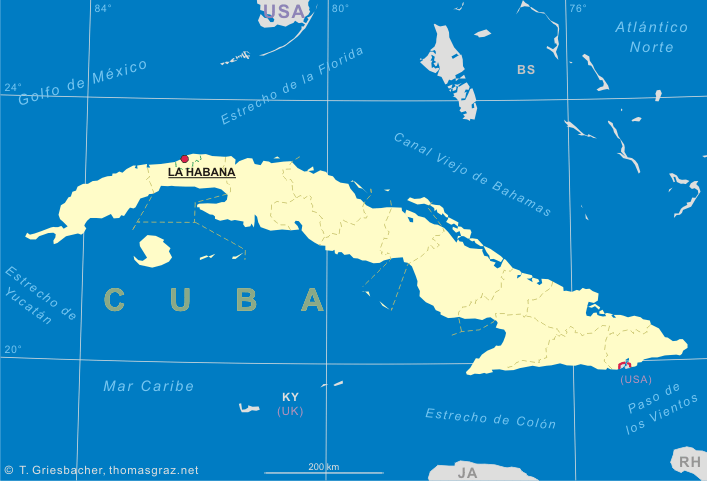
Cuba trades with the rest of the world. Castro, Inc. has been very profitable in the years following la revolución. Does the US embargo really matter as a practicality?
US President Barak Obama has shown leniency toward leftist gains in Latin America at the expense of freedom.
Will he seek more plaudits from the International Left and reward Castro,Inc.?
Or will he ignore the clamor for a change in Washington's 50-plus year policy toward Havana?
***
If you need research from open sources in Spanish, French, or Portuguese and presented in a stylish English language report or a translation of documents in said languages to English, please contact Professor Winn at by sending an email to mrenglish101@gmail.com for a prompt evaluation.
Sunday, July 11, 2010
75 Freed Political Prisoners = End of US embargo on Cuba?

With another hunger-striker near death, El Máximo Castro reappears in public (again, only still-shots), and in an apparent breakthrough on the release of a block of unjustly jailed political opponents, some observers believe it is a win-win for the rogue regime in La Habana. If not, it would not have happened.
Madrid´s El País has led the coverage of Cuba´s biggest release to date of 75 presos políticos (political prisoners) in a deal evidently brokered by Spanish Foreign Minister Miguel Ángel Moratinos Cuyabué.
The move drew jeers from influential Cuban-American blogger,Alberto de la Cruz, accusing Spain of "scheming behind closed doors with a murderous regime and the compromised and immoral leadership of the Catholic church in Cuba."
Undeniably, Spain under the unsteady leadership of socialist President José Luiz Zapatero, has been manipulated by the regime to gain coveted favorability by the European Union.
Moreover, the influential daily El Nuevo Herald in Miami reports the prisoner release is "...sólo una concesión táctica de un gobierno que enfrenta una fulminante crisis económica y es improbable que a largo plazo suavice medio siglo de autoritarismo y mano dura.(only a tactical concession by a regime facing a worsening economic crisis and it is unlikely to ease its half-century of authoritarian control in the long term).
Alas, is the door finally open for the left-leaning US President Barak Obama to ease, if not end the embargo, on the repressive prison paradise island?
Such a bold policy change would hand Castro, Inc. its long-sought moral victory and mark a total defeat in the US´s Cuba policy.
The Democrat-run House Agriculture Committee voted last week to ease the tough travel restrictions which allows more dollars to flow into Castro, Inc.´s coffers, moving the US closer to hollowing out the embargo.
Unfortunately, the trend is toward a "bailout" of Castro, Inc., not preparing for its burial as GSM mulled in its Top 6 Strategic Questions for 2010.
***
If you need research from open sources in Spanish, French, or Portuguese and presented in a stylish English language report or a translation of documents in said languages to English, please contact Professor Winn at by sending an email to wtglobalanalytics@gmail.com for a prompt evaluation.
Tuesday, March 2, 2010
ETA-FARC-Cuba-Venezuela Nexus


ETA of Spain have been working with the FARC of Colombia since 1999 (see indictment, p. 2).
The auto contains evidence from various sources (including the treasure trove from captured FARC laptops in a Colombian military raid into Ecuador) of:
- training in explosives;
- training of eterras (ETA terrorists) by FARC of "el manejo de misiles tierre/aire" (handling ground to air missiles) in their Venezuelan camps;
- ETA`s targetting of former President Andres Pastrana of Colombia and current President Alvaro Uribe, and other Colombians in Spain for assassination, at the request of the FARC.
Terrorist organizations need state support to thrive. Iran aids and abets Hezbollah and Hamas to attack Israel by proxy.
Likewise, Cuba and Venezuela use the FARC to club Colombia, Latin America`s oldest democracy.
Eterras safely protected from the law while living in Cuba coordinated contact with the FARC (see indictment, p.8).
In addition to the training grounds mentioned above, Judge Velasco focuses like a laser beam on Venezuela in his indictment by noting specifically "la cooperación gubermental venezolana en la ilícita colaboracion entre las FARC y ls ETA (the cooperation of the Venezuelan government in the illicit collaboration between the FARC and ETA)(see indictment, p.26).
US List State Sponsors of Terrorism
It is time for the United States to join Venezuela with Cuba on its State Department List of State Sponsors of Terrorism and prepare other measures to counter Caracas` negative influence in the Americas.
Wednesday, January 6, 2010
When will Zapatero Learn His Cuban Lesson?

Spain reversed course from the previous rightist Partido Popular (PP) and began a diplomatic dance with Cuba. Time and again, countries dealing with La Habana get burned.
In 2002, former Presidente of Mexico, Vincente Fox, learned that the coy dictator Fidel can pull a few tricks when he released the audio of a taped telephone conversation of Fox trying to persuade Castro to cut short a summit meeting so as to avoid crossing paths with then US President George W. Bush. Sneaky.
Regarding Spain, La Habana found a pliant European leader with a modicum of ideological affinity and thus Zapatero was maneuvered into granting diplomatic cover to break its relative isolation and find wiggle room in the respectable European Union. Spain under Zapatero flakked for Cuba in the European Parliament.
Lately, Spain still has not recognized the presidential elections in Honduras in wake of the Mel Zelaya´s ouster for his extra-constitutional shenanigans. Mr. Zelaya was a new recruuit for the Castro-Chavez Club in Latin America. Thus, Spain defers to La Habana´s view on the matter.
 Yesterday, the Spanish national dailies reported another barring of a Spanish socialist European Parliament member visiting Cuba: Cuba prohíbe entrar al eurodiputado español Luis Yáñez (Cuba bars entry of Spanish Eurodeputy Luis Yañez) - El Pais.
The cheekiest part of this - it comes three days after Spain assumed the EU presidency in which - if you can believe it - Zapatero hopes to strengthen EU ties with Cuba!
And this was not la isla´s first snub of a Eurodeputy.
Here is one more factoid to show Castro, Inc.´s appreciation for the EU´s help in propping up the criminal regime in La Habana: "The EU is Cuba's largest trading partner, with a third of all trade, almost one half of foreign direct investment and more than half of all tourists coming from Europe."
Playing with fire means eventually getting burned.
***
If you need research from open sources in Spanish, French, or Portuguese and presented in a stylish English language report or a translation of documents in said languages to English, please contact Professor Winn at by sending an email to mrenglish101@gmail.com for a prompt evaluation.
Tuesday, January 5, 2010
Cuba limps through 2009

The "demented experiment" of Castroism has "virtually destroyed" the island's economy and wrecked the lives of its people with human rights abuses.
According to a media report, Cuba faced worst economic crisis in 2009, the drop in nickel prices, less tourism, and the global financial crisis hit the la isla hard. La Habana never recuperated from the hurricanes in 2008, too. Above all, Castroism - communist kleptocracy with little human freedom- is an unmitigated fiasco.
China is Cuba´s main banker and Belarus sports credits as well for cars and machinery. Banks like Lloyds TSB in countries friendly to and with offices in the US have faced pressure to sever ties or face prosecution, at least until the Obama Administration.
Reuters reported a 1.4% increase in the Cuban economy as opposed to the 1.7% projected, but adds la isla uses"una fórmula especial para calcular el PIB (a special formula to calculate the GDP). No doubt they do.
Until the billionaires Fidel and now nominal Presidente Raúl Castro leave the scene, Cuba and the other states in the region emulating Castro, Inc. are doomed to a cruel and punishing existence.
***
If you need research from open sources in Spanish, French, or Portuguese and presented in a stylish English language report or a translation of documents in said languages to English, please contact Professor Winn at by sending an email to mrenglish101@gmail.com for a prompt evaluation.
Thursday, December 31, 2009
Top 6 Strategic Questions for 2010
Ancient Greek Plato´s teacher, Socrates, created a discipline based on asking the right questions.
For 2010, I pose the following 6 strategic questions concerning global security.
1. What will the international community do about Iran?
Iran´s rogue regime is nearing nuclear breakout (see Net Assessment:Iran) and tests ballistic missiles to deliver them at increasing greater ranges. The widespread public unrest over the burial of opposition leader, theGrand Ayatollah Hossein Ali Montazeri, coincided with the Shia holiday of Ashoura and clashes with government security forces resulted in many arrests and deaths. Notable is the student unrest, the country´s future. Just like the reaction in October to Mr. Ahmadinejad's fraud-tainted re-election as president, clearly the Iranian street is bubbling over with rage at the regime. The tyrants in Teheran represent a clear and present danger to Iran and the world.
2. Will radical Islamic terrorism wax or wane?
Is the so-called "Christmas Bomber" of Northwest Flight 253 to Detroit an opening shot in a wave of radical Islamic terrorism against Western interests around the world? Ungovernable Somalia and war-torn Yemen make the Horn of Africa region a hot zone haven for terrorists. Al Qaeda Arabian Peninsula (AQAP) and Al Qaeda Islamic Maghreb (AQIM) are active as well. The tyrants in Teheran also figure into the equation given the current regime is Terror, Inc. Radical Islamic terrorism is mostly organized by state sponsors and serves as a proxy to attack larger and more powerful states.
3. What will China’s recent gains in diplomatic currency portend?
China has risen. The Middle Kingdom´s audacious diplomatic play at the so-called climate change conference in Copenhagen in early December by besting the overmatched US President Obama is more evidence (see "China Can Say No"). China surpassed Germany at the beginning of 2009 to become the third-largest economy in the world and will pass Japan to become the second in 2010. Beijing is claiming the diplomatic power equal to its economic power. Attendant military power and more muscular power projection continues. One weakness is its so-called "soft power" or cultural assertiveness. China offers an alternative to US preeminence and it does not shy away from it.
4. Will the Nato mission fail in Afghanistan?
Nato is losing in Afghanistan. US President Obama's half-measure of 30,000 more combat troops plus another 5,000 (pledged) from Nato allies is unlikely to turn the tide. Together, the troop contingent is the bare minimum General McChrystal requested for his new strategy. An added worry: Pakistan may yet yield to Taliban and Al Qaeda pressures complicating any scenario for "victory."
5. Does Castro, Inc. survive?
¿Fin de la Revolución? Castro, Inc. celebrated the 40th anniversary of its violent overthrow of strongman Batista on January 1 this year. La revolución exchanged one corrupt blood-thirsty strongman for another corrupt blood-thirsty strongman, Fidel Castro. Forty years and absolute power allowed the Castro brothers to amass a vast wealth to the point billionaire Fidel ranked in Forbes list in 2006. This came despite the hated US embargo, el bloqueo (blockade) in Castro Spanish. After a fair wage for the boss, El Jefe, really, how much is left for the proletariat?
Hard times again have hit the regime. The Castro business survived the high drama of the October 1962 missile crisis sparked by Soviet missiles on the island in Mr. Castro´s hot-headed attempt to use Moscow to get revenge on Washington after Bay of Pigs. It muddled through the período especial (special period) after the collapse of the Soviet Union and the sugar subsidy scheme evaporated. Castro investments in tourism and sexual exploitation were attempts to earn more hard currency, as if drug smuggling is not enough.Then, El Jefe himself, reaching mortality, "temporarily" passed the baton to brother Raúl. The king stepped aside.
Will the deteriorating status quo hold? Whenever Fidel Castro dies, the pernicious disease of Castroism has been spread to others in the region, but at least the prisoners on the paradisaical island would win the freedom and full meal they deserve if the military moved to save la patría (country).
6. What is next for the European Union?
The EU-27, from the humble beginnings of the European Economic Community (EEC), now ranges from the Atlantic Ocean to the border with Russia. Spain, the "new sick man of Europe," becomes the president for the next six months on January 1. Presidente Zapatero states he hopes to superar la indiferencia de la ciudadanía respecto a Europa (overcome the indifference to Europe). The disconnect between European elites and the citizenry has plagued the EU from the start.
It is the economy, stupid. In the Eurobarometer 72 released this month, 54% of the EU-27 believe the "worse it yet to come" economically. Socialism does not work. That failed economic theory gnaws at the core of the EU´s troubles. Double digit unemployment afflicts the member states. The EU eked out 0.4% growth in the third quarter officially ending the recession on paper. At the close of 2009, Greece emerged as a threat to the euro. There still is no president of Europe. A shared history and the attendant lingering mutual suspicions, an aging population in rigid welfare states, weak military strength and hesitancy to fully support the Nato mission in Afghanistan, energy dependence on Russia and Iran, and a Tower of Babel in diplomacy, all detract from the "union" which appears more like a collection. Add fierce nationalism in the latest round of EU appointments and large nations pitted against smaller nations as even more evidence of disunion.
Happy 2010!
***
If you need research from open sources in Spanish, French, or Portuguese and presented in a stylish English language report or a translation of documents in said languages to English, please contact Professor Winn at by sending an email to mrenglish101@gmail.com for a prompt evaluation.
For 2010, I pose the following 6 strategic questions concerning global security.
6 Strategic Questions for 2010
1. What will the international community do about Iran?
Iran´s rogue regime is nearing nuclear breakout (see Net Assessment:Iran) and tests ballistic missiles to deliver them at increasing greater ranges. The widespread public unrest over the burial of opposition leader, theGrand Ayatollah Hossein Ali Montazeri, coincided with the Shia holiday of Ashoura and clashes with government security forces resulted in many arrests and deaths. Notable is the student unrest, the country´s future. Just like the reaction in October to Mr. Ahmadinejad's fraud-tainted re-election as president, clearly the Iranian street is bubbling over with rage at the regime. The tyrants in Teheran represent a clear and present danger to Iran and the world.
2. Will radical Islamic terrorism wax or wane?
Is the so-called "Christmas Bomber" of Northwest Flight 253 to Detroit an opening shot in a wave of radical Islamic terrorism against Western interests around the world? Ungovernable Somalia and war-torn Yemen make the Horn of Africa region a hot zone haven for terrorists. Al Qaeda Arabian Peninsula (AQAP) and Al Qaeda Islamic Maghreb (AQIM) are active as well. The tyrants in Teheran also figure into the equation given the current regime is Terror, Inc. Radical Islamic terrorism is mostly organized by state sponsors and serves as a proxy to attack larger and more powerful states.
3. What will China’s recent gains in diplomatic currency portend?
China has risen. The Middle Kingdom´s audacious diplomatic play at the so-called climate change conference in Copenhagen in early December by besting the overmatched US President Obama is more evidence (see "China Can Say No"). China surpassed Germany at the beginning of 2009 to become the third-largest economy in the world and will pass Japan to become the second in 2010. Beijing is claiming the diplomatic power equal to its economic power. Attendant military power and more muscular power projection continues. One weakness is its so-called "soft power" or cultural assertiveness. China offers an alternative to US preeminence and it does not shy away from it.
4. Will the Nato mission fail in Afghanistan?
Nato is losing in Afghanistan. US President Obama's half-measure of 30,000 more combat troops plus another 5,000 (pledged) from Nato allies is unlikely to turn the tide. Together, the troop contingent is the bare minimum General McChrystal requested for his new strategy. An added worry: Pakistan may yet yield to Taliban and Al Qaeda pressures complicating any scenario for "victory."
5. Does Castro, Inc. survive?
¿Fin de la Revolución? Castro, Inc. celebrated the 40th anniversary of its violent overthrow of strongman Batista on January 1 this year. La revolución exchanged one corrupt blood-thirsty strongman for another corrupt blood-thirsty strongman, Fidel Castro. Forty years and absolute power allowed the Castro brothers to amass a vast wealth to the point billionaire Fidel ranked in Forbes list in 2006. This came despite the hated US embargo, el bloqueo (blockade) in Castro Spanish. After a fair wage for the boss, El Jefe, really, how much is left for the proletariat?
Hard times again have hit the regime. The Castro business survived the high drama of the October 1962 missile crisis sparked by Soviet missiles on the island in Mr. Castro´s hot-headed attempt to use Moscow to get revenge on Washington after Bay of Pigs. It muddled through the período especial (special period) after the collapse of the Soviet Union and the sugar subsidy scheme evaporated. Castro investments in tourism and sexual exploitation were attempts to earn more hard currency, as if drug smuggling is not enough.Then, El Jefe himself, reaching mortality, "temporarily" passed the baton to brother Raúl. The king stepped aside.
Will the deteriorating status quo hold? Whenever Fidel Castro dies, the pernicious disease of Castroism has been spread to others in the region, but at least the prisoners on the paradisaical island would win the freedom and full meal they deserve if the military moved to save la patría (country).
6. What is next for the European Union?
The EU-27, from the humble beginnings of the European Economic Community (EEC), now ranges from the Atlantic Ocean to the border with Russia. Spain, the "new sick man of Europe," becomes the president for the next six months on January 1. Presidente Zapatero states he hopes to superar la indiferencia de la ciudadanía respecto a Europa (overcome the indifference to Europe). The disconnect between European elites and the citizenry has plagued the EU from the start.
It is the economy, stupid. In the Eurobarometer 72 released this month, 54% of the EU-27 believe the "worse it yet to come" economically. Socialism does not work. That failed economic theory gnaws at the core of the EU´s troubles. Double digit unemployment afflicts the member states. The EU eked out 0.4% growth in the third quarter officially ending the recession on paper. At the close of 2009, Greece emerged as a threat to the euro. There still is no president of Europe. A shared history and the attendant lingering mutual suspicions, an aging population in rigid welfare states, weak military strength and hesitancy to fully support the Nato mission in Afghanistan, energy dependence on Russia and Iran, and a Tower of Babel in diplomacy, all detract from the "union" which appears more like a collection. Add fierce nationalism in the latest round of EU appointments and large nations pitted against smaller nations as even more evidence of disunion.
Happy 2010!
***
If you need research from open sources in Spanish, French, or Portuguese and presented in a stylish English language report or a translation of documents in said languages to English, please contact Professor Winn at by sending an email to mrenglish101@gmail.com for a prompt evaluation.
Monday, March 16, 2009
Report: Cuba, Venezuela could host Russian bombers
 credit:DND Handout Photo
Report: Cuba, Venezuela could host Russian bombers
Back to the Cold War?
When US President Obama visited Canada in his first trip abroad in late February, Canadian fighters intercepted two Russian Tu-95 bombers in an increasing show of strength off the North American coastline.
The Russian-Cuban-Venezuelan connection must be taken seriously.
Get your International Policy
 books today!
Wednesday, March 11, 2009
Commuting Cuba's Embargo
 credit: AP
The new Obama Administration in Washington has raised high hopes about imminent changes in international policy on a host of issues.
The tiny state of Cuba still figures in a prominent way in the US international policy calculus. The Cuban exile community is politically potent and savvy. The country's geographic proximity is another concern.
Since Fidel Castro marched triumphantly into Havana in 1959, a Cold War has raged between the two hemispheric neighbors filled with mutual suspicion and high drama including almost triggering the nuclear trip wire in the Missile Crisis with the former Soviet Union.
While the old warrior Fidel has retired due to serious health reasons resulting from a routine surgical procedure (in most countries without Cuban-style medical care), his somewhat younger brother (five years difference) only changes the face of murderous Castro, Inc. which runs the island prison for their sole economic benefit.

Indeed, the Castro family fortune is estimated at nearly $1 billion, according to Forbes Magazine in 2006. What would Fathers Marx and Lenin think?
It seems the US embargo has not dented Castro, Inc. given Cuba trades with every other country (and limited items with the US). The embargo is not about economics, but politics. It is a test of wills between freedom and liberty and repression and murder.
If the US blinks under President Obama - something every president has not done since 1959 - and commutes the embargo, a moral victory goes to the dying dictator and the Castro-clones throughout the region and the world. Imagine the Hugo Chavez victory speech!
The US will not garner an ounce of recognition contrary to the columnists and other observers otherwise who have mixed motivations for sporting a repeal of the embargo. On the contrary, th price could be very high. Surrendering in face of tyranny never accrues profits or benefits for democracies.
Raul Castro is more of the same brutal repression in the name of profits for the Castro clique and a desperate attempt at regime survival. An internal putsch to end blood-dipped Castroism once and for all is one likely scenario to solve the Cuban problem. Now that is Cuban self-determination.
Get your International Policy
books today!
Sunday, February 1, 2009
Havana-Moscow Tango on Washington's Doorstep
 credit: AFP
The Russia-Cuba tango is an extension of Moscow's push to strengthen ties with Latin America at the expense of Washington.
Perceived and real deficiencies in the former Bush Administration's policy toward the region provided an opening to not only Russia, but China, too.
What are the motives for rekindling a relationship that for the most part languished after the fall of the Soviet Union in 1991?
Observers point to three key reasons: 1) oil, 2) money, and 3) Russian mischief in Washington's backyard.
Cuba is aggressively exploring oil in the Gulf of Mexico and Russian oil company Lukkoil wants a share.
Cash-strapped Cuba gladly accepted a recent $20 million loan to buy construction materials and equipment. Cuba is desperate from cash and a friend in need is a friend indeed.
Russian mischief is highlighted by the visit of Russian Deputy Prime Minister Igor Sechin on July 30 to Havana, an old Cuban hand in the KGB responsible for many secretive arms transfers in the region during the Cold War. Sechin is also a close ally of Prime Minister Vladimir Putin. Cuba, laying off the southern US coast, could return to be a linchpin in Moscow's strategy to bring Russian influence to Washington's periphery.
Certainly there exist enough motives for an even closer Havana-Moscow partnership going forward given a regional climate at the moment tilted against Washington and more open to outsiders.
Subscribe to:
Posts (Atom)