


GSM has assiduously followed the dizzying downward spiral of the European Union.
The fundamental weakness, above them all, is the inescapable truism that socialism is a failed economic theory.
The faux union of Western and Central European states is now naked for all to see.
The second Greek bailout has spurred the contagion across the Old Continent as Ireland, Portugal, Spain, and now Italy (the second most indebted economy in the EU) weigh on investors.
The invisible hand may be constrained, but in the end, the laws of economics cannot be denied. The market will out.
The evaporating EU cannot be saved if Spain or Italy cede to international investors and German and French taxpayers cannot cough up the euros for the collapsing EU dream.
***If you need research from open sources in Spanish, French, or Portuguese and presented in a stylish English language report or a translation of documents in said languages to English, please contact Professor Winn at by sending an email to mrenglish101@gmail.com for a prompt evaluation.
Showing posts with label Germany. Show all posts
Showing posts with label Germany. Show all posts
Monday, July 11, 2011


Wednesday, June 1, 2011
EU Center Collapasing
News about the EU periphery is horrible. Now its core is in trouble.
Greece may yet leave the faux European Union (EU) by the end of this year after its economy remains in dire straits. It was never a qualifying state, but at least it kept its nemesis Turkey out.
Ireland and Portugal got their multi-billion euro bailouts to keep their economies afloat by passing the bill to fellow EU partners.
Spain is wobbling, but resists any talk of a bailout.
EU Center Collapsing
Germany and France have been the two principal authors of the EU experiment since its founding with the Treaty of Rome in 1957.
The Germany-France nucleus is now unraveling.
While Sarkozy's France seems to be stable, it is Germany, the EU's largest economy (nearly $3 trillion GDP), where attention now turns in light of two recent bits of news: another devastating electoral loss by Chancellor Angela Merkel's ruling Christian Democratic Union (CDU) Party and the Cucumber Crisis.
Lights out for Germany?
In another stinging electoral defeat this year, Chancellor Merkel's party lost an election in Germany's most populous state, North Rhine-Westphalia last Sunday. The CDU also lost control of its upper house of the German Parliament as a result, the Bundesrat.
Germany's bailout of Greece continues to exact a toll on Merkel's governance.
The political shift in Germany unmistakably away from the sane CDU could have a deleterious effect on an already hobbled EU going forward.
As an immediate reaction to election defeat, Merkel decided to essentially turn out the lights in Germany by ordering all nuclear plants extinguished by 2022, a concession to the wild-eyed Green Party. More energy will have to be pumped in from France and Poland at an added cost to German consumers.
Despite evidence abound, Germany will rely more upon a demonstrably failed wind power scheme to fuel the EU's largest economy. It is a very risky move for the country and the ailing EU around it.
Cucumber Crisis Crisscross
The Spanish cucumber crisis is more evidence of a Germany adrift.
An e.coli bacteria breakout in Hamburg last week has now claimed 14 lives across the country.
Fingers quickly pointed at Spain in more bad news for Madrid at a time of economic malaise.
However, now, German health authorities have backtracked leaving Spain the option to seek legal relief from the cucumber crisscross.
Spain faces a €43 million loss in wake of the false claims.
EU Death Throng
The EU continues to wither away. Now, even its core is crumbling.
While German Chancellor Merkel is expected to run for a third term in 2013, that looks less certain in the wake of the electoral defeats for her party and her unsteady leadership in face of truly difficult issues.
Berlin will regret the wind energy folly over the safety and certainty of nuclear energy.
The unwarranted highly-publicized panic to pin the cucumber crisis on Spain shows more than poor judgement. In the larger scheme, it is yet another sign of the faux EU.
A high level of mistrust runs deep between the member state capitals. The ghosts of history stalk the EU.
To undermine another national economy so recklessly is beyond excusable.
No, the EU is in its death throng. The collapse of steady and sane governance at the EU's core, Germany, marks another milestone in the organization's checkered history.
The silly Euro elitist experiment is coming to an end and not all of the overpaid and underworked bureaucrats in Brussels can put it back together again.
***If you need research from open sources in Spanish, French, or Portuguese and presented in a stylish English language report or a translation of documents in said languages to English, please contact Professor Winn at by sending an email to mrenglish101@gmail.com for a prompt evaluation.
Sunday, November 28, 2010
Invisible Hand Crushing €uro House of Cards

Whether practiced in the former Soviet Union, Cuba, North Korea, or the European Union, statism does not work.
Failed EU Economic System
At the end of the day, the much-maligned ''invisible hand'' of the market exacts its toll and cannot be defied without excessive costs. Just look at the collapsing euro house of cards.
Spain is learning a difficult lesson by the ''invisible hand'' as the bond market moves mercilessly against the Iberian giant spurring a huge leap in its risk premium this week, the highest since the euro's debut.
Effete socialist President Zapatero in Madrid, with declining popular support, still strenuously resists talk of a bailout, but so did Ireland at first.
The European social welfare experiment is nearing its end - in disaster.
The iron hand of dirigisme marked by parsimonious economic growth, unfunded promises by elite politicians to provide cradle-to-grave livelihood, entrenched unions, and above all - the disincentive for entrepreneurship and economic freedom to excel beyond one's social station at birth - mires an ageing, energy-strapped, and near defenseless (save Nato) EU adrift in a sea of pain. High tide is now upon the euro-zone.
The EU crisis is social, economic, and political. There is no president of the EU to bring discipline to decision making. Too much shared history, atavism, and a gulf between the ''rich core'' and ''poor periphery'' cannot be reconciled. Divisions are also geographic: east-west and north-south. A divided house will not stand.
Finally, bureaucrats and politicians are not smarter than the business class in economic production, job creation, and bolstering economic freedom. The lack of economic freedom smothers the euro zone.
Wither the EU?
The European Union began without the consent of the people yet now the hoi polloi (taxpayers) are being asked to save the elite dream began with the Treaty of Rome in March 1957.
Greece. Ireland. Probably Portugal. Maybe Spain. Then Italy. Like dominoes, the periphery EU countries are collapsing and pressuring the core (Germany and France) to stop the economic hemorrhaging.
Ironically, Ireland reluctantly joined the EU scheme. The United Kingdom smartly kept the pound sterling.
GSM looked into its crystal ball in December 2009 and asked in its Six Strategic Questions for 2010: What is next for the European Union?
As far back as May, the respected business journal Bloomberg raised the prospect of a disintegrating EU.
Six months later, the EU is unraveling daily. Slovakia exempted itself from any aid in the Irish bailout. So much for the ''one for all and all for one'' happy EU.
Germany, the EU's ATM, now sees its own credit-worthiness stressed.
Fundamental Failure
While the current crisis focuses on sovereign debt and bank lending, the fundamental failure is the attempt to fight market forces with excessive taxes, generous social welfare policies, and the ''omnipotent State'' growing into a Leviathan in every citizen's life.
Frankly, the mature EU economies are not producing what the world wants to buy. Where is the EU's Apple or Toshiba?
Moreover, the economies cannot grow or compete in the global economy with the impediments of overregulation and nanny-state interference from the national capitals and the colder blanket from Brussels' bureaucrats.
While the EU continues to voluntarily kill its economies, its global competitors move forward.
The market wins at the end of the day as demonstrated by world history, a lesson unfolding before the world today.
The faux European Union is dissolving along with its faux currency.
***
If you need research from open sources in Spanish, French, or Portuguese and presented in a stylish English language report or a translation of documents in said languages to English, please contact Professor Winn at by sending an email to mrenglish101@gmail.com for a prompt evaluation.
Wednesday, May 12, 2010
EU Crisis Endures on all fronts

To read the current crisis solely through the economic lens is myopic.
Political Problems Perculate
The comic Cameron- Clegg Coalition in London, the United Kingdom, will not last.
The UK´s ambivalance toward the EU is well- known and newly- minted Prime Minister Cameron is a pronounced Euro- skeptic. Political instability in one of Europe´s most important states does not bode well for the Continent.
Centrist Chancellor Merkel is under mounting pressure and probably lost a key regional election last Sunday as part of the fallout from the bailout of Greece.
Last March, the UMP Party of President Sarkozy was " thrashed" in regional elections in France.
And now on to beleaguered but beloved Spain where President Zapatero, nearing the end of his 6- month term as the current leader of the European Union, is enacting only tepid measures to tamp down the burgeoning debt despite IMF support.
The absence of political will to make tough choices will only likely shortly postpone more drastice measures. The myriad alphabet soup of unions is already sharpening their swords to oppose even these weak moves.
Economic Strictures
The IMF sees Europe´s economy in a " tenuous recovery" and actually there is no basis to believe the EU economies will recover anytime soon.
There is no single unified economic entity backing up the euro like the United States for the dollar. The euro is a faux currency like the EU is a faux union.
"L'incertitude domine," ( Uncertainy reigns) says Jean-Claude Trichet, president of the European Central Bank, as quoted in Le Figaro.
The uncertainty surely lingers when the $1 trillion resuce plan for Greece and the euro proves incapable of saving both. Greece will surely cede to EU pressure and leave the euro zone.
It can only be ironic that Spain is one of the sick economies at the same time it heads the dizzingly merry- go- round EU presidency.
Social Fallout
The question must be if the current leaders in Europe can control the streets.
The battles between Greek police and protestors, including invasion of government buildings, is just the tip of the iceberg.
Central governments from Lisbon to Athens through socialist economic policies have produced large dependent class of citizens who see their security eroding ( rightly) with the austerity measures that have to be implemented to try to calm the markets and have a chance to save the EU project.
The social market system is an abject failure because in the end there is not enough money to back the promises of the politicians for cradle-to-grave upkeep of their voters.
Conclusions
The Europe Union continues to unravel. Its fundamentals are rickety.
The weight of debt is crushing to economies that barely produce anything the world consumer wants to buy.
Again, where is the EU´s Microsoft, Apple or Intel?
Bureaucrats in Brussels are a poor substitute and political-social economic policies that punish success and wealth yield... well, less success and wealth.
Until Europe rids itself of pathetic socialist economic policies, its schlerotic economic growth will persist and in the end the invisible hand will deal a knockout blow.
***
Thursday, December 31, 2009
Top 6 Strategic Questions for 2010
Ancient Greek Plato´s teacher, Socrates, created a discipline based on asking the right questions.
For 2010, I pose the following 6 strategic questions concerning global security.
1. What will the international community do about Iran?
Iran´s rogue regime is nearing nuclear breakout (see Net Assessment:Iran) and tests ballistic missiles to deliver them at increasing greater ranges. The widespread public unrest over the burial of opposition leader, theGrand Ayatollah Hossein Ali Montazeri, coincided with the Shia holiday of Ashoura and clashes with government security forces resulted in many arrests and deaths. Notable is the student unrest, the country´s future. Just like the reaction in October to Mr. Ahmadinejad's fraud-tainted re-election as president, clearly the Iranian street is bubbling over with rage at the regime. The tyrants in Teheran represent a clear and present danger to Iran and the world.
2. Will radical Islamic terrorism wax or wane?
Is the so-called "Christmas Bomber" of Northwest Flight 253 to Detroit an opening shot in a wave of radical Islamic terrorism against Western interests around the world? Ungovernable Somalia and war-torn Yemen make the Horn of Africa region a hot zone haven for terrorists. Al Qaeda Arabian Peninsula (AQAP) and Al Qaeda Islamic Maghreb (AQIM) are active as well. The tyrants in Teheran also figure into the equation given the current regime is Terror, Inc. Radical Islamic terrorism is mostly organized by state sponsors and serves as a proxy to attack larger and more powerful states.
3. What will China’s recent gains in diplomatic currency portend?
China has risen. The Middle Kingdom´s audacious diplomatic play at the so-called climate change conference in Copenhagen in early December by besting the overmatched US President Obama is more evidence (see "China Can Say No"). China surpassed Germany at the beginning of 2009 to become the third-largest economy in the world and will pass Japan to become the second in 2010. Beijing is claiming the diplomatic power equal to its economic power. Attendant military power and more muscular power projection continues. One weakness is its so-called "soft power" or cultural assertiveness. China offers an alternative to US preeminence and it does not shy away from it.
4. Will the Nato mission fail in Afghanistan?
Nato is losing in Afghanistan. US President Obama's half-measure of 30,000 more combat troops plus another 5,000 (pledged) from Nato allies is unlikely to turn the tide. Together, the troop contingent is the bare minimum General McChrystal requested for his new strategy. An added worry: Pakistan may yet yield to Taliban and Al Qaeda pressures complicating any scenario for "victory."
5. Does Castro, Inc. survive?
¿Fin de la Revolución? Castro, Inc. celebrated the 40th anniversary of its violent overthrow of strongman Batista on January 1 this year. La revolución exchanged one corrupt blood-thirsty strongman for another corrupt blood-thirsty strongman, Fidel Castro. Forty years and absolute power allowed the Castro brothers to amass a vast wealth to the point billionaire Fidel ranked in Forbes list in 2006. This came despite the hated US embargo, el bloqueo (blockade) in Castro Spanish. After a fair wage for the boss, El Jefe, really, how much is left for the proletariat?
Hard times again have hit the regime. The Castro business survived the high drama of the October 1962 missile crisis sparked by Soviet missiles on the island in Mr. Castro´s hot-headed attempt to use Moscow to get revenge on Washington after Bay of Pigs. It muddled through the período especial (special period) after the collapse of the Soviet Union and the sugar subsidy scheme evaporated. Castro investments in tourism and sexual exploitation were attempts to earn more hard currency, as if drug smuggling is not enough.Then, El Jefe himself, reaching mortality, "temporarily" passed the baton to brother Raúl. The king stepped aside.
Will the deteriorating status quo hold? Whenever Fidel Castro dies, the pernicious disease of Castroism has been spread to others in the region, but at least the prisoners on the paradisaical island would win the freedom and full meal they deserve if the military moved to save la patría (country).
6. What is next for the European Union?
The EU-27, from the humble beginnings of the European Economic Community (EEC), now ranges from the Atlantic Ocean to the border with Russia. Spain, the "new sick man of Europe," becomes the president for the next six months on January 1. Presidente Zapatero states he hopes to superar la indiferencia de la ciudadanía respecto a Europa (overcome the indifference to Europe). The disconnect between European elites and the citizenry has plagued the EU from the start.
It is the economy, stupid. In the Eurobarometer 72 released this month, 54% of the EU-27 believe the "worse it yet to come" economically. Socialism does not work. That failed economic theory gnaws at the core of the EU´s troubles. Double digit unemployment afflicts the member states. The EU eked out 0.4% growth in the third quarter officially ending the recession on paper. At the close of 2009, Greece emerged as a threat to the euro. There still is no president of Europe. A shared history and the attendant lingering mutual suspicions, an aging population in rigid welfare states, weak military strength and hesitancy to fully support the Nato mission in Afghanistan, energy dependence on Russia and Iran, and a Tower of Babel in diplomacy, all detract from the "union" which appears more like a collection. Add fierce nationalism in the latest round of EU appointments and large nations pitted against smaller nations as even more evidence of disunion.
Happy 2010!
***
If you need research from open sources in Spanish, French, or Portuguese and presented in a stylish English language report or a translation of documents in said languages to English, please contact Professor Winn at by sending an email to mrenglish101@gmail.com for a prompt evaluation.
For 2010, I pose the following 6 strategic questions concerning global security.
6 Strategic Questions for 2010
1. What will the international community do about Iran?
Iran´s rogue regime is nearing nuclear breakout (see Net Assessment:Iran) and tests ballistic missiles to deliver them at increasing greater ranges. The widespread public unrest over the burial of opposition leader, theGrand Ayatollah Hossein Ali Montazeri, coincided with the Shia holiday of Ashoura and clashes with government security forces resulted in many arrests and deaths. Notable is the student unrest, the country´s future. Just like the reaction in October to Mr. Ahmadinejad's fraud-tainted re-election as president, clearly the Iranian street is bubbling over with rage at the regime. The tyrants in Teheran represent a clear and present danger to Iran and the world.
2. Will radical Islamic terrorism wax or wane?
Is the so-called "Christmas Bomber" of Northwest Flight 253 to Detroit an opening shot in a wave of radical Islamic terrorism against Western interests around the world? Ungovernable Somalia and war-torn Yemen make the Horn of Africa region a hot zone haven for terrorists. Al Qaeda Arabian Peninsula (AQAP) and Al Qaeda Islamic Maghreb (AQIM) are active as well. The tyrants in Teheran also figure into the equation given the current regime is Terror, Inc. Radical Islamic terrorism is mostly organized by state sponsors and serves as a proxy to attack larger and more powerful states.
3. What will China’s recent gains in diplomatic currency portend?
China has risen. The Middle Kingdom´s audacious diplomatic play at the so-called climate change conference in Copenhagen in early December by besting the overmatched US President Obama is more evidence (see "China Can Say No"). China surpassed Germany at the beginning of 2009 to become the third-largest economy in the world and will pass Japan to become the second in 2010. Beijing is claiming the diplomatic power equal to its economic power. Attendant military power and more muscular power projection continues. One weakness is its so-called "soft power" or cultural assertiveness. China offers an alternative to US preeminence and it does not shy away from it.
4. Will the Nato mission fail in Afghanistan?
Nato is losing in Afghanistan. US President Obama's half-measure of 30,000 more combat troops plus another 5,000 (pledged) from Nato allies is unlikely to turn the tide. Together, the troop contingent is the bare minimum General McChrystal requested for his new strategy. An added worry: Pakistan may yet yield to Taliban and Al Qaeda pressures complicating any scenario for "victory."
5. Does Castro, Inc. survive?
¿Fin de la Revolución? Castro, Inc. celebrated the 40th anniversary of its violent overthrow of strongman Batista on January 1 this year. La revolución exchanged one corrupt blood-thirsty strongman for another corrupt blood-thirsty strongman, Fidel Castro. Forty years and absolute power allowed the Castro brothers to amass a vast wealth to the point billionaire Fidel ranked in Forbes list in 2006. This came despite the hated US embargo, el bloqueo (blockade) in Castro Spanish. After a fair wage for the boss, El Jefe, really, how much is left for the proletariat?
Hard times again have hit the regime. The Castro business survived the high drama of the October 1962 missile crisis sparked by Soviet missiles on the island in Mr. Castro´s hot-headed attempt to use Moscow to get revenge on Washington after Bay of Pigs. It muddled through the período especial (special period) after the collapse of the Soviet Union and the sugar subsidy scheme evaporated. Castro investments in tourism and sexual exploitation were attempts to earn more hard currency, as if drug smuggling is not enough.Then, El Jefe himself, reaching mortality, "temporarily" passed the baton to brother Raúl. The king stepped aside.
Will the deteriorating status quo hold? Whenever Fidel Castro dies, the pernicious disease of Castroism has been spread to others in the region, but at least the prisoners on the paradisaical island would win the freedom and full meal they deserve if the military moved to save la patría (country).
6. What is next for the European Union?
The EU-27, from the humble beginnings of the European Economic Community (EEC), now ranges from the Atlantic Ocean to the border with Russia. Spain, the "new sick man of Europe," becomes the president for the next six months on January 1. Presidente Zapatero states he hopes to superar la indiferencia de la ciudadanía respecto a Europa (overcome the indifference to Europe). The disconnect between European elites and the citizenry has plagued the EU from the start.
It is the economy, stupid. In the Eurobarometer 72 released this month, 54% of the EU-27 believe the "worse it yet to come" economically. Socialism does not work. That failed economic theory gnaws at the core of the EU´s troubles. Double digit unemployment afflicts the member states. The EU eked out 0.4% growth in the third quarter officially ending the recession on paper. At the close of 2009, Greece emerged as a threat to the euro. There still is no president of Europe. A shared history and the attendant lingering mutual suspicions, an aging population in rigid welfare states, weak military strength and hesitancy to fully support the Nato mission in Afghanistan, energy dependence on Russia and Iran, and a Tower of Babel in diplomacy, all detract from the "union" which appears more like a collection. Add fierce nationalism in the latest round of EU appointments and large nations pitted against smaller nations as even more evidence of disunion.
Happy 2010!
***
If you need research from open sources in Spanish, French, or Portuguese and presented in a stylish English language report or a translation of documents in said languages to English, please contact Professor Winn at by sending an email to mrenglish101@gmail.com for a prompt evaluation.
Wednesday, November 11, 2009
Headless in Berlin

- Former US President John F. Kennedy in his Berlin speech, June 1963
The United States was left headless in Berlin last Monday.
US President Barak Hussein Obama did not deign to visit the 20th anniversary of the Berlin Wall´s fall for three main reasons. Instead, he dispatched Secretary of State Hillary R. Clinton, a diplomatic downgrade, to mingle with the presidents and prime ministers of US allies in Europe.
It is a despicable act and a shameful behavior by the leader of the free world and president of the very country that forced the hands of the communist dictatorships to surrender leading to fall of the Iron Curtain symbolized by the fall of the odious Berlin Wall twenty years ago. Unfortunately, it is consistent with a US president ill at ease with American success and leadership in the world and devoid of intellectul curiosity about global security.
 Tone death to history, US President Barak Hussein Obama betrayed the legacy of his Democrat Party´s main icon in the latter half of the last century, John F. Kennedy, who proudly stood at the wall and declared: ´´All free men, wherever they may live, are citizens of Berlin, and, therefore, as a free man, I take pride in the words "Ich bin ein Berliner.´´
US President Obama, who is often lauded for his soaring rhetoric, cannot ever match the substance of former President Kennedy nor his committment for freedom, sadly.
Moreover, the Democrat Party was on the wrong side of history seeking more accomodation and less confrontation with the Soviet Union after the US reversal in the Vietnam War. Perhaps President Obama did not want to bring attention to this fact.
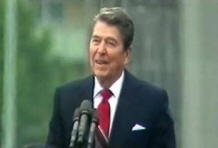
´´I noticed words crudely spray-painted upon the wall, perhaps by a young Berliner (quote):"This wall will fall. Beliefs become reality." Yes, across Europe, this wall will fall, for it cannot withstand faith; it cannot withstand truth. The wall cannot withstand freedom.´´
Indeed, a little freedom is very dangerous for tyrannical regimes. Liberty cannot be snuffed out by concrete and steel when the will of the people is greater than its dictators.
President Obama´s absence at the anniversary last Monday is a telling indictment on his rank inability to fulfill the august duties of president and serve as the number one advocate defender of freedom, a horrifying combination. Today´s tyrannts may misread the US president´s snub and imperil global security further.
Saturday, November 7, 2009
Cold War Series Part I: Soviet Communist Ascendancy
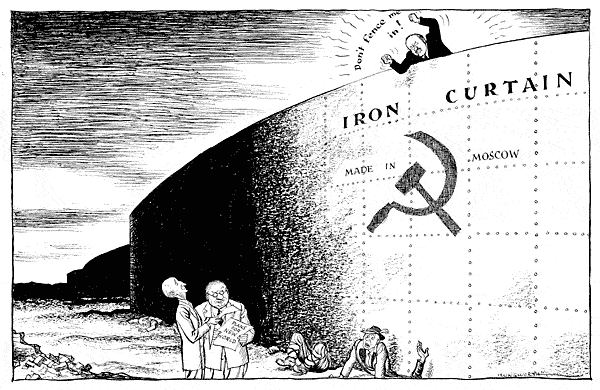
The Western democracies led by the United States rejected this barbarism.
GSM in a four part series reviews the Cold War. Part I covers the ascendancy of Soviet communism. Part II shows how the Cold War was not won. Part III demonstrates how the West´s iron-willed determination forced Moscow to relent. Finally, Part IV expounds upon the lessons learned which are applicable to the current international system.
From the ashes of World War II sprang almost immediately the Cold War, the titanic struggle between the West (NATO) and the East (Warsaw Pact). Namely, the United States and the Soviet Union managed a rivalry across the global chessboard for supremacy. Would tyranny and command economics triumph over freedom and market economics? For 46 years, the two sides competed for prestige, allies to carry forward the fight, and of course, victory.
The early contests began in the divided Germany - Federal Republic of Germany (West Germany) and the German Democratic Republic (East Germany) in the former Nazi capital - Berlin. The West led by US President Harry Truman defied Soviet attempts to block land routes into western Berlin (where the western Allies had divided the capital into zones) with a massive airlift transferring supplies to 2.2 million inhabitants. The Soviets did not act to stop the airlift and the crisis abated and West Berlin became an island of freedom and market economics in the heart of East Germany. West Berlin and the divided Germany would be a constant thorn in the side of the Soviet Union throughout the Cold War.
The US-Soviet rivalry stretched across the globe touching every continent. US President Truman believed China´s helped spark the Korean Conflict which was fought to a stalemate. That unsettled conflict precipitated a challenge later in Vietnam where first the French were evicted by a nationalistic communist insurgency and later the United States who left the quagmire with a shameful defeat. The dominoes fell later as predicted in Laos and Cambodia who also fell under communist tyranny. Re-education camps and ´´the killing fields´´of Cambodia proceeded to subject millions to a fate of certain death.
Indeed, the 1970s can arguably be the apogee of Soviet communism. The West was reeling. Many observers believed Moscow´s march was unstoppable and that capitalism was a spent force. At the height of the Arab-Israeli War in 1973, US President Nixon put the country on DEFCON3 (Defense Readiness Condition) to deter the Soviets from intervening.
However deadly serious, the second direct confrontation between Moscow and Washington occurred a decade earlier during the Cuban Missile Crisis of 1962 which nudged the United States and the Soviet Union closer to mutually assured destruction (MAD). The wily Castro in Havana and reckless Khrushchev in Moscow pushed the US Kennedy Administration to the brink over nuclear missiles in Cuba.
These hot points during the Cold War again redounded to a test of wills. Join us for Part II of our series where we explore how the Cold War was not won. Our final post on the series reflects more on the extraordinary time period the Cold War covered in world history and lessons applicable to global security challenges today.
Get your International Policy
 books today!
Sunday, June 14, 2009
Germany at the Crossroads
 credit: Lonely Planet
Translation Courtesy: Buenos Aires Translator
Alemania se desentiende de Europa · ELPAÍS.com:
"Germany washes its hands of Europe" - from El Pais.com (Madrid)
por: Joschka Fischer, del Partido Verde, fue ministro de Asuntos Exteriores y vicecanciller de Alemania.
by: Joschka Fischer, Green Party memeber, former foreign minister and vice-chancellor of Germany
"Qué le ocurre a Alemania?", se preguntan cada vez más a uno y otro lado del Atlántico. Sin embargo, en Berlín nadie entiende la pregunta.
"What is happening to Germany?" asks both sides of the Atlantic. However, no one in Berlin understands the question.
Mr. Fishcher plants difficult questions that could determine the fate of the European Union, the collection of western and eastern democracies occupying a majority of the "world island:"
¿acaso puede Alemania permitirse de verdad el lujo de dejar que fracase la ampliación de la UE a la Europa Oriental?
Can Germany allow the luxury of a failed EU expansion in East Europe?
¿Acaso puede permitirse los lujos de una crisis mortalmente peligrosa del euro, de un mercado común puesto en peligro por el creciente proteccionismo o de la intromisión de Rusia en los asuntos de los países de la Europa Oriental vecinos de la UE?
Can it allow the luxuries of a fatally dangerous crisis with the euro, a commom market endangered by increasing protectionism or the interference of Russia in the affairs of East Europe, neighbors of the EU?
¿Acaso puede aplicar de verdad una política nacional independiente en Oriente Próximo y en África?
Can it really pursue a politically independent policy in East Europe and in Africa?
¿O desempeñar un papel eficaz para resolver asuntos mundiales, como la lucha contra el cambio climático o la creación de un nuevo orden financiero?
Or can it play an important role in the solving global problems like the fight against climate change or the creation of a new financial order?
Mr. Fischer concludes that EU memeber nations need to invest their national interests in a stronger EU for future success, but it is not clear Germany will do so.
Subscribe to:
Posts (Atom)