


Newly-elected former KGB Colonel Vladimir Putin is once again in total control of Russia and his global adversaries had better wake up.
A snarling Russia is back after a short hibernation under former puppet president Dmitry Medvedev.
From the brutal crackdown of the opposition at home to shielding Iran and Syria from international outrage abroad, Putin aims to use Moscow's limited influence where it can do the most damage to international peace.
The US Administration of President Obama now must see clearly what Russia has always been - a worthy adversary to stir up trouble on the global chessboard.
The last thing the Syrian Crisis needed was a Russian shipment of attack helicopters to help the Asad Regime in Damascus to cut down the opposition coalition.
Future of Global Security
The Syrian Conflict has always been more than an internal squabble between a disaffected opposition and an illegtimate authortitarian in another Mid East sandbox.
It is clearly Russia, China, and Iran vs. the US and its Western allies about the future of global security.
Russia of course needs to demonstrate fealty to its client states and deliver goods - it's good business for Moscow. Putin has brazenly laid down his marker.
Conclusion
The US-Russia-China squareoff over Syria is a window into the current state of international relations.
As from the beginning, the current US Administration is overmatched to defend freedom and its interests abroad.
The decline of the US, presided happily over by the current Administration, could not come at a worse time.
***
Peace through strength.
Showing posts with label Russia. Show all posts
Showing posts with label Russia. Show all posts
Thursday, June 14, 2012


Sunday, May 22, 2011
#Middle East and #Latin America Heat Up, #Spain Turns Right
Tyranny grows at freedom's expense in the Middle East and Latin America. Spain, suffering the ills of statism, turns to rightist Popular Party (PP) in local elections for a way out of its economic, social, and political malaise.
US Power Again Undermined by Obama Speech on Israel-Palestinian "Issue"
US President Obama, feeling his oats after killing Osama bin Laden on May 1, turned to one of the perennial chestnuts of global security - the so-called Israel-Palestinian issue.
In a speech on Thursday, while Israeli Prime Minister Bibi Netanyahu was in the air on his way to Washington for talks, Mr. Obama hoped to trap his supposed ally in a public relations vise grip.
The gambit backfired spectacularly. Mr. Obama's call for a forced return of Israel to its pre-1967 borders was soundly rejected by Mr. Netanyahu and supporters of Israel.
The Jewish state's current borders were forged when its Arab neighbors ganged up for invasion and were soundly thrashed in combat, a historical fact seemingly ignored or not understood by the US president. History ignored usually is history repeated.
The public degrading of a US ally, nothing new from the current US administration, is yet another wakeup call for both friend (those remaining) and foe. Washington leans harder on its allies while refusing to confront common enemies, an amazing shift from previous administrations that understood realpolitik.
The naive leftist US president was rebuked publicly in the Oval Office on Friday by Mr. Netanyahu for all of the world's cameras to record the open dispute between supposed allies.
Mr. Obama endangered Israel's existence with his reckless and radical US policy shift despite claims to the contrary now that harsh criticism has descended upon him.
That a US president would apparently endorse the Muqawama Doctrine used by Israel's terrorist enemies is despicable.
The current US administration's anti-Israel bias is highly disturbing and provides too much comfort to the radical elements that work diligently to dissolve US power already on the wane in the Middle East and the state of Israel.
Missile Silos, ALBA Intrigue, FARC Laptop Fallout, Mel back to Honduras
Hugo Chavez's ALBA (Alternativa Bolivariana para Los Pubelos de Nuestra América) tyranny project continues unopposed across Latin America.
After reports at the end of 2010 about plans for Iran to install medium-range missiles in Venezuela, again German sources indicated this week an initiative to build missile bases on the Paraguaná Peninsula jutting out into the balmy Caribbean Sea just miles from Colombia.
Terror,Inc, racing to master the nuclear genie and build the missiles to deliver payloads of mass destruction, is not content to meddle in the Middle East region. That is why rogue regimes must be confronted and defeated. Their tentacles, once firmly rooted, continue to spread around the world.
All of this news comes on the heels of reporting about Iran's new Quiyam missile test fired by the Revolutionary Guard this week.
Iran is not the only interloper in the region (See Russian bombers post).
Now Washington, should it have the will, must confront growing Iranian influence in Latin America in alliance with Venezuelan dictator Hugo Chavez. The encirclement of the US and its dwindling friends in the region meshes nicely with the diabolic plans of both Tehran and Caracas to spread tyranny wherever possible.
Two other Chavez-related news bits from the region were reported this week. First, Colombia's Supreme Court ruled any evidence from the FARC laptops seized in a daring raid into Ecuador in March 2008 was inadmissible in legal proceedings.
Reyes, the number two guerrilla commander, was killed and a treasure trove of laptops and thumb drives were confiscated by the military. However, the Court cited military, not police, handling of the evidence in its harmful decision for the side of freedom in a region with less every day.
As Bogotá's El Tiempo reports today, the decision continues to cause shockwaves in and outside of Colombia. Colombian congressional representatives under investigation for collaboration with the narcoterrorist FARC and related international cases could be scuttled now. Chavez figures prominently in the FARC laptops which is not surprising given his belligerency toward democratic states.
In Cartagena, Colombia, today, Presidente Santos and the Venezuelan foreign minister welcomed the current presidente of Honduras, Porfirio Lobo, and the legally-ousted Chavista Mel Zelaya.
In a plan cobbled together over four days, Zelaya is allowed to return to Honduras to continue his tyrannical campaign and Honduras is eligible to re-enter among the flaccid Chavista-dominated Organization of American States (OAS).
The Chavistas have not given up on adding Honduras to their notch in the belt of Latin American countries heading toward the totalitarianism of Fidel's Cuba and Chavez's Venezuela: Argentina, Bolivia, Ecuador, El Salvador, Nicaragua, and soon-to-be Peru.
The return of Zelaya supposedly heals the wounds he opened with his failed gambit to force Honduras into the ALBA orbit. It is quite the opposite and the consequences for freedom-loving Honduras will become quickly apparent.
Spain's Socialists Smashed in Local Elections - "una histórica victoria" (historic victory)
Spaniards went to the polls in droves seeking relief from the pain of the incumbent Socialist Party's disastrous misrule and the country's tattered economy which threatens to deepen the eurocrisis gripping the Continent.
According to the Socialist fave, El País, the rightist opposition PP (Partido Popular) swept 10 of 13 regions and gained 10 points on the incumbent Socialists in local elections.
José Luis Rodríguez Zapatero was always the accidental president of Spain elected as a chaotic reaction to the PP's mishandling of the macabre 11-M Islamic terror attacks at the Atocha train station in 2004 on the eve of the presidential election.
The witless political apparatchik, Zapatero, was never qualified to lead the country and adding the failed policies of the Euro-Socialists, the electoral carnage today results.
Socialism threatens to undermine the entire European Union. After Portugal's €78 billion bailout this week by the IMF, eyes turn to "sick" Spain.
Presidente Zapatero should resign immediately given his Party's sound rejection by Spaniards across the country.
Stay tuned for the clearest insights into global security issues as developments warrant!
***
Saturday, January 1, 2011
Top 6 Strategic Questions for 2011
 The past is prologue.
As we go forward, issues trending in the international affairs arena in 2010 are poised to intensify in 2011.
It is easy to get lost in daily press reports and miss the fundamental understanding of what really is happening.
While no one can accurately predict the future course of global security no more than the weather, informed estimates of military and diplomatic analyses must be made.
As GSM peers down the road, we ask the following 6 Strategic Questions (see our questions in 2010) to provoke thought and focus debate on the issues impacting global security now and likely in the near future.
_____________________________________________________
1. Does despotism deepen in Russia ahead of 2012 presidential elections? Putin's Russia slid closer to a one-man rule in 2010. Curiously the titular president Medvedev pressed his US counterpart Obama to ratify the ''new'' START Treaty for reductions in nuclear ICBMs and limits on future development of any anti-ballistic missile systems. But, the Russian Duma did not see any urgency at all and deferred any action until this year. The rule of law was severely weakened with the recent imprisonment of Mikhail Khodorkovsky and Platon Lebedev, former Yukos oil executives, for what many observers see as a penalty for opposing Putin. His grip is tightening on all parts of the government ahead of his expected run in the 2012 presidential elections.
2. Is the Middle East destined for another armed clash? The Economist muses about clashes between Israel and Iran, its newly-replenished Hamas and Hizbolla proxies, and even Syria over Tehran's nuclear quest. Events last year could precipitate fighting in 2011. The spectacular failure of the latest US-led round of Palestinian-Israeli peace talks weighs on the scale. While estimates vary of when Iran may ''go nuclear'' given delays from the Stuxnet computer virus attack, it is possible Israel could decide to act sometime this year.
3. Can Calderon of Mexico save his country from narcoterrorism? Mexico is torn asunder by the war between the narcotraficantes and the government and internecine savagery between rival cartels for primacy. More than 22,000 have died since Presidente Felipe Calderón cracked down on the narcos and the border with the US is on fire. The systemic corruption, a weak judiciary, and suspect federales only complicate any ''victory'' over the well-armed and well-financed narcos. US planners as far back as 2008 pondered a total collapse of the country. Calderón must act decisively to avoid that fate.
4. Does Brazil solidify its ''middle power'' status and stand up for freedom? Happy talk surrounds Brazil, Latin America's largest country and economy. Brazilians begin 2011 with a new president, Dilma Rousseff, the first female to take charge in Brasilia. Its oil success, if managed well, could pave the path to an economically stronger and less poorer regional hegemon. Outgoing President Lula left Brazil better after 8 years of rule. However if Ms. Rousseff continues his left-bent embrace of neighbor Chavez and outreach to Iran by meddling again in the nuclear question, the turn away from supporting freedom abroad would detract from Brazil's attempt to gain international currency. Is Brazil ready for prime time?
5. Does India effectively balance against the Sino-Pak encirclement? China is India's chief adversary in south Asia. Beijing's ''string of pearls'' encirclement of India is nothing new. As both a maritime and land power, its regional power projection gives New Delhi options to counter the Sino-Pak gambit. US President Obama's visit last November bolstered India's standoff with both its neighbors. The chaos in the Afghanistan-Pakistan theater and China's rising aggressiveness challenge India to chart a delicate course.
6. Is there peaceful reunification on the Korean peninsula? Leadership transitions in totalitarian regimes are often dicey deals and in a regime as opaque as North Korea, doubly. Kim Jong-il named his third son as successor, a mere 27 year-old, to head up the dying regime in Pyongyang. While some observers say the transition is in its early stages, it is clear that freedom-loving countries including South Korea can barely spare any more existence of the nuclear-tipped, nuclear proliferating, and otherwise thuggish gang in Pyongyang. China, however, does not want a democratic and unified Korea on its border and thus continues to subsidize and prop up the NE Asian menace. Along with its proxy Iran, China can frustrate US goals in the respective regions. North Korea is enriching uranium and antagonizing the South at will, all in the throes of a transition. Is it possible the Pyongyang gang's lease on life is running short?
_____________________________________________________
GSM is committed to providing the keen analysis our loyal readers demand and deserve.
Count on our continued commitment to providing the information and insights you have come to enjoy.
Happy 2011!
Saturday, November 13, 2010
Más alla Nica-Tico Tiff - A Nicaragua Canal?


Never ever trust ALBA and its members.
While Comadante Ortega no doubt wants to gin up nationalist sentiment ahead of his unconstitutional third bid in presidential elections next year, one cannot forget Nicaragua's dream of its own canal traversing the border with Costa Rica from the Caribbean to the Pacific Ocean (the so-called Canal Interoceánico de Nicaragua).
Recall the first plan for the later Panama Canal was to traverse Nicaragua.
Sinister Sandinista Scenario
A confluence of interests apparently converged in the rash Nicaraguan invasion of Costa Rica territory.
Haartez curiously reports today that Iran and Venezuela have designs for a Nicaragua Canal noting that dredging is already under way. Costa Rica frets the attendant environmental damage.
 | |
| Río San Juan |
China actively plots to limit Washington's influence in the region.
Russia and even the United Arab Emirates have expressed interest in a Nicaragua Canal.
While there is no denying economic benefits for Latin America's second poorest country (after Haiti), ALBA's interest come first: spreading its tyranny at the expense of freedom-lovers in the region.
Given Nicaragua is a noted transshipment point in the narcotics trade and Venezuela is a haven for both drugs and Hizbullah terrorists, it is not difficult to see a coming calamity of a Nicaragua Canal under Sandinista-ALBA direction.
Enough mischief is possible to warrant grave concern among freedom-lovers in the region.
Will Nicaraguan Bullies Withdraw from Isla Calero?
Just look at the cast of international characters potentially involved in the canal project.
Managua flatly rejected the OAS' demand to withdraw its troops from Tico territory today.
ALBA bullying must not be allowed to prosper.
This hardening resolve with unalloyed ALBA support and the cast of characters potentially involved in any canal deal require an immediate resolution to thwart the nefarious plans at the expense of peace-loving Costa Rica and freedom-lovers throughout the hemisphere.
Given Costa Rica only has a mere national police force in face of a trained Sandinista Army, San José needs diplomatic reinforcement to stare down Managua's strong arm tactics.
Is Washington watching? Is the Obama Administration able to decipher the freedom-lover and the tyrant in this spat?
It is high time the Castro-Chavez Axis in Latin America is confronted resolutely - the sooner the better.
***If you need research from open sources in Spanish, French, or Portuguese and presented in a stylish English language report or a translation of documents in said languages to English, please contact Professor Winn at by sending an email to mrenglish101@gmail.com for a prompt evaluation.
Tuesday, November 2, 2010
Sino-Ruso Gangup on Japan?
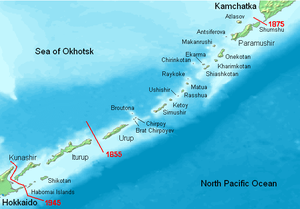
Russia's Move
Yesterday Russian President Dmitry Medvedev drew Tokyo's ire when he visited Kunashir isle, one of the four disputed with Japan since the end of World War II.
The provocative step is consistent with stoking Russian nationalism on full display in the Victory Day last May in Moscow and comes ahead of a regional summit between the two countries.
Mr. Medvedev's visit was a milestone since he is the first Russian leader to visit the island group.
Japanese Foreign Minister Naoto Kan reasserted Japan's claim to its ''northern islands'' and called the visit ''regrettable.''
Japan recalled its ambassador to Moscow in response to the latest territorial tiff.
Russo-Sino policy in tandem
Is there another reason to up the pressure on Japan?
Some Japanese observers see a joint Russo-Sino gang up on territorial disputes with Japan.
Evidence grows of a stronger ''strategic partnership'' between Beijing and Moscow especially in the Pacific region.
The fight over the four Kuril Islands stems from the vagaries of the post-World War II conferences in Postsdam and Yalta and the fact that the Soviet Union did not sign the Treaty of San Francisco.
The United States thus never supported the Soviet claim over the isles and still sides with Japan today.
***If you need research from open sources in Spanish, French, or Portuguese and presented in a stylish English language report or a translation of documents in said languages to English, please contact Professor Winn at by sending an email to mrenglish101@gmail.com for a prompt evaluation.
Friday, July 2, 2010
Russian Spy Caper Imperils START Ratification

While the Obama Adminstration refused to condemn Russia over the spy caper, in the US Senate, where the START Treaty must gain approval, bipartisan worries could endanger its ratification.
The aggressive cuts in the US nuclear arsenal without any strategic rationale have long concerned GSM.
There are numerous grounds to seriously stall any consideration of the treaty.
Finally, maybe even by accident, the flawed treaty reaches an unglorious end.
***
If you need research from open sources in Spanish, French, or Portuguese and presented in a stylish English language report or a translation of documents in said languages to English, please contact Professor Winn at by sending an email to wtglobalanalytica@gmail.com for a prompt evaluation.
Thursday, June 17, 2010
Putin Reset? Boasts new jet fighter better than U.S. plane
 Putin boasts new jet fighter better than U.S. plane
Russian Prime Minister Vladimir Putin boasts that the PAK-FA Sukhoi T-50 is mightier than the US F-22 Raptor, killed by the US Senate last year.
The current leadership in the US does not see the need for such a fighter, unlike Russia.
The new fifth generation Russian fighter can take off from a short runway and deliver supersonic speed with a range of about 5,500 km.
Put military hardware issues aside.
What does Mr. Putin´s boast mentioning the US fighter forebode in relations between Moscow and Washington?
***
If you need research from open sources in Spanish, French, or Portuguese and presented in a stylish English language report or a translation of documents in said languages to English, please contact Professor Winn at by sending an email to wtglobalanalytics@gmail.com for a prompt evaluation.
Wednesday, May 19, 2010
US Diplomacy in Tatters - Iran Wins Again

The difficult and dangerous time arrived this week for the United States when its Nato ally Turkey and supposed Latin American friend Brazil provided the Teheran Tyranny a fig leave to continue its drive for nuclear primacy in the Middle East.
As the Heritage Foundation´s blog, The Foundry, notes: "[The agreement] would only deflate the perceived urgency of imposing sanctions on Iran while allowing Tehran to advance its nuclear weapons program with impunity."
Thus, Iran will have nuclear weapons and the ballistic missiles to deliver them to Tel Aviv and Washington. It is astonishing that this is an acceptable toll for Washington to pay.
The West has failed just as GSM forecast in its Net Assessment: Iran last year.
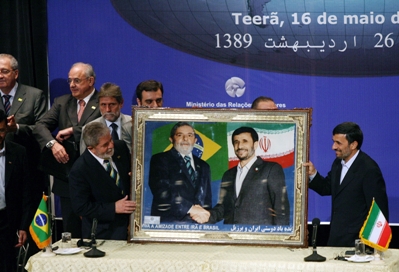
While headlines speak of Russia and China aboard, there is little chance enough UN Security Council members will vote for any sanctions given the Turkey nuclear fuel swap deal.
Some policy wonks actually believe in the Teheran Tyranny´s peaceful intentions. No, Ms. Slavin, Iran cannot deliver on a deal it reneged on before.
Iran has no peaceful intentions. The Teheran Tyranny has not engaged in deceit, deception, and duplicity to just throw away an expensive public and hidden nuclear program. Terror, Inc. is not building longer-range ballistic missiles for a rainy day.
The rogue regime in Teheran is dead serious in continuing to inflict as much harm as possible against the Israel and the United States and their allies and interests. To believe otherwise is beyond naive.
As a young John F. Kennedy wrote before World War II after the failed Munich Pact: "Appeasement was, therefore, as I have said, partly based on the mistaken belief that peace might be achieved by concession but it was also a realistic hard-headed policy of playing for time."
For freedom lovers worldwide, that time is nearly up. A nuclear Iran is a game-changer in the global security calculus.
As like Munich, paper-mache charades like the nuclear deal brokered by Turkey and Brazil with the Iranian dictatorship does not prevent war, but make it more certain.
***
Sunday, February 7, 2010
NATO Desperately Seeks a Mission?
The trouble in Afghanistan is very severe as underscored by the desperation expressed by Secretary General Anders Fogh Rasmussen in the Munich Security Conference: NATO Says Russia, China Can Help in Afghanistan.
The SecGen´s news is just stunning. First, why would Russia want to wade back into Afghanistan? "Moscow´s Vietnam War" during the Soviet-era helped bring down the then Soviet Union. NATO does not have adequate helicopters to engage the enemy?
Russia wants to remain only as an observer in NATO now. Its fresh condemnation of US missiles in Romania is a curious development in this vain.
China? Sure, China is in the neighborhood. Yes, Beijing searches to expand the scope and range of its military reach. Does China want NATO to succeed?
Does Mr. Rassmussen believe both Russia and China view NATO benignly?
The Western military alliance which sat across the Fulda Gap between East and West Germany from 1949-1989 to halt a Soviet invasion which never came engaged in another mission far afield from Europe when the United States was attacked on 9/11.
Article 5 of the NATO Treaty states an attack on one is an attack on all. So NATO followed the United States into Afghanistan where it faces its gravest test in the history of the alliance.
Failure in a difficult scenario to secure a peace with a corrupt government and a determined enemy with safe border sanctuary - a la Vietnam - is not an option. The credibility of the alliance and its members governments, notably the United States, United Kingdom, and France are on the line.
By Rassmussen´s account, NATO appears to be untethered and without a clearly defined mission as if fighting for freedom is not enough to sustain an alliance of democracies in a world generally hostile to this value.
Sunday, January 31, 2010
US-Russia START Deal Imperiled?
The shift in power in the Democrat-controlled US Senate - the loss of the 60th "super majority" vote with Scott Brown´s electoral victory in Massachusetts - could complicate Mr. Obama´s push for a drastic cutback in nuclear missiles between Russia and the United States as explained in this editorial from a career diplomat in the Russian daily Saint Petersburg Times: Reset in Danger of Being Set Back.
Given the US Senate's unique role in approving any treaties, the new START treaty could stall. That would not be a terrible development either.
***
Given the US Senate's unique role in approving any treaties, the new START treaty could stall. That would not be a terrible development either.
***
Saturday, January 23, 2010
Obama Comment on Iran in Time Interview

However, it is his comments on Iran that are more worthy of exploration:
Excerpt 1
On Iran, one of our trickiest foreign policy challenges, we have held the international community together, both in our engagement strategy, but also now as we move into a dual-track approach. Which is, If they don't accept the open hand, we've got to make sure they understand there are consequences for breaking international rules.
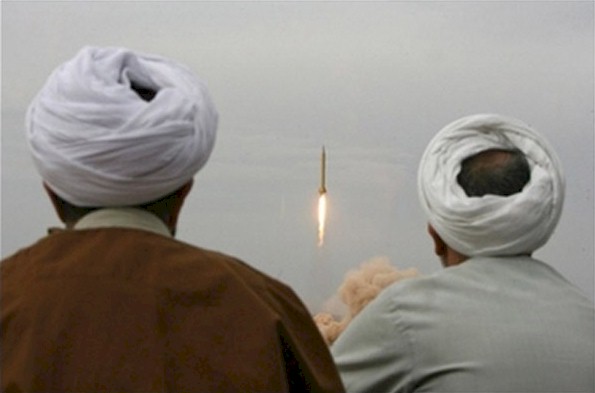 Iran is not tricky. Terror, Inc. is pursuing nuclear weapons and ballistic missiles to blast Israeli and American cities. Is that tricky? The president needs to be forthright with the American people.
Iran slapped that extended hand, Mr. Obama and you have done nothing as a result. There is no consequence saying NO to the US while you are in the White House. The only "dual-track approach" (trying to sound so smart) is if Iran breaks an arbitrary pre-determined deadline (like the last one at the end of 2009 of which you are silent and hope no one remembers) is to issue meaningless paper-based threats with no plan to back them up with military force - the only response totalitarian states respect. International rules? (Back to your lawyer training!)
The Iranian nuclear program and long-range missiles are geared for Tel Aviv and Washington. It is American rules Teheran breaks! Iran is a clear and present danger to the United States of America and you are clueless in face of the danger.
International rules are only valid if there is one nation or a group of nations who act to enforce them. However, that requires tough decisions and we already know how tough the MidEast is for you. Lawyers make lousy presidents and worse foreign policy practitioners. The Hobbesian international system is messier than a civil or criminal trial in a US courtroom. The sooner you learn that fact the better you will be.
Excerpt 2
It's going to be tough, but I think the relationship we've developed with Russia will be very helpful. The outreach we've done to our traditional NATO allies will be very helpful. The work that we've done with China — including the work we've done with China to enforce sanctions against North Korea — will help us in dealing more effectively with Iran.
Perhaps Mr. Obama saw the recent Reuters headline: Russia says to start Iran nuclear plant in 2010. We cite this action (see Net Assessment: Iran) as the bookend of the current phase of playing pattycake with Iran on the nuclear issue. Once the Russians start up Bushehr, all bets are off. So, it seems throwing the Czech Republic and Poland under the bus on the missile shield did not buy any love with Moscow, Mr. Obama. Oops.
China? Beijing´s strategic interests are too intertwined with Iran to risk any trouble with stronger sanctions on Terror, Inc, at the US´s behest. China can also say NO (and has) to the US without any consequences.
When Moscow and Beijing definitively thwart "tougher sanctions" (whatever that is) on Iran at the United Nations, Mr. Obama´s words in these two excerpts will ring oh so hollow.
If Mr. Obama is overmatched in domestic policy, he is doubly out of his league in foreign policy. The intelletcual leftist foreign policy apparatus underestimates American enemies and too often blames America first, not exactly a winning combination.
Mr. Obama has a failed foreign policy that has not stopped Iran.
He has a fundamental misunderstanding of the international system and his obesesion with pounding allies (including Israel) and cozing up with enemies is more than self-defeating. Add leftist political correctness in the war on terror and you have the perfect storm for physical damage to the United States and its citizens at the hands of a mistaken ideological president beholden to a radical world view.
He has a fundamental misunderstanding of the international system and his obesesion with pounding allies (including Israel) and cozing up with enemies is more than self-defeating. Add leftist political correctness in the war on terror and you have the perfect storm for physical damage to the United States and its citizens at the hands of a mistaken ideological president beholden to a radical world view.
Thursday, December 31, 2009
Top 6 Strategic Questions for 2010
Ancient Greek Plato´s teacher, Socrates, created a discipline based on asking the right questions.
For 2010, I pose the following 6 strategic questions concerning global security.
1. What will the international community do about Iran?
Iran´s rogue regime is nearing nuclear breakout (see Net Assessment:Iran) and tests ballistic missiles to deliver them at increasing greater ranges. The widespread public unrest over the burial of opposition leader, theGrand Ayatollah Hossein Ali Montazeri, coincided with the Shia holiday of Ashoura and clashes with government security forces resulted in many arrests and deaths. Notable is the student unrest, the country´s future. Just like the reaction in October to Mr. Ahmadinejad's fraud-tainted re-election as president, clearly the Iranian street is bubbling over with rage at the regime. The tyrants in Teheran represent a clear and present danger to Iran and the world.
2. Will radical Islamic terrorism wax or wane?
Is the so-called "Christmas Bomber" of Northwest Flight 253 to Detroit an opening shot in a wave of radical Islamic terrorism against Western interests around the world? Ungovernable Somalia and war-torn Yemen make the Horn of Africa region a hot zone haven for terrorists. Al Qaeda Arabian Peninsula (AQAP) and Al Qaeda Islamic Maghreb (AQIM) are active as well. The tyrants in Teheran also figure into the equation given the current regime is Terror, Inc. Radical Islamic terrorism is mostly organized by state sponsors and serves as a proxy to attack larger and more powerful states.
3. What will China’s recent gains in diplomatic currency portend?
China has risen. The Middle Kingdom´s audacious diplomatic play at the so-called climate change conference in Copenhagen in early December by besting the overmatched US President Obama is more evidence (see "China Can Say No"). China surpassed Germany at the beginning of 2009 to become the third-largest economy in the world and will pass Japan to become the second in 2010. Beijing is claiming the diplomatic power equal to its economic power. Attendant military power and more muscular power projection continues. One weakness is its so-called "soft power" or cultural assertiveness. China offers an alternative to US preeminence and it does not shy away from it.
4. Will the Nato mission fail in Afghanistan?
Nato is losing in Afghanistan. US President Obama's half-measure of 30,000 more combat troops plus another 5,000 (pledged) from Nato allies is unlikely to turn the tide. Together, the troop contingent is the bare minimum General McChrystal requested for his new strategy. An added worry: Pakistan may yet yield to Taliban and Al Qaeda pressures complicating any scenario for "victory."
5. Does Castro, Inc. survive?
¿Fin de la Revolución? Castro, Inc. celebrated the 40th anniversary of its violent overthrow of strongman Batista on January 1 this year. La revolución exchanged one corrupt blood-thirsty strongman for another corrupt blood-thirsty strongman, Fidel Castro. Forty years and absolute power allowed the Castro brothers to amass a vast wealth to the point billionaire Fidel ranked in Forbes list in 2006. This came despite the hated US embargo, el bloqueo (blockade) in Castro Spanish. After a fair wage for the boss, El Jefe, really, how much is left for the proletariat?
Hard times again have hit the regime. The Castro business survived the high drama of the October 1962 missile crisis sparked by Soviet missiles on the island in Mr. Castro´s hot-headed attempt to use Moscow to get revenge on Washington after Bay of Pigs. It muddled through the período especial (special period) after the collapse of the Soviet Union and the sugar subsidy scheme evaporated. Castro investments in tourism and sexual exploitation were attempts to earn more hard currency, as if drug smuggling is not enough.Then, El Jefe himself, reaching mortality, "temporarily" passed the baton to brother Raúl. The king stepped aside.
Will the deteriorating status quo hold? Whenever Fidel Castro dies, the pernicious disease of Castroism has been spread to others in the region, but at least the prisoners on the paradisaical island would win the freedom and full meal they deserve if the military moved to save la patría (country).
6. What is next for the European Union?
The EU-27, from the humble beginnings of the European Economic Community (EEC), now ranges from the Atlantic Ocean to the border with Russia. Spain, the "new sick man of Europe," becomes the president for the next six months on January 1. Presidente Zapatero states he hopes to superar la indiferencia de la ciudadanía respecto a Europa (overcome the indifference to Europe). The disconnect between European elites and the citizenry has plagued the EU from the start.
It is the economy, stupid. In the Eurobarometer 72 released this month, 54% of the EU-27 believe the "worse it yet to come" economically. Socialism does not work. That failed economic theory gnaws at the core of the EU´s troubles. Double digit unemployment afflicts the member states. The EU eked out 0.4% growth in the third quarter officially ending the recession on paper. At the close of 2009, Greece emerged as a threat to the euro. There still is no president of Europe. A shared history and the attendant lingering mutual suspicions, an aging population in rigid welfare states, weak military strength and hesitancy to fully support the Nato mission in Afghanistan, energy dependence on Russia and Iran, and a Tower of Babel in diplomacy, all detract from the "union" which appears more like a collection. Add fierce nationalism in the latest round of EU appointments and large nations pitted against smaller nations as even more evidence of disunion.
Happy 2010!
***
If you need research from open sources in Spanish, French, or Portuguese and presented in a stylish English language report or a translation of documents in said languages to English, please contact Professor Winn at by sending an email to mrenglish101@gmail.com for a prompt evaluation.
For 2010, I pose the following 6 strategic questions concerning global security.
6 Strategic Questions for 2010
1. What will the international community do about Iran?
Iran´s rogue regime is nearing nuclear breakout (see Net Assessment:Iran) and tests ballistic missiles to deliver them at increasing greater ranges. The widespread public unrest over the burial of opposition leader, theGrand Ayatollah Hossein Ali Montazeri, coincided with the Shia holiday of Ashoura and clashes with government security forces resulted in many arrests and deaths. Notable is the student unrest, the country´s future. Just like the reaction in October to Mr. Ahmadinejad's fraud-tainted re-election as president, clearly the Iranian street is bubbling over with rage at the regime. The tyrants in Teheran represent a clear and present danger to Iran and the world.
2. Will radical Islamic terrorism wax or wane?
Is the so-called "Christmas Bomber" of Northwest Flight 253 to Detroit an opening shot in a wave of radical Islamic terrorism against Western interests around the world? Ungovernable Somalia and war-torn Yemen make the Horn of Africa region a hot zone haven for terrorists. Al Qaeda Arabian Peninsula (AQAP) and Al Qaeda Islamic Maghreb (AQIM) are active as well. The tyrants in Teheran also figure into the equation given the current regime is Terror, Inc. Radical Islamic terrorism is mostly organized by state sponsors and serves as a proxy to attack larger and more powerful states.
3. What will China’s recent gains in diplomatic currency portend?
China has risen. The Middle Kingdom´s audacious diplomatic play at the so-called climate change conference in Copenhagen in early December by besting the overmatched US President Obama is more evidence (see "China Can Say No"). China surpassed Germany at the beginning of 2009 to become the third-largest economy in the world and will pass Japan to become the second in 2010. Beijing is claiming the diplomatic power equal to its economic power. Attendant military power and more muscular power projection continues. One weakness is its so-called "soft power" or cultural assertiveness. China offers an alternative to US preeminence and it does not shy away from it.
4. Will the Nato mission fail in Afghanistan?
Nato is losing in Afghanistan. US President Obama's half-measure of 30,000 more combat troops plus another 5,000 (pledged) from Nato allies is unlikely to turn the tide. Together, the troop contingent is the bare minimum General McChrystal requested for his new strategy. An added worry: Pakistan may yet yield to Taliban and Al Qaeda pressures complicating any scenario for "victory."
5. Does Castro, Inc. survive?
¿Fin de la Revolución? Castro, Inc. celebrated the 40th anniversary of its violent overthrow of strongman Batista on January 1 this year. La revolución exchanged one corrupt blood-thirsty strongman for another corrupt blood-thirsty strongman, Fidel Castro. Forty years and absolute power allowed the Castro brothers to amass a vast wealth to the point billionaire Fidel ranked in Forbes list in 2006. This came despite the hated US embargo, el bloqueo (blockade) in Castro Spanish. After a fair wage for the boss, El Jefe, really, how much is left for the proletariat?
Hard times again have hit the regime. The Castro business survived the high drama of the October 1962 missile crisis sparked by Soviet missiles on the island in Mr. Castro´s hot-headed attempt to use Moscow to get revenge on Washington after Bay of Pigs. It muddled through the período especial (special period) after the collapse of the Soviet Union and the sugar subsidy scheme evaporated. Castro investments in tourism and sexual exploitation were attempts to earn more hard currency, as if drug smuggling is not enough.Then, El Jefe himself, reaching mortality, "temporarily" passed the baton to brother Raúl. The king stepped aside.
Will the deteriorating status quo hold? Whenever Fidel Castro dies, the pernicious disease of Castroism has been spread to others in the region, but at least the prisoners on the paradisaical island would win the freedom and full meal they deserve if the military moved to save la patría (country).
6. What is next for the European Union?
The EU-27, from the humble beginnings of the European Economic Community (EEC), now ranges from the Atlantic Ocean to the border with Russia. Spain, the "new sick man of Europe," becomes the president for the next six months on January 1. Presidente Zapatero states he hopes to superar la indiferencia de la ciudadanía respecto a Europa (overcome the indifference to Europe). The disconnect between European elites and the citizenry has plagued the EU from the start.
It is the economy, stupid. In the Eurobarometer 72 released this month, 54% of the EU-27 believe the "worse it yet to come" economically. Socialism does not work. That failed economic theory gnaws at the core of the EU´s troubles. Double digit unemployment afflicts the member states. The EU eked out 0.4% growth in the third quarter officially ending the recession on paper. At the close of 2009, Greece emerged as a threat to the euro. There still is no president of Europe. A shared history and the attendant lingering mutual suspicions, an aging population in rigid welfare states, weak military strength and hesitancy to fully support the Nato mission in Afghanistan, energy dependence on Russia and Iran, and a Tower of Babel in diplomacy, all detract from the "union" which appears more like a collection. Add fierce nationalism in the latest round of EU appointments and large nations pitted against smaller nations as even more evidence of disunion.
Happy 2010!
***
If you need research from open sources in Spanish, French, or Portuguese and presented in a stylish English language report or a translation of documents in said languages to English, please contact Professor Winn at by sending an email to mrenglish101@gmail.com for a prompt evaluation.
Sunday, December 20, 2009
China Can Say ‘No’

The real story out of COP15, the so-called Climate Change Conference in Copenhagen, is not the curious quest for an international agreement based on dubious science.
It is the conspicuous display of China’s full diplomatic, and economic strength on the world stage and the eclipse of US prestige.
China Leads
China hosted a closed door meeting among other partners with India and Brazil to thwart any legal binding stipulations to put teeth into any accord pushed by the United States. While it is not confirmed that Russia attended, the BRIC bloc (Brazil, Russia, India, and China) came alive in Copenhagen.
The BRIC bloc represents the four top developing nations whose weight on the world stage is increasing every day.
Surrounded by its BRIC bloc partners, China asserted its role clearly as a leader of the “non-aligned” less-developed countries at the Copenhagen conference. This was China’s tact during the Cold War and remains a guiding principle in its international statecraft.
BRIC Ascendancy
It was US President Barak Obama who sought out Chinese Premier Wen Jiabao, not the reverse, to salvage a minimal and meaningless “declaration of principles” so he did not appear to leave Copenhagen empty handed twice in a span of two months.
China told the US ‘no’ on any binding targets for reduction of CO2 gas emissions on which its economy is dependent for exports as a developing country. It will not sacrifice its economic progress and date with history based on dubious science.
The BRIC bloc is emerging as an effective counterweight to declining US primacy.
China Snubs
The Sino-US standoff began as soon as US President Obama arrived on Friday in Copenhagen. Premier Wen took umbrage from an extemporaneous line in the president's speech in a slightly veiled reference to China by insisting on "sharing information and ensuring we are meeting our commitments."
Later that afternoon in a negotiation round, he and Secretary of State Hillary Clinton cooled their heels with three low-level Chinese delegates who could not make any political decisions. That was only the first diplomatic snub.
US Prestige Drops
The amateurish US diplomatic play by President Obama to crash China's closed door meeting (to which it was pointedly not invited) in order to desperately force even an unbinding agreement will certainly be noted by the BRIC bloc and other adversaries in the world.
The rapid drop of US prestige in the world less than one year into the naïve president’s term is quite shocking.
The Sino-US chilliness is palpable. China's handling of the weak US president has broader implications. A China that can say 'no' to the US has already risen.
The fissures exposed among the international players in Copenhagen augur a more competitive global security environment at the expense of Washington. The die is cast.
***
Please follow us on Twitter name:@wtglobalanalytics and visit our blog at globalsecuritymonitor.blogspot.com.
If you need research from open sources in Spanish, French, or Portuguese and presented in a stylish English language report or a translation of documents in said languages to English, please contact Professor Winn at by sending an email to mrenglish101@gmail.com for a prompt evaluation.
64G3JEUKBNP3
Thursday, December 3, 2009
Mr. Obama´s Top 6 Foreign Policy Flops
Top 6 Obama Foreign Policy Flops
6. Honduras - Washington initially backed the constitutionally-removed Mel Zelaya who sought to perpetuate his presidential term beyond its time limit. It was disgraceful to embrace false coup language and side with the Castro-Chavez Club in Latin America.
5. China - President Obama was roundly criticized for showing weakness and undue deference to Beijing, the United States´ major creditor. He tepidly spoke about human rights and returned home empty-handed on issues ranging from the environment and help with Iran.
4. Afghanistan - In his latest speech, Mr. Obama abandons the war effort to defeat Al Quayda and the Taliban and signals a fundamental absence of understanding about international affairs and how to confront tyranny.
3. Russia - The US president abandoned Central European allies the Czech Republic and Poland by withdrawing a Bush-era missile defense shield against Iranian (and Russian) missiles, all in a vain effort to curry favor with Moscow on Iran sanctions.
2. Iran - It is clear that Washington has no desire to stop the Teheran Tyrants from acquiring nuclear weapons and the missiles to deliver them. Words alone cannot and do not tame tyrants. Human history is replete with examples. Sadly, the US president is not a student of history. GSM will release an exclusive Net Assessment with more details about the Iranian impasse.
1. War on Islamic Fascism - The United States is at war despite inexplicable behavior by the country´s president to deny that reality and act in a cavalier manner toward the most serious threat to the nation´s survival. From allowing some key parts of the Patriot Act to expire, closing the facilities at Guantonomo Bay to interrogate prisoners for intelligence to prevent future attacks, to allowing a civilian court trial for Khalid Sheik Muhammaed and other alleged perpetrators of the 9/11 attacks and to flinching in the stares of evil from Iran and the Al Quayda/Taliban threat in Afghanistan, it is obvious Mr. Obama is severely misinformed about the true nature of the threat.
The war within Islam has become the world´s problem manifested in the various terror groups from Asia to America. By not taking on Terror Inc - Iran - directly, the United States is treading dangerously in an increasingly unstable world partly because of US tepidness and disengagement.
Sunday, November 1, 2009
Persian Peril Percolates While West Wanes

´´I hope these negotiations continue [and] that the Satanic forces will not be able to disrupt them because the Zionist regime and domineering powers are dissatisfied.´´
´´Washington is expected to continue to engage Tehran toward a deal on Iran's nuclear program, according to both government sources and American sources accompanying U.S. Secretary of State Hillary Clinton on her lightning visit to Israel Saturday´´ - Haaretz.com, 11/01/2009
´´Iran must demonstrate through concrete steps that it will live up to its responsibilities with regard to its nuclear program.´´ - US President Obama, 10/02/2009 after P-5+1 talks in Geneva.
The Teheran Tyrants know they have won. Iran skipped providing an answer by the October 23 deadline on the ridiculous nuclear enrichment deal. More defiance from the Teheran Tyrants and yet the Obama Administration reportedly (from Haaretz above) is still on the talk-a-thon track. Incredible!

A military campaign is fraught with complexity and difficulty given the extensive layout of Iran´s nuclear facilities across the Persian state and the built-in redundancy. It would require a sustained operation to be effective. The repercussions with Russia and China have to be weighed beforehand as well.
When the Bush Administration did not follow up Iraq with confronting Iran more forcefully (as if killing US soldiers in Iraq was not an act of war), the mullahs in Teheran knew the coast was clear. An inexperienced president from a traditionally anti-war (Democrat) party was manna from heaven after the 2008 US elections.
World history is replete with examples when a determined foe is not confronted until the last hour. It is incredible to believe suddenly Iran will scrap its crown jewel overnight to please the Western powers after investing billions of oil dollars in research, materiel, nuclear scientists, and advanced ballistic missiles to deliver their lethal cargo.
Its protectors in the proxy war with the
As
Wednesday, September 30, 2009
US in precarious global security jam - Pt I
part 1: US President no longer fights for freedom

US President Barak Hussein Obama promised a new America; he has delievered.
The new president of the United States is not a tireless advocate for freedom lovers abroad and the security of his country at home.
He allowed himself to be photographed with Venezuelan President Hugo Chavez who actively plots to diminish US influence in Latin America and undermine Colombia´s democracy. At the same hemispheric conference in April, the US president endured a tirade by Nicaraguan President Daniel Ortega enumerating the supposed crimes Washington had perpetrated in the sweep of Latin American history.
His attorney general, Eric Holder, has unleashed a vindictive investigation of CIA interrogators who produced actionable intelligence to smash terrorist attacks inside the US during the previous presidential administration. Saving American lives and thwarting terror attacks used to be a priority for a US president.
No more. The interrogators will now be interrogated with a noticeable chilling effect on the practice and comforting those subject to it. It is curious to note that Mr. Holder´s old law firm represents and provides legal defense counsel for Yemeni terror detainees at Gitmo.
The US Democrat Party traditionally has opposed any missile defense shield whether for the homeland or not. US President Obama´s decision to abandon the Bush-era missile defense shield housed in the Czech Republic and Poland to protect Europe from Iran´s increasingly iniquitous missile threat fits the pattern.
However, the immediate satisfaction to appease Russia in an empty chance to get help with UN sanctions on Iran rewards Moscow on two fronts. The US slap of two Nato allies genuflects before Moscow´s tough demands on a youthful US president. Additionally, Moscow basks in seeing its ex-Soviet states knocked back a peg or two by the very country that gave much to liberate them from tyranny. The new democratic states in Central Europe will not easily forgive or forget Washington´s betrayal.
US President Obama too easily cossets his enemies and dismisses his friends. US presidents are normally more informed and more careful.
President Obama´s moves to this point weaken the US in an increasinly less secure world. While dumping on allies is easy, the big test, as GSM has reminded its readers, is the challenge posed by Iran. We invite you to read on in part two.
Tuesday, July 14, 2009
US-Russian Relations Dangerously Offcourse
 Global security challenges are rapidly accumulating for young and ill-prepared US President Obama. Relations with the major actors in the world are important, too. US-Russian relations are at their lowest point since the official end of the Cold War.
President Obama's misadventure at the Russian summit earlier this month should illustrate clearly the need for sober thinking (and more study) about the role of the United States in the world and its international relations.
Russia is not disposed to make President Obama's choices easy. The "secret" swap of pressure on Iran for a nuclear arms pact was a complete failure and Moscow can only laugh at such amateur statecraft. Linkage was not a great idea for starters; thankfully Moscow nixed any such deal.
The miserable state of US-Russian relations is emblematic of the naive president's predicament.
The lack of deep strategic thinking and pacifist approach to global security is a marked change from the Bush era, as candidate Obama promised.

However, once in the hot seat as president of the United States and briefed on the threats to freedom and democracy at home and to US allies, President Obama's course is a recipe for disaster for freeom-loving peoples.
Tyranny and advanced technology to impose it (ballistic missiles and nuclear weapons) are on the march. Weakness begets challenges. The severe degree and sheer number of challenges limit the president's maneuverability without the will and wherewithall to tackle them. Both are sorely absent at this point.
US destroyer anchors off Georgia for exercises
By MISHA DZHINDZHIKHASHVILI Associated Press Writer
AP Photo/Shakh Aivazov
BATUMI, Georgia (AP) -- A week after a Moscow summit intended to smooth over the differences between Russia and the U.S., both countries on Tuesday engaged in displays of military might near Russia's southern border.
By MISHA DZHINDZHIKHASHVILI Associated Press Writer
AP Photo/Shakh Aivazov
BATUMI, Georgia (AP) -- A week after a Moscow summit intended to smooth over the differences between Russia and the U.S., both countries on Tuesday engaged in displays of military might near Russia's southern border.

A U.S. warship anchored off the Black Sea coast of Georgia in preparation for joint naval maneuvers with the ex-Soviet nation, which was trounced in a war with Russia last August. Russian warplanes, meanwhile, conducted mock bombing runs in exercises just a few hundred kilometers northwest.
The maneuvers and countermaneuvers marked a stark change from July 6-7, when U.S. President Barack Obama dined in the Kremlin with Russia's Dmitry Medvedev and both countries expressed hope for repairing relations that in recent years have sunk to a post-Cold War low.
During those meetings, Obama diplomatically warned Moscow to respect the territorial integrity of Georgia and reject the notion that it holds a zone of privileged interest among its former Soviet neighbors.
Georgia is still seething over what it views as Russia's occupation of South Ossetia after the August conflict, when Russian tanks drove deep into Georgia before pulling back. Georgia had attacked South Ossetia, which has long had de facto independence, to try to retake it. Russian tanks and troops poured into the region immediately and overwhelmed the Georgian army. Russia said it was acting in defense of locals with Russian passports.
Monday, March 16, 2009
Report: Cuba, Venezuela could host Russian bombers
 credit:DND Handout Photo
Report: Cuba, Venezuela could host Russian bombers
Back to the Cold War?
When US President Obama visited Canada in his first trip abroad in late February, Canadian fighters intercepted two Russian Tu-95 bombers in an increasing show of strength off the North American coastline.
The Russian-Cuban-Venezuelan connection must be taken seriously.
Get your International Policy
 books today!
Sunday, March 8, 2009
Rocky Russian Road Ahead
 Nice Try
US Secretary of State Hillary R. Clinton met her Russian counterpart, Sergei Lavrov, in Geneva this week to "reset" the two countries' relations.
The "reset button" (see picture) however was enclosed in a gift box with the Russian word for "overcharge," not "reset."
Thus, the first high level tête-à-tête between the world's remaining superpower and former superpower was a bust despite diplomatic niceties.
The road ahead for US-Russian relations is unlikely to be smooth.
Divisions
Significant issues divide the US and Russia and to pretend otherwise is dangerous.
Moscow is a strategic competitor of Washington. The faster the new Obama Aministration grasps that reality the better. Cooperation will be limited.
The siloviki (literally, "men of power") is engaged in an ambitious worldwide energy gambit to gain more profits and exercise economic control over dependent trading partners as an instrument of its international policy. Russia is run like a giant corporation.
The war in Georgia is an extreme example as Moscow eyes the strategic Caucasus region as its backyard and wants to control the pipeline routes for energy. The yearly dust up with Ukraine over gas supplies reverberated across a shivering EU last February.
However, Moscow has a glaring weakness: the price of oil is a key determinant in its confidence and ability to pursue its aggressive economic policy abroad. About 85% of its income is based on the export of oil and gas. Oil currently at $45 a barrel is a problem for Moscow.
Rebuke on Iran
President Medvedev's sharp "nyet" (no) to President Obama on linking the proposed US missile shield in Europe to more cooperation on taming Iran's nuclear ambitions is a recent example of great divergences of opinion between Moscow and Washington.
If a nuclear Iran on its southern flank does not concern Medvedev and Prime Minister Putin, it is very difficult to believe most other issues will as well. Again, Russia's complex economic relationship with Iran trumps cooperation with the US.
Review, not reset
The new Obama Administration needs deep thinkers on the future of US-Russian relations. A bottom-up review is required. Photo ops and symbolic gifts (with the wrong translation) show naivete at best.
Again, the new Administration believes on many fronts its unilateral gestures of goodwill and good feelings will be reciprocated by those whose interests it is not to reciprocate. Statecraft relying on the mercy of others is bound to fail.
So far, a rocky road lies ahead for Washington (not just in Russian affairs) until a clearly defined policy based on its social, economic, and political interests is declared and pursued. A policy based more on personality (the Bush way) than national interest is discouraged.
The secretary of state should study before taking the next flight abroad.
Get your International Policy
books today!
Wednesday, February 4, 2009
 credit: defense-update.com
Russian news agency, RIA Novosti, reports exhibition of the MiG-35 (Fulcrum F) at Aero India 2009 on February 11-15, 2009 at Yelahanka, Bangalore, India.
The largest air show in south Asia allows Russia to showcase its Multirole Front-Line Fighter offering an extremely maneuverable, all-axial deflected vectored thrust "DTV" engine which first debuted in 1999.
Speaking of maneuverability, Russia was the first to master real thrust vectoring and build it into a serving combat aircraft design: the Sukhoi Su-30MKI, which uses single-axis or up-and-down vectoring.
The move comes as India contemplates buying 126 multi-role combat aircraft (MRCA) in a multi-billion dollar deal (largest since early 1990s) to replace its ageing MiG-21 aircraft.
India and Russia share a 50 year military relationship. The Indian military is full of Russian aircraft, helicopters, submarines, and tanks.
Attractive Options
The MiG-35 is an attractive option for New Delhi. Along with improvements in keeping maintenance costs lower, the MiG-35 also comes with "modern glass cockpit designed with three 6x8 inch flat-panel LCDs and full HOTAS controls, digital map, helmet-mounted sight."
The latest Zhuk-AE active electronically scanning array (AESA) is "one of the most important, if not the most important development in radar technology since the 1940s."
The MiG-35 builds on the MiG-29 which India flies about 65. Ease of part acquisition, training, etc. favor the acquisition of the MiG-35s over the US F/A-18s and/or F-16s.
In Sum
India's multidirectional international policy engages the major powers on a somewhat equal basis from China to Russia to the United States. As India develops as a major world power in its own right, its arms purchases from 1998 to 2005 topped all of the developing world.
The US would like to cultivate an arms supplier relationship as close as Russia's with India.
However, it appears unlikely as New Delhi's expected green light to Moscow on the MiG-35 will demonstrate.
Subscribe to:
Posts (Atom)