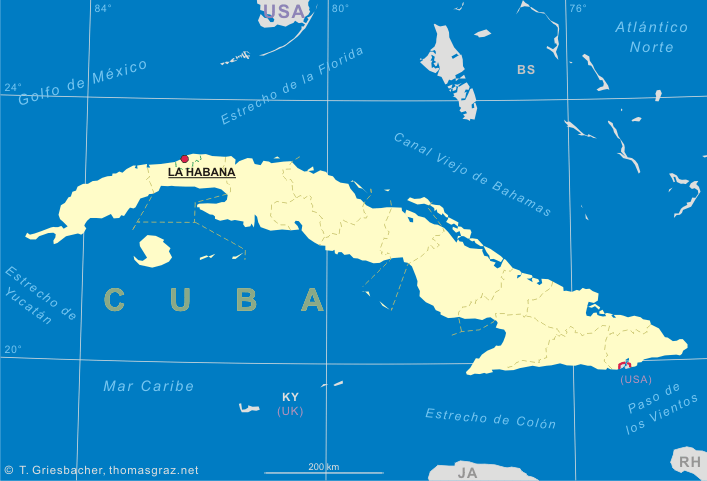
Lil Brother Raúl lashed out at the rubber-stamp Cuban National Assembly over the moribund state of Castro, Inc. yesterday (ABC.es - "O rectificamos o nos hundimos'' - Either we make corrections or sink).
In a bit of comic relief, he even suggested that committing the same errors of the past pone en juego "la vida de la revolución" (endanger the life of the revolution). Good!
And just who committed those errors?
Economic Crisis Deepens
Dr. Pavel Vidal Alejandro of the Universidad de La Habana provides background to the current crisis in a short paper published by the Spain´s Real Instituto Elcano entitled, El rompecabezas monetario y financiero cubano (Headache of Cuban Money and Finance).
Dr. Alejandro points to the trouble of the dual (dueling?) currencies - convertible and nonconvertible peso - and the financial disequilibriums in the banking sector.
However, one fundamental fact is inescapable - socialism does not work, especially the extreme state-centralized Castro style. No amount of cash infusions into the dying patient can revive it.
One of GSM's Top Six Strategic Questions of 2010 was - Does Castro, Inc. survive?
So now like in 2009, Cuba limps along.
Various media reports say a Wikileaks cable from the US Interest Section discussed a broke Cuba in two or three years.
Return to freedom
The entire Cuban experience under the jackboot of Castro,Inc. has been a nightmare in the cost of lives and treasure on the paradisaical prison island for those outside the communist elite.
Castro, Inc. cannot sink fast enough so freedom and prosperity can return to the once upon a time ''pearl of the Caribbean.''
***
Global Security Headlines
Showing posts with label Castro. Show all posts
Sunday, December 19, 2010
Saturday, November 13, 2010
Más alla Nica-Tico Tiff - A Nicaragua Canal?
GSM figured correctly there was an ulterior motive for Nicaragua's sudden interest in the mouth of the San Juan River running into the Caribbean Sea in the extreme southeast border region with Costa Rica.
Never ever trust ALBA and its members.
While Comadante Ortega no doubt wants to gin up nationalist sentiment ahead of his unconstitutional third bid in presidential elections next year, one cannot forget Nicaragua's dream of its own canal traversing the border with Costa Rica from the Caribbean to the Pacific Ocean (the so-called Canal Interoceánico de Nicaragua).
Recall the first plan for the later Panama Canal was to traverse Nicaragua.
Sinister Sandinista Scenario
A confluence of interests apparently converged in the rash Nicaraguan invasion of Costa Rica territory.
Haartez curiously reports today that Iran and Venezuela have designs for a Nicaragua Canal noting that dredging is already under way. Costa Rica frets the attendant environmental damage.
Compañero Chavez desperately seeks to get his oil to energy-starved China and a pipeline through Colombia seems improbably given the rocky relations between the two brotherly neighbors.
China actively plots to limit Washington's influence in the region.
Russia and even the United Arab Emirates have expressed interest in a Nicaragua Canal.
While there is no denying economic benefits for Latin America's second poorest country (after Haiti), ALBA's interest come first: spreading its tyranny at the expense of freedom-lovers in the region.
Given Nicaragua is a noted transshipment point in the narcotics trade and Venezuela is a haven for both drugs and Hizbullah terrorists, it is not difficult to see a coming calamity of a Nicaragua Canal under Sandinista-ALBA direction.
Enough mischief is possible to warrant grave concern among freedom-lovers in the region.
Will Nicaraguan Bullies Withdraw from Isla Calero?
Just look at the cast of international characters potentially involved in the canal project.
Managua flatly rejected the OAS' demand to withdraw its troops from Tico territory today.
ALBA bullying must not be allowed to prosper.
This hardening resolve with unalloyed ALBA support and the cast of characters potentially involved in any canal deal require an immediate resolution to thwart the nefarious plans at the expense of peace-loving Costa Rica and freedom-lovers throughout the hemisphere.
Given Costa Rica only has a mere national police force in face of a trained Sandinista Army, San José needs diplomatic reinforcement to stare down Managua's strong arm tactics.
Is Washington watching? Is the Obama Administration able to decipher the freedom-lover and the tyrant in this spat?
It is high time the Castro-Chavez Axis in Latin America is confronted resolutely - the sooner the better.
***If you need research from open sources in Spanish, French, or Portuguese and presented in a stylish English language report or a translation of documents in said languages to English, please contact Professor Winn at by sending an email to mrenglish101@gmail.com for a prompt evaluation.
Never ever trust ALBA and its members.
While Comadante Ortega no doubt wants to gin up nationalist sentiment ahead of his unconstitutional third bid in presidential elections next year, one cannot forget Nicaragua's dream of its own canal traversing the border with Costa Rica from the Caribbean to the Pacific Ocean (the so-called Canal Interoceánico de Nicaragua).
Recall the first plan for the later Panama Canal was to traverse Nicaragua.
Sinister Sandinista Scenario
A confluence of interests apparently converged in the rash Nicaraguan invasion of Costa Rica territory.
Haartez curiously reports today that Iran and Venezuela have designs for a Nicaragua Canal noting that dredging is already under way. Costa Rica frets the attendant environmental damage.
| Río San Juan |
China actively plots to limit Washington's influence in the region.
Russia and even the United Arab Emirates have expressed interest in a Nicaragua Canal.
While there is no denying economic benefits for Latin America's second poorest country (after Haiti), ALBA's interest come first: spreading its tyranny at the expense of freedom-lovers in the region.
Given Nicaragua is a noted transshipment point in the narcotics trade and Venezuela is a haven for both drugs and Hizbullah terrorists, it is not difficult to see a coming calamity of a Nicaragua Canal under Sandinista-ALBA direction.
Enough mischief is possible to warrant grave concern among freedom-lovers in the region.
Will Nicaraguan Bullies Withdraw from Isla Calero?
Just look at the cast of international characters potentially involved in the canal project.
Managua flatly rejected the OAS' demand to withdraw its troops from Tico territory today.
ALBA bullying must not be allowed to prosper.
This hardening resolve with unalloyed ALBA support and the cast of characters potentially involved in any canal deal require an immediate resolution to thwart the nefarious plans at the expense of peace-loving Costa Rica and freedom-lovers throughout the hemisphere.
Given Costa Rica only has a mere national police force in face of a trained Sandinista Army, San José needs diplomatic reinforcement to stare down Managua's strong arm tactics.
Is Washington watching? Is the Obama Administration able to decipher the freedom-lover and the tyrant in this spat?
It is high time the Castro-Chavez Axis in Latin America is confronted resolutely - the sooner the better.
***If you need research from open sources in Spanish, French, or Portuguese and presented in a stylish English language report or a translation of documents in said languages to English, please contact Professor Winn at by sending an email to mrenglish101@gmail.com for a prompt evaluation.
Thursday, July 22, 2010
Pressure to Lift US Embargo on Cuba Grows
As GSM posited in its first comments after the release into freedom of Cuban political prisoners, the pressure is on for the United States to lift its economic embargo on La Habana: Cuba release 'could lead to US lifting embargo'.
Cuba trades with the rest of the world. Castro, Inc. has been very profitable in the years following la revolución. Does the US embargo really matter as a practicality?
US President Barak Obama has shown leniency toward leftist gains in Latin America at the expense of freedom.
Will he seek more plaudits from the International Left and reward Castro,Inc.?
Or will he ignore the clamor for a change in Washington's 50-plus year policy toward Havana?
***
If you need research from open sources in Spanish, French, or Portuguese and presented in a stylish English language report or a translation of documents in said languages to English, please contact Professor Winn at by sending an email to mrenglish101@gmail.com for a prompt evaluation.
Cuba trades with the rest of the world. Castro, Inc. has been very profitable in the years following la revolución. Does the US embargo really matter as a practicality?
US President Barak Obama has shown leniency toward leftist gains in Latin America at the expense of freedom.
Will he seek more plaudits from the International Left and reward Castro,Inc.?
Or will he ignore the clamor for a change in Washington's 50-plus year policy toward Havana?
***
If you need research from open sources in Spanish, French, or Portuguese and presented in a stylish English language report or a translation of documents in said languages to English, please contact Professor Winn at by sending an email to mrenglish101@gmail.com for a prompt evaluation.
Labels:
Castro,
Cuba,
economy,
embargo,
President Obama
Sunday, July 11, 2010
75 Freed Political Prisoners = End of US embargo on Cuba?
Castro´s Cuba, in its very sad and too long history, has never shied away from theatrics.
With another hunger-striker near death, El Máximo Castro reappears in public (again, only still-shots), and in an apparent breakthrough on the release of a block of unjustly jailed political opponents, some observers believe it is a win-win for the rogue regime in La Habana. If not, it would not have happened.
Madrid´s El País has led the coverage of Cuba´s biggest release to date of 75 presos políticos (political prisoners) in a deal evidently brokered by Spanish Foreign Minister Miguel Ángel Moratinos Cuyabué.
The move drew jeers from influential Cuban-American blogger,Alberto de la Cruz, accusing Spain of "scheming behind closed doors with a murderous regime and the compromised and immoral leadership of the Catholic church in Cuba."
Undeniably, Spain under the unsteady leadership of socialist President José Luiz Zapatero, has been manipulated by the regime to gain coveted favorability by the European Union.
Moreover, the influential daily El Nuevo Herald in Miami reports the prisoner release is "...sólo una concesión táctica de un gobierno que enfrenta una fulminante crisis económica y es improbable que a largo plazo suavice medio siglo de autoritarismo y mano dura.(only a tactical concession by a regime facing a worsening economic crisis and it is unlikely to ease its half-century of authoritarian control in the long term).
Alas, is the door finally open for the left-leaning US President Barak Obama to ease, if not end the embargo, on the repressive prison paradise island?
Such a bold policy change would hand Castro, Inc. its long-sought moral victory and mark a total defeat in the US´s Cuba policy.
The Democrat-run House Agriculture Committee voted last week to ease the tough travel restrictions which allows more dollars to flow into Castro, Inc.´s coffers, moving the US closer to hollowing out the embargo.
Unfortunately, the trend is toward a "bailout" of Castro, Inc., not preparing for its burial as GSM mulled in its Top 6 Strategic Questions for 2010.
***
If you need research from open sources in Spanish, French, or Portuguese and presented in a stylish English language report or a translation of documents in said languages to English, please contact Professor Winn at by sending an email to wtglobalanalytics@gmail.com for a prompt evaluation.
With another hunger-striker near death, El Máximo Castro reappears in public (again, only still-shots), and in an apparent breakthrough on the release of a block of unjustly jailed political opponents, some observers believe it is a win-win for the rogue regime in La Habana. If not, it would not have happened.
Madrid´s El País has led the coverage of Cuba´s biggest release to date of 75 presos políticos (political prisoners) in a deal evidently brokered by Spanish Foreign Minister Miguel Ángel Moratinos Cuyabué.
The move drew jeers from influential Cuban-American blogger,Alberto de la Cruz, accusing Spain of "scheming behind closed doors with a murderous regime and the compromised and immoral leadership of the Catholic church in Cuba."
Undeniably, Spain under the unsteady leadership of socialist President José Luiz Zapatero, has been manipulated by the regime to gain coveted favorability by the European Union.
Moreover, the influential daily El Nuevo Herald in Miami reports the prisoner release is "...sólo una concesión táctica de un gobierno que enfrenta una fulminante crisis económica y es improbable que a largo plazo suavice medio siglo de autoritarismo y mano dura.(only a tactical concession by a regime facing a worsening economic crisis and it is unlikely to ease its half-century of authoritarian control in the long term).
Alas, is the door finally open for the left-leaning US President Barak Obama to ease, if not end the embargo, on the repressive prison paradise island?
Such a bold policy change would hand Castro, Inc. its long-sought moral victory and mark a total defeat in the US´s Cuba policy.
The Democrat-run House Agriculture Committee voted last week to ease the tough travel restrictions which allows more dollars to flow into Castro, Inc.´s coffers, moving the US closer to hollowing out the embargo.
Unfortunately, the trend is toward a "bailout" of Castro, Inc., not preparing for its burial as GSM mulled in its Top 6 Strategic Questions for 2010.
***
If you need research from open sources in Spanish, French, or Portuguese and presented in a stylish English language report or a translation of documents in said languages to English, please contact Professor Winn at by sending an email to wtglobalanalytics@gmail.com for a prompt evaluation.
Labels:
Castro,
Cuba,
economy,
embargo,
EU,
political prisoners,
President Obama,
rogue regime,
Spain
Tuesday, January 5, 2010
Cuba limps through 2009
In our post, Strategic Questions 2010, we questioned the longevity of Castro, Inc.
The "demented experiment" of Castroism has "virtually destroyed" the island's economy and wrecked the lives of its people with human rights abuses.
According to a media report, Cuba faced worst economic crisis in 2009, the drop in nickel prices, less tourism, and the global financial crisis hit the la isla hard. La Habana never recuperated from the hurricanes in 2008, too. Above all, Castroism - communist kleptocracy with little human freedom- is an unmitigated fiasco.
China is Cuba´s main banker and Belarus sports credits as well for cars and machinery. Banks like Lloyds TSB in countries friendly to and with offices in the US have faced pressure to sever ties or face prosecution, at least until the Obama Administration.
Reuters reported a 1.4% increase in the Cuban economy as opposed to the 1.7% projected, but adds la isla uses"una fórmula especial para calcular el PIB (a special formula to calculate the GDP). No doubt they do.
Until the billionaires Fidel and now nominal Presidente Raúl Castro leave the scene, Cuba and the other states in the region emulating Castro, Inc. are doomed to a cruel and punishing existence.
***
If you need research from open sources in Spanish, French, or Portuguese and presented in a stylish English language report or a translation of documents in said languages to English, please contact Professor Winn at by sending an email to mrenglish101@gmail.com for a prompt evaluation.
The "demented experiment" of Castroism has "virtually destroyed" the island's economy and wrecked the lives of its people with human rights abuses.
According to a media report, Cuba faced worst economic crisis in 2009, the drop in nickel prices, less tourism, and the global financial crisis hit the la isla hard. La Habana never recuperated from the hurricanes in 2008, too. Above all, Castroism - communist kleptocracy with little human freedom- is an unmitigated fiasco.
China is Cuba´s main banker and Belarus sports credits as well for cars and machinery. Banks like Lloyds TSB in countries friendly to and with offices in the US have faced pressure to sever ties or face prosecution, at least until the Obama Administration.
Reuters reported a 1.4% increase in the Cuban economy as opposed to the 1.7% projected, but adds la isla uses"una fórmula especial para calcular el PIB (a special formula to calculate the GDP). No doubt they do.
Until the billionaires Fidel and now nominal Presidente Raúl Castro leave the scene, Cuba and the other states in the region emulating Castro, Inc. are doomed to a cruel and punishing existence.
***
If you need research from open sources in Spanish, French, or Portuguese and presented in a stylish English language report or a translation of documents in said languages to English, please contact Professor Winn at by sending an email to mrenglish101@gmail.com for a prompt evaluation.
Thursday, December 31, 2009
Top 6 Strategic Questions for 2010
Ancient Greek Plato´s teacher, Socrates, created a discipline based on asking the right questions.
For 2010, I pose the following 6 strategic questions concerning global security.
1. What will the international community do about Iran?
Iran´s rogue regime is nearing nuclear breakout (see Net Assessment:Iran) and tests ballistic missiles to deliver them at increasing greater ranges. The widespread public unrest over the burial of opposition leader, theGrand Ayatollah Hossein Ali Montazeri, coincided with the Shia holiday of Ashoura and clashes with government security forces resulted in many arrests and deaths. Notable is the student unrest, the country´s future. Just like the reaction in October to Mr. Ahmadinejad's fraud-tainted re-election as president, clearly the Iranian street is bubbling over with rage at the regime. The tyrants in Teheran represent a clear and present danger to Iran and the world.
2. Will radical Islamic terrorism wax or wane?
Is the so-called "Christmas Bomber" of Northwest Flight 253 to Detroit an opening shot in a wave of radical Islamic terrorism against Western interests around the world? Ungovernable Somalia and war-torn Yemen make the Horn of Africa region a hot zone haven for terrorists. Al Qaeda Arabian Peninsula (AQAP) and Al Qaeda Islamic Maghreb (AQIM) are active as well. The tyrants in Teheran also figure into the equation given the current regime is Terror, Inc. Radical Islamic terrorism is mostly organized by state sponsors and serves as a proxy to attack larger and more powerful states.
3. What will China’s recent gains in diplomatic currency portend?
China has risen. The Middle Kingdom´s audacious diplomatic play at the so-called climate change conference in Copenhagen in early December by besting the overmatched US President Obama is more evidence (see "China Can Say No"). China surpassed Germany at the beginning of 2009 to become the third-largest economy in the world and will pass Japan to become the second in 2010. Beijing is claiming the diplomatic power equal to its economic power. Attendant military power and more muscular power projection continues. One weakness is its so-called "soft power" or cultural assertiveness. China offers an alternative to US preeminence and it does not shy away from it.
4. Will the Nato mission fail in Afghanistan?
Nato is losing in Afghanistan. US President Obama's half-measure of 30,000 more combat troops plus another 5,000 (pledged) from Nato allies is unlikely to turn the tide. Together, the troop contingent is the bare minimum General McChrystal requested for his new strategy. An added worry: Pakistan may yet yield to Taliban and Al Qaeda pressures complicating any scenario for "victory."
5. Does Castro, Inc. survive?
¿Fin de la Revolución? Castro, Inc. celebrated the 40th anniversary of its violent overthrow of strongman Batista on January 1 this year. La revolución exchanged one corrupt blood-thirsty strongman for another corrupt blood-thirsty strongman, Fidel Castro. Forty years and absolute power allowed the Castro brothers to amass a vast wealth to the point billionaire Fidel ranked in Forbes list in 2006. This came despite the hated US embargo, el bloqueo (blockade) in Castro Spanish. After a fair wage for the boss, El Jefe, really, how much is left for the proletariat?
Hard times again have hit the regime. The Castro business survived the high drama of the October 1962 missile crisis sparked by Soviet missiles on the island in Mr. Castro´s hot-headed attempt to use Moscow to get revenge on Washington after Bay of Pigs. It muddled through the período especial (special period) after the collapse of the Soviet Union and the sugar subsidy scheme evaporated. Castro investments in tourism and sexual exploitation were attempts to earn more hard currency, as if drug smuggling is not enough.Then, El Jefe himself, reaching mortality, "temporarily" passed the baton to brother Raúl. The king stepped aside.
Will the deteriorating status quo hold? Whenever Fidel Castro dies, the pernicious disease of Castroism has been spread to others in the region, but at least the prisoners on the paradisaical island would win the freedom and full meal they deserve if the military moved to save la patría (country).
6. What is next for the European Union?
The EU-27, from the humble beginnings of the European Economic Community (EEC), now ranges from the Atlantic Ocean to the border with Russia. Spain, the "new sick man of Europe," becomes the president for the next six months on January 1. Presidente Zapatero states he hopes to superar la indiferencia de la ciudadanía respecto a Europa (overcome the indifference to Europe). The disconnect between European elites and the citizenry has plagued the EU from the start.
It is the economy, stupid. In the Eurobarometer 72 released this month, 54% of the EU-27 believe the "worse it yet to come" economically. Socialism does not work. That failed economic theory gnaws at the core of the EU´s troubles. Double digit unemployment afflicts the member states. The EU eked out 0.4% growth in the third quarter officially ending the recession on paper. At the close of 2009, Greece emerged as a threat to the euro. There still is no president of Europe. A shared history and the attendant lingering mutual suspicions, an aging population in rigid welfare states, weak military strength and hesitancy to fully support the Nato mission in Afghanistan, energy dependence on Russia and Iran, and a Tower of Babel in diplomacy, all detract from the "union" which appears more like a collection. Add fierce nationalism in the latest round of EU appointments and large nations pitted against smaller nations as even more evidence of disunion.
Happy 2010!
***
If you need research from open sources in Spanish, French, or Portuguese and presented in a stylish English language report or a translation of documents in said languages to English, please contact Professor Winn at by sending an email to mrenglish101@gmail.com for a prompt evaluation.
For 2010, I pose the following 6 strategic questions concerning global security.
6 Strategic Questions for 2010
1. What will the international community do about Iran?
Iran´s rogue regime is nearing nuclear breakout (see Net Assessment:Iran) and tests ballistic missiles to deliver them at increasing greater ranges. The widespread public unrest over the burial of opposition leader, theGrand Ayatollah Hossein Ali Montazeri, coincided with the Shia holiday of Ashoura and clashes with government security forces resulted in many arrests and deaths. Notable is the student unrest, the country´s future. Just like the reaction in October to Mr. Ahmadinejad's fraud-tainted re-election as president, clearly the Iranian street is bubbling over with rage at the regime. The tyrants in Teheran represent a clear and present danger to Iran and the world.
2. Will radical Islamic terrorism wax or wane?
Is the so-called "Christmas Bomber" of Northwest Flight 253 to Detroit an opening shot in a wave of radical Islamic terrorism against Western interests around the world? Ungovernable Somalia and war-torn Yemen make the Horn of Africa region a hot zone haven for terrorists. Al Qaeda Arabian Peninsula (AQAP) and Al Qaeda Islamic Maghreb (AQIM) are active as well. The tyrants in Teheran also figure into the equation given the current regime is Terror, Inc. Radical Islamic terrorism is mostly organized by state sponsors and serves as a proxy to attack larger and more powerful states.
3. What will China’s recent gains in diplomatic currency portend?
China has risen. The Middle Kingdom´s audacious diplomatic play at the so-called climate change conference in Copenhagen in early December by besting the overmatched US President Obama is more evidence (see "China Can Say No"). China surpassed Germany at the beginning of 2009 to become the third-largest economy in the world and will pass Japan to become the second in 2010. Beijing is claiming the diplomatic power equal to its economic power. Attendant military power and more muscular power projection continues. One weakness is its so-called "soft power" or cultural assertiveness. China offers an alternative to US preeminence and it does not shy away from it.
4. Will the Nato mission fail in Afghanistan?
Nato is losing in Afghanistan. US President Obama's half-measure of 30,000 more combat troops plus another 5,000 (pledged) from Nato allies is unlikely to turn the tide. Together, the troop contingent is the bare minimum General McChrystal requested for his new strategy. An added worry: Pakistan may yet yield to Taliban and Al Qaeda pressures complicating any scenario for "victory."
5. Does Castro, Inc. survive?
¿Fin de la Revolución? Castro, Inc. celebrated the 40th anniversary of its violent overthrow of strongman Batista on January 1 this year. La revolución exchanged one corrupt blood-thirsty strongman for another corrupt blood-thirsty strongman, Fidel Castro. Forty years and absolute power allowed the Castro brothers to amass a vast wealth to the point billionaire Fidel ranked in Forbes list in 2006. This came despite the hated US embargo, el bloqueo (blockade) in Castro Spanish. After a fair wage for the boss, El Jefe, really, how much is left for the proletariat?
Hard times again have hit the regime. The Castro business survived the high drama of the October 1962 missile crisis sparked by Soviet missiles on the island in Mr. Castro´s hot-headed attempt to use Moscow to get revenge on Washington after Bay of Pigs. It muddled through the período especial (special period) after the collapse of the Soviet Union and the sugar subsidy scheme evaporated. Castro investments in tourism and sexual exploitation were attempts to earn more hard currency, as if drug smuggling is not enough.Then, El Jefe himself, reaching mortality, "temporarily" passed the baton to brother Raúl. The king stepped aside.
Will the deteriorating status quo hold? Whenever Fidel Castro dies, the pernicious disease of Castroism has been spread to others in the region, but at least the prisoners on the paradisaical island would win the freedom and full meal they deserve if the military moved to save la patría (country).
6. What is next for the European Union?
The EU-27, from the humble beginnings of the European Economic Community (EEC), now ranges from the Atlantic Ocean to the border with Russia. Spain, the "new sick man of Europe," becomes the president for the next six months on January 1. Presidente Zapatero states he hopes to superar la indiferencia de la ciudadanía respecto a Europa (overcome the indifference to Europe). The disconnect between European elites and the citizenry has plagued the EU from the start.
It is the economy, stupid. In the Eurobarometer 72 released this month, 54% of the EU-27 believe the "worse it yet to come" economically. Socialism does not work. That failed economic theory gnaws at the core of the EU´s troubles. Double digit unemployment afflicts the member states. The EU eked out 0.4% growth in the third quarter officially ending the recession on paper. At the close of 2009, Greece emerged as a threat to the euro. There still is no president of Europe. A shared history and the attendant lingering mutual suspicions, an aging population in rigid welfare states, weak military strength and hesitancy to fully support the Nato mission in Afghanistan, energy dependence on Russia and Iran, and a Tower of Babel in diplomacy, all detract from the "union" which appears more like a collection. Add fierce nationalism in the latest round of EU appointments and large nations pitted against smaller nations as even more evidence of disunion.
Happy 2010!
***
If you need research from open sources in Spanish, French, or Portuguese and presented in a stylish English language report or a translation of documents in said languages to English, please contact Professor Winn at by sending an email to mrenglish101@gmail.com for a prompt evaluation.
Labels:
Afghanistan,
Castro,
China,
Cuba,
EU,
Germany,
Iran,
Islamic fascism,
Pakistan,
Russia,
soft power,
Strategic Questions
Saturday, November 28, 2009
US on Right Side of Honduran Crisis, finally
Obama Backing of Honduras Election Crimps Latin Ties.
The Administration´s first stance supporting the restitution of constitutionally-removed former president Mel Zelaya was incomprehensible. Foreign assistance was cut off and visas were canceled for members of interim President Micheletti´s government.
Slowly Washington evolved its thinking (prodded by US Senator Jim Demint of South Carolina, a member of the powerful Senate Foreign Relations Committee) on the Honduran Crisis by silently rejecting the popular narrative spun by the Castro-Chavez Axis as a ´´coup´´ in another Latin American country. Unfortunately, the international press picked up the line and complicated a sober and honest assessment of the facts on the ground in Tegucigalpa.
No coup occurred when the Honduran Congress and Supreme Court acted to save the country and ordered Zelaya´s removal from the presidency. The near-coup actually happened when Zelaya rolled the dice in an illegal and naked power grab in a rigged national referendum to perpetuate himself in power. He failed to copy the success of Hugo Chavez in Venezuela and Evo Morales in Bolivia to install competitive autocracy through the ballot box.
As quoted in ''Impasse em Honduras amplia divisão político-ideológica na região''(Impasse in Honduras Widens Ideological Division in Region), Clodoaldo Bueno, a foreign policy professor at the University of São Paulo, believes ''Little by little, other countries will probably end up recognizing the election as the only possible solution because there will not be an ideal one.''
The Honduran Crisis is more than a tug-o-war of who leads Honduras. The bigger picture is a test of wills between two competing ideologies of Washington and the Castro-Chavez Axis in the region.
The only crimped ''Latin ties'' of importance are with Brazil, Argentina, and Chile. Standing for free elections and democractic values should not be so controversial.
The weight of Washington´s endorsement of the elections should also influence the European Union and individual states to give their unqualified support as well to finally conclude this difficult time for the people of Honduras who have been the first to forestall a Castro-Chavez takeover of their country.
The United States does need to pay greater attention to its southern border as both China and Iran forge closer ties. Building pluralist civil societies and improving trade relations, like passing the free trade agreement with Colombia, could help countries in the region to decide upon the political and economic model best for them. That is the their decision not populists who want to change the rules of the game once past the ballot box.
***
Anyone interested in English-language services or translations (Sp/Fr/Pt to En) may send an email to mrenglish101@gmail.com for a prompt evaluation of your documents or research request.
Monday, November 9, 2009
Honduran Crisis: Recognize Michelleti Now
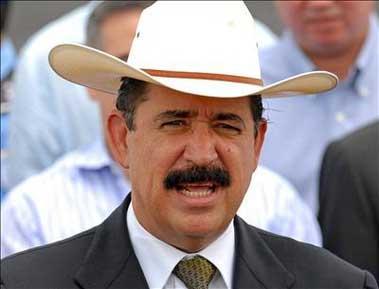
Honduras is no better off after constitutionally-ousted former president of Honduras, Manuel Zelaya, cries foul over a breakdown of the accord leading to his restitution and a national unity government: ´´The accord is dead.´´
The accord forced upon the interim President Michelleti by the disgraced OAS calls for a vote by the Honduran Congress and Supreme Court before Zelaya supposedly returns to power. However, the Honduran Congress and Supreme Court voted him out of power, thus sparking the ´´crisis.´´ Just because one is president he or she is not above the law as Mr. Zelaya found out.
There is no evidence Mr. Zelaya has learned a lesson from his constitutional ouster. There is no contrition. Authoritarians rarely say ´´I am sorry.´´ His designs for Honduras to continue as a transhipment point for Venezuelan drug planes and to become a junior member of the Castro-Chavez Club are unaltered.
Thus, Mr. Zelaya is a threat to Honduran democracy. His street thugs agitating for his return at any costs, including attacking the attorney general investigating his alledged long list of crimes last weekend, are very similar to the same outlaws enforcing Chavezism in Venezuela.
Brazil still provides diplomatic cover for Mr. Zelaya housing him in their embassy. The United States first rushed to support him because of ´´coup´´ talk (false).
It is time for regional powers and the international community as a whole to recognize the Micheletti government in Tegucigalpa and recognize Mr. Zelaya was dutifully dismissed and let Honduras resolve its problems alone.
Freedom and democracy are in the balance.
Get your International Policy
books today!
The accord forced upon the interim President Michelleti by the disgraced OAS calls for a vote by the Honduran Congress and Supreme Court before Zelaya supposedly returns to power. However, the Honduran Congress and Supreme Court voted him out of power, thus sparking the ´´crisis.´´ Just because one is president he or she is not above the law as Mr. Zelaya found out.
There is no evidence Mr. Zelaya has learned a lesson from his constitutional ouster. There is no contrition. Authoritarians rarely say ´´I am sorry.´´ His designs for Honduras to continue as a transhipment point for Venezuelan drug planes and to become a junior member of the Castro-Chavez Club are unaltered.
Thus, Mr. Zelaya is a threat to Honduran democracy. His street thugs agitating for his return at any costs, including attacking the attorney general investigating his alledged long list of crimes last weekend, are very similar to the same outlaws enforcing Chavezism in Venezuela.
It is time for regional powers and the international community as a whole to recognize the Micheletti government in Tegucigalpa and recognize Mr. Zelaya was dutifully dismissed and let Honduras resolve its problems alone.
Freedom and democracy are in the balance.
Get your International Policy
Saturday, November 7, 2009
Cold War Series Part I: Soviet Communist Ascendancy
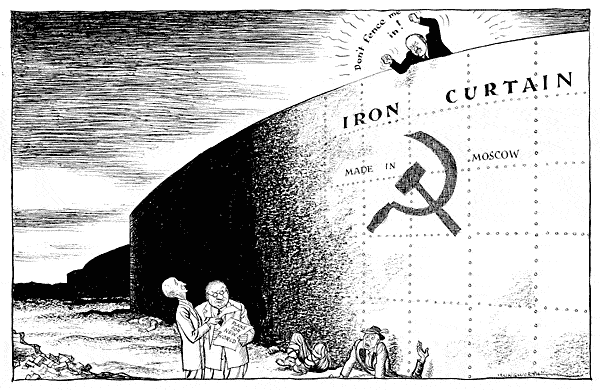
November 9, 2009, marks the 20th anniversary of the fall of the odious Berlin Wall, a symbolic event for ushering in the end of the Cold War. An ´´Iron Curtain,´´ separating East and West Europe, walls, vicious guard dogs, prison camps, barbed wire, minefields, no-mans land, Checkpoint Charlie, and soldiers at the ready were implements of tyrannical regimes to enslave their people, dash their dreams, and maintain total control through the gun barrel.
The Western democracies led by the United States rejected this barbarism.
GSM in a four part series reviews the Cold War. Part I covers the ascendancy of Soviet communism. Part II shows how the Cold War was not won. Part III demonstrates how the West´s iron-willed determination forced Moscow to relent. Finally, Part IV expounds upon the lessons learned which are applicable to the current international system.
From the ashes of World War II sprang almost immediately the Cold War, the titanic struggle between the West (NATO) and the East (Warsaw Pact). Namely, the United States and the Soviet Union managed a rivalry across the global chessboard for supremacy. Would tyranny and command economics triumph over freedom and market economics? For 46 years, the two sides competed for prestige, allies to carry forward the fight, and of course, victory.
The early contests began in the divided Germany - Federal Republic of Germany (West Germany) and the German Democratic Republic (East Germany) in the former Nazi capital - Berlin. The West led by US President Harry Truman defied Soviet attempts to block land routes into western Berlin (where the western Allies had divided the capital into zones) with a massive airlift transferring supplies to 2.2 million inhabitants. The Soviets did not act to stop the airlift and the crisis abated and West Berlin became an island of freedom and market economics in the heart of East Germany. West Berlin and the divided Germany would be a constant thorn in the side of the Soviet Union throughout the Cold War.
The US-Soviet rivalry stretched across the globe touching every continent. US President Truman believed China´s helped spark the Korean Conflict which was fought to a stalemate. That unsettled conflict precipitated a challenge later in Vietnam where first the French were evicted by a nationalistic communist insurgency and later the United States who left the quagmire with a shameful defeat. The dominoes fell later as predicted in Laos and Cambodia who also fell under communist tyranny. Re-education camps and ´´the killing fields´´of Cambodia proceeded to subject millions to a fate of certain death.
Indeed, the 1970s can arguably be the apogee of Soviet communism. The West was reeling. Many observers believed Moscow´s march was unstoppable and that capitalism was a spent force. At the height of the Arab-Israeli War in 1973, US President Nixon put the country on DEFCON3 (Defense Readiness Condition) to deter the Soviets from intervening.
However deadly serious, the second direct confrontation between Moscow and Washington occurred a decade earlier during the Cuban Missile Crisis of 1962 which nudged the United States and the Soviet Union closer to mutually assured destruction (MAD). The wily Castro in Havana and reckless Khrushchev in Moscow pushed the US Kennedy Administration to the brink over nuclear missiles in Cuba.
These hot points during the Cold War again redounded to a test of wills. Join us for Part II of our series where we explore how the Cold War was not won. Our final post on the series reflects more on the extraordinary time period the Cold War covered in world history and lessons applicable to global security challenges today.
Get your International Policy
books today!
The Western democracies led by the United States rejected this barbarism.
GSM in a four part series reviews the Cold War. Part I covers the ascendancy of Soviet communism. Part II shows how the Cold War was not won. Part III demonstrates how the West´s iron-willed determination forced Moscow to relent. Finally, Part IV expounds upon the lessons learned which are applicable to the current international system.
From the ashes of World War II sprang almost immediately the Cold War, the titanic struggle between the West (NATO) and the East (Warsaw Pact). Namely, the United States and the Soviet Union managed a rivalry across the global chessboard for supremacy. Would tyranny and command economics triumph over freedom and market economics? For 46 years, the two sides competed for prestige, allies to carry forward the fight, and of course, victory.
The early contests began in the divided Germany - Federal Republic of Germany (West Germany) and the German Democratic Republic (East Germany) in the former Nazi capital - Berlin. The West led by US President Harry Truman defied Soviet attempts to block land routes into western Berlin (where the western Allies had divided the capital into zones) with a massive airlift transferring supplies to 2.2 million inhabitants. The Soviets did not act to stop the airlift and the crisis abated and West Berlin became an island of freedom and market economics in the heart of East Germany. West Berlin and the divided Germany would be a constant thorn in the side of the Soviet Union throughout the Cold War.
The US-Soviet rivalry stretched across the globe touching every continent. US President Truman believed China´s helped spark the Korean Conflict which was fought to a stalemate. That unsettled conflict precipitated a challenge later in Vietnam where first the French were evicted by a nationalistic communist insurgency and later the United States who left the quagmire with a shameful defeat. The dominoes fell later as predicted in Laos and Cambodia who also fell under communist tyranny. Re-education camps and ´´the killing fields´´of Cambodia proceeded to subject millions to a fate of certain death.
Indeed, the 1970s can arguably be the apogee of Soviet communism. The West was reeling. Many observers believed Moscow´s march was unstoppable and that capitalism was a spent force. At the height of the Arab-Israeli War in 1973, US President Nixon put the country on DEFCON3 (Defense Readiness Condition) to deter the Soviets from intervening.
However deadly serious, the second direct confrontation between Moscow and Washington occurred a decade earlier during the Cuban Missile Crisis of 1962 which nudged the United States and the Soviet Union closer to mutually assured destruction (MAD). The wily Castro in Havana and reckless Khrushchev in Moscow pushed the US Kennedy Administration to the brink over nuclear missiles in Cuba.
These hot points during the Cold War again redounded to a test of wills. Join us for Part II of our series where we explore how the Cold War was not won. Our final post on the series reflects more on the extraordinary time period the Cold War covered in world history and lessons applicable to global security challenges today.
Get your International Policy
Labels:
Berlin,
Castro,
China,
Cold War,
Germany,
Moscow,
NE Asia,
North Korea,
Vietnam,
Washington
Thursday, October 29, 2009
Colombia´s Courage
Two enemies on its borders - Ecuador and Venezuela - are not Colombia´s only threats to its fragile democracy. Add the United States, its erstwhile ally.
Bogotá knew the change in administrations and ideologies from Bush to Obama spelled a change in its relationship with Washington.
Thus far, President Obama´s curious choices of friends in Latin America are the very countries who work diligently to undermine freedom and democracy in the region. Staunch allies like Colombia are dismissed.
President Obama refuses to buck Big Labor and fight for a free trade agreement with Presidente Uribe. Washington only advances Caracas´agenda to destroy Colombia by economic pressure, an unconscionable move.
The US seemingly remains oblivious to the high stakes regional power game with the Castro-Chavez Club perhaps blinded by the left-leaning ideology of President Obama and his staff.
The most glaring example is US support for the return of constitutionally-ousted Manuel Zelaya, the former president of Honduras and Castro-Chavez champion. Obviously seriously misinformed, the Obama Administration up to now seeks to re-impose a disgraced freedom hater on the humble country of Honduras.

US interests are sorely served cossetting the Castro-Chavez Club while freedom lovers are cast aside. US influence is declining in Latin America. Supporting those actors who undermine freedom and its allies serves no purpose.
The Obama Administration needs to quickly study the facts on the ground in the region and not allow ideological bias to blind its approach.
Colombia also fights terrorists (FARC, paras) daily like the US. Bogotá even sent troops to help in Afghanistan. The US needs strong allies in a region tipping more toward authoritarianism and less toward freedom. Bogotá deserves better.
A positive first step would be congressional ratification of the free trade agreement with Colombia to reward Bogotá´s progress of reform and show clearly the US does not abandon its freedom-loving allies in a time of need.
Labels:
Castro,
Chavez,
Colombia,
Ecuador,
FARC,
Free Trade,
President Obama,
Venezuela
Sunday, July 19, 2009
Ecuador-Colombia Front Flares Up
The Other Castro-Chavez Club Front: Colombia
The Castro-Chavez Club is not only planting weeds in Central America. Colombia, the linchpin democratic state between Venezuela and Ecuador, remains a key objective.
Colombia's rightist Presidente Uribe has carved more than a pound of flesh from the hide of the country's leftist FARC narco-guerrillas engaged in the longest-running rebel resistance in the region's history.
- Jefe #2, Raul Reyes, was killed in a daring dash into neighboring Ecuador, capture of laptops (March 2008)
- Senior Commandante Ivan Rios killed by his own troops a week later
- Brash trickery in rescue of cause célèbre Ingrid Betancourt and three Americans (July 2008)
The latest crisis flared up when the Associated Press' broadcast a video tape showing Commadante el 'Mono Jojoy' stating the FARC directly gave dirty drug dollars to support Correa's presidential campaign.
The foreign policy challenge to Correa comes at a time of increasing domestic strife. His brother is snared in funny financing farce involving a $80 million in state funds while the president continues to squeeze the dwindling free press - just like his mentor, Chavez of Venezuela.
So far, Ecuador is retaliating by restricting goods entering the country from Colombia, its chief commercial partner.
While the war is far from over (freedom requires eternal vigilance), the Castro-Chavez Club is experiencing mounting difficulties in snuffing out freedom in the Americas in territories outside their own turf.
Mel Zelaya is still ranting from outside of Honduras and Venezuelan drug planes are not landing anymore. The FARC are reeling and their state support for terrorizing Colombia from neighboring Ecuador and Venezuela is laid bare for all to see.
It is a good time for US President Obama and the international community to re-analyze their rush to re-instate Castro-Chavez comedian Zelaya in Honduras and support freedom and fighters for democracy in a region increasingly short of both.
Get your International Policy
Labels:
Castro,
Chavez,
Colombia,
Ecuador,
FARC,
narcoterrorism,
President Obama,
Venezuela
Monday, July 13, 2009
Hands Off Honduras Part II
Positive progress is underway in the post-Zelaya Honduras as evidenced by these headlines in the daily El Heraldo:
Deuda interna se disparó en 100 por ciento
New government inherits a sum of 13,700 millions in lempiras, plus interest
Deuda interna se disparó en 100 por ciento
Internal debt shot up 100%
New government inherits a sum of 13,700 millions in lempiras, plus interestNarcoavionetas dejaron de aterrizar en Honduras
Narcoplanes no longer land in Honduras
En los primeros seis meses, las autoridades registran al menos 14 ‘narcoavionetas’ que ingresaron al país. La última fue el 15 de junio y desde entonces no ha vuelto a producirse otro aterrizaje
In the first six months, authorities counted at least 14 'narcoplanes' entering the country. The last one was on June 15 and no more have landed.
Exploding debt and drug planes. Forced entry into the Chavez-Castro Club of ultra-leftists in Latin America. Is this the type of country the international community wants to force back upon Honduras?
The proud country of Honduras deserves better.
Its spirited resistance to accepting Mr. Zelaya merits kudos. The first successful throwing off the Castro-Chavez Club yoke should lift those who love democracy in neighboring El Salvador, the next stage of the fight for freedom in Central America given the ballot box FMLN victors in the presidential election last March.
En los primeros seis meses, las autoridades registran al menos 14 ‘narcoavionetas’ que ingresaron al país. La última fue el 15 de junio y desde entonces no ha vuelto a producirse otro aterrizaje
In the first six months, authorities counted at least 14 'narcoplanes' entering the country. The last one was on June 15 and no more have landed.
Exploding debt and drug planes. Forced entry into the Chavez-Castro Club of ultra-leftists in Latin America. Is this the type of country the international community wants to force back upon Honduras?
The proud country of Honduras deserves better.
Its spirited resistance to accepting Mr. Zelaya merits kudos. The first successful throwing off the Castro-Chavez Club yoke should lift those who love democracy in neighboring El Salvador, the next stage of the fight for freedom in Central America given the ballot box FMLN victors in the presidential election last March.
Thursday, July 2, 2009
Hands Off Honduras - Part I
"As his presidential term approached its end, Zelaya tried to alter the constitution to allow him to seek a second term. He even led a violent mob in an assault on a military installation to seize and distribute ballots printed in
In Honduras, as in the U.S. and other civilized countries, there are recognized procedures for changing the constitution and for dealing with unconstitutional behavior by high office holders, though there is not a discrete impeachment process. The Honduran congress and supreme court followed the constitutional path for removing Zelaya as far as it goes, after he was found guilty of unconstitutional offenses, including firing the military officers ordered by the congress and supreme court to restrain him from holding an illegal referendum.
The highly respected cardinal-archbishop, Oscar Rodríguez, has urged Zelaya to desist from his farcical efforts to return and accused him of violating his inaugural oath and the “sacred law of God: not to lie, not to steal, and not to kill.”"
The international community's zeal to reinstall an anti-democrat to Honduras is disgraceful. Mr. Zelaya forfeited his mandate and the system worked to reject him.
It is high time to support the democratic forces in Honduras not aid and abet the anti-constitutionalists who have one aim- unite in the Castro-Chavez Club no matter the price to be paid.
US President Obama's siding with the Marxist Zelaya is sorely misplaced and reflects a poor understanding of what actually transpired in Honduras or worse.
Labels:
Castro,
Chavez,
Honduras,
Latin America,
President Obama,
Venezuela
Wednesday, March 11, 2009
Commuting Cuba's Embargo
The new Obama Administration in Washington has raised high hopes about imminent changes in international policy on a host of issues.
The tiny state of Cuba still figures in a prominent way in the US international policy calculus. The Cuban exile community is politically potent and savvy. The country's geographic proximity is another concern.
Since Fidel Castro marched triumphantly into Havana in 1959, a Cold War has raged between the two hemispheric neighbors filled with mutual suspicion and high drama including almost triggering the nuclear trip wire in the Missile Crisis with the former Soviet Union.
While the old warrior Fidel has retired due to serious health reasons resulting from a routine surgical procedure (in most countries without Cuban-style medical care), his somewhat younger brother (five years difference) only changes the face of murderous Castro, Inc. which runs the island prison for their sole economic benefit.
Indeed, the Castro family fortune is estimated at nearly $1 billion, according to Forbes Magazine in 2006. What would Fathers Marx and Lenin think?
It seems the US embargo has not dented Castro, Inc. given Cuba trades with every other country (and limited items with the US). The embargo is not about economics, but politics. It is a test of wills between freedom and liberty and repression and murder.
If the US blinks under President Obama - something every president has not done since 1959 - and commutes the embargo, a moral victory goes to the dying dictator and the Castro-clones throughout the region and the world. Imagine the Hugo Chavez victory speech!
The US will not garner an ounce of recognition contrary to the columnists and other observers otherwise who have mixed motivations for sporting a repeal of the embargo. On the contrary, th price could be very high. Surrendering in face of tyranny never accrues profits or benefits for democracies.
Raul Castro is more of the same brutal repression in the name of profits for the Castro clique and a desperate attempt at regime survival. An internal putsch to end blood-dipped Castroism once and for all is one likely scenario to solve the Cuban problem. Now that is Cuban self-determination.
Get your International Policy
Subscribe to:
Posts (Atom)